
Ep. #2, Feat. Accel’s Vas Natarajan
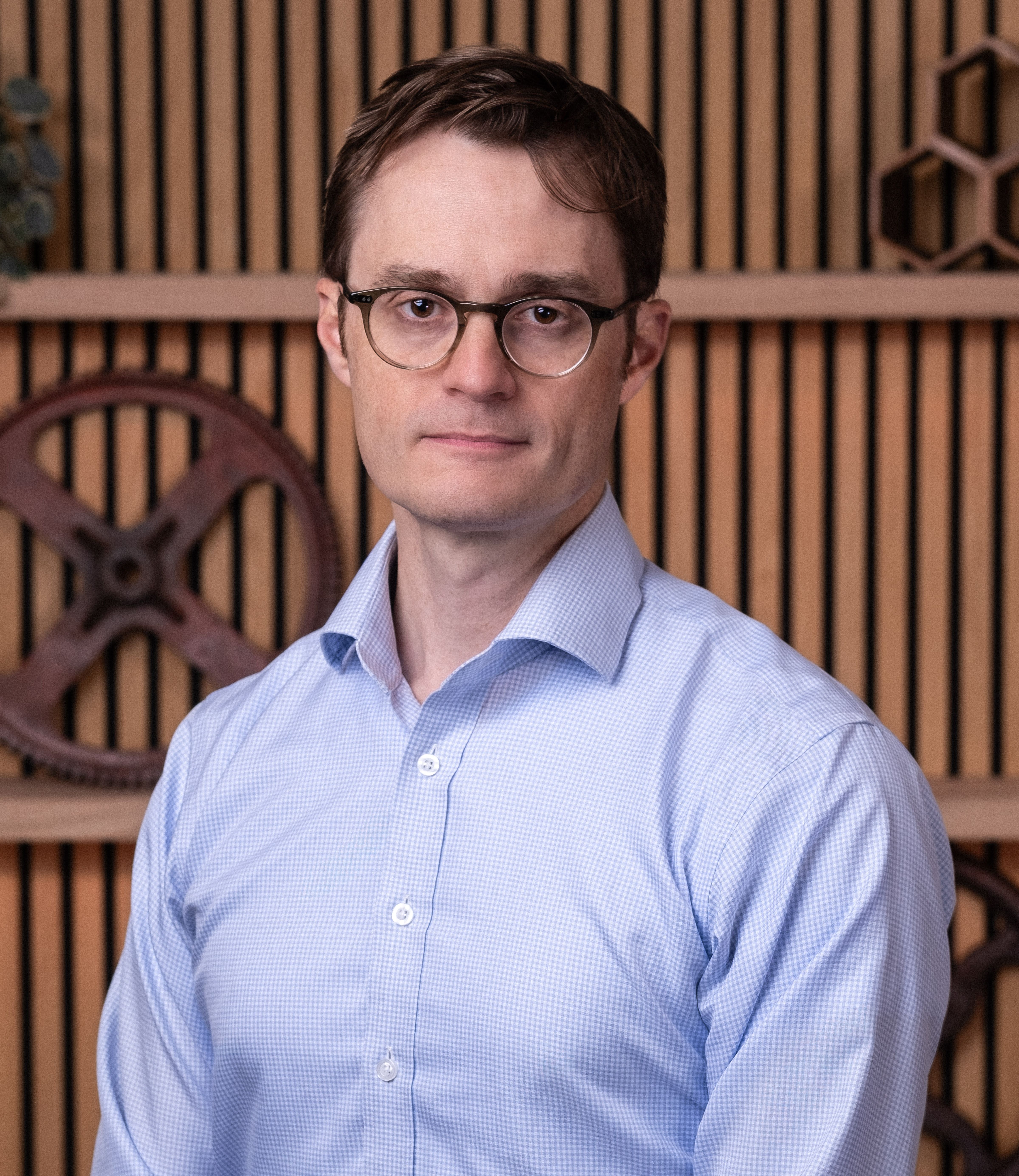
In this episode, Tom is joined by Vas Natarajan of Accel Partners. Tom and Vas talk about how much money founders should raise and when, how to transition from individual developers to enterprise customers, and how open source business models are evolving.
To find out about new episodes of this and other Heavybit podcasts, follow @heavybit on Twitter, and sign up for our newsletter for more great developer focused news, events, and announcements.
transcript
Vas Natarajan: Fundraising is an art in sequencing. It's getting the right amount of capital into the business at the right price so that you're setting yourself up for success going forward.
I think the market for great founders who have a clearly articulated business model and a clearly articulated vision for the market has never been better.
We certainly look at developer love as a form of early product market fit.
I think it's short-sighted of anyone to assume that developers will support a good business model. I think developers will support a good distribution model, but that's not the same as a business model.
Tom Drummond: Hey everyone, my name's Tom Drummond. Welcome to Venture Confidential. This is a regular podcast featuring candid conversations with top VCs from Silicon Valley. On Venture Confidential, we dive into the fundraising landscape, offer insights on how VCs think about investment, and hear investors' perspectives on what great founders get right.
Venture Confidential is brought to you by Heavybit, a nine-month program for developer-facing startups. If you're interested in learning more about Heavybit, being a guest on this show, or you have a VC-related question, email me at vc@heavybit. com. On this episode, I'm excited to host Vas Natarajan from Accel Partners. We talk about how much money founders should raise, how to transition from individual developers to enterprise customers, and how open source business models are evolving.
Inside Accel
Hi and welcome to Venture Confidential. This week we're happy to have Vas Natarajan with us from Accel Partners. Welcome, Vas.
Vas: Hey.
Tom: Thank you very much for coming and doing this.
Vas: Oh, thanks for having me. Appreciate it.
Tom: Tell us a little bit about Accel. It's a pretty storied venture fund, pretty large venture fund here in the valley, but give us a little bit of background on Accel.
Vas: Yeah, sure. So Accel has been around for about 30 years now. We are based down in Palo Alto, so just off of University Avenue. We are currently investing out of a venture fund and a growth fund. So there's a slight nuance to both.
Our venture fund is predominantly focused on early stage seed and Series A opportunities. Our growth fund is focused on much later stage businesses, things that are generating revenue and potentially profitable and are scaling quite rapidly. But the sectors that we focus on tend to be the same for both funds.
So application software, infrastructure, and IT, a lot of developer services, open source-oriented business models. And then traditional large consumer categories like social media. We were an early investor in Facebook back in 2005, consumer mobile opportunities like HotelTonight and Gametime and many, many others.
So it's been a very exciting past couple of years. I mean it's remarkable how so many categories of not just technology, but our economy have been reimagined through software and services, and so it's certainly made for an exciting but busy time on the venture side.
Tom: That's great, and so how long have you been with Accel?
Vas: So I've been with Accel for just about six years now. So I'm one of the partners on the early stage fund. I typically focus on, and why I have the pleasure of spending time with the folks at Heavybit, focus a lot on developer tools and services.
So I was an early investor in a company called Segment, which is an analytics-oriented API. We had been an early investor in Braintree, which was a payments API. Sold to PayPal two years ago.
Coming up in just the next couple weeks, we're gonna celebrate the outcome for Atlassian, which was an early DevTools related investment for us, one of the first that has just done remarkably well. And obviously a lot of companies in the open source world between Cloudera and Couchbase and a few others. So tend to spend a lot of time in enterprise IT, but things with a developer go to market.
Tom: And is this kinda enterprise IT and infrastructure and developer tools, are those all things that you'd looked at in a previous life before you joined Accel, or is this kind of a new investment focus for you? What got you excited about this space?
Vas: Yeah, absolutely. It's a space that I've spent most of my career looking at. So I had been an investor at a firm in New York called Insight Venture Partners. We were a growth stage oriented venture firm. So looking again at later stage business models, but spent a lot of time looking at enterprise IT, open source, and infrastructure software there as well.
What was remarkable in my transition from Insight to Accel, one of the key business model changes that occurred right around that time, and this was 2009-2010, was infrastructure and IT-oriented businesses stopped being so sales-led and started becoming very product and usage-led.
And that was an interesting nuance because as opposed to the traditional way of building a product, sending your enterprise salesman out on the street to bang down the door of the CIO and sell very top-down, enterprise and infrastructure IT started organically entering the organization or the business from the ground up. So it became very developer-led. Developers had a key voice at the table in terms of what they wanted to use and how they wanted to deploy.
And so that spawned a new generation of companies and certainly has made for a fun sort of last five, six years.
Tom: As well as I suppose kind of this shift from the top down enterprise sales approach to a bottom up developer first approach, I mean, are there other kind of big differences you've seen moving from a late stage fund to an early stage fund?
Vas: Yeah, no, the change from a late stage venture firm to an early stage venture firm is quite profound. I mean obviously on the late stage side, we're looking at unit economics and revenue and potential path to profitability and a lot of very business model centric inputs.
I think at the early stage side, we're much more focused on who are the people around the table, what is their vision for the business, how can they really clearly articulate the business model and the opportunity, how can they clearly articulate the go to market model. How well versed are they in the idiosyncrasies of the market? Those are the things that we're trying to solve on the early stage side.
Ideally those have already been solved by the time that we make a growth stage investment. And we're really just thinking about how to optimize the business model. But no, certainly on the venture side, our lens is very, very different.
That presents its own challenges because, as a partnership, we're investing across both stages, and so every Monday morning during our partner meeting we have to flip our switch and go from thinking about things with a venture lens to then thinking about things through a growth stage lens, and sometimes that can be challenging.
Tom: It's a pretty big partnership, right? How many partners do you have?
Vas: I think we're up to ten investing partners at this point. We have a handful of partners that are just exclusively focused on growth stage investing, and then there are eight of us that are focused on the venture side.
Building a Big Business
Tom: I think there are still a good number of investors in the venture community that are worried about market size and market opportunity when it comes to developer tools and infrastructure. How do you think about building a big business in this space?
Vas: Yeah, that's really important. And I'd say that's probably one of the first things that we try to suss out when we meet with entrepreneurs or founders in this category. For us, it's less about the size or the potential opportunity around your wedge, but it's more about how are you using this wedge or this initial product as a fulcrum to something larger.
The dev tool space is a really popular space to build a company because so many founders are devs or engineers themselves, and so they're trying to solve problems that they experience firsthand, which is great. And so that solves a lot of the founder market fit issues, as we like to say.
But the thing that we really try to poke on early on is, okay, you have a tool or a service that is solving let's call it one part of the development process, but how can that be your land so that you can expand into other parts of the developer operating system?
So Atlassian's a good example. They started with both the JIRA and Confluence, which were two relatively critical tools from just a documentation and a bug tracking need perspective. And they've since built out the operating system to include a whole host of tools and services, whether that be software to power and support CI, software to power and support Git, software to support internal team communications with HipChat. They've found a way to build around what they've landed with, and as a result they've been able to extract some great economics from a lot of the customers that they're working with.
Tom: Yeah, I think Atlassian is a really fascinating case study in this space, but also a really interesting kind of counterexample to the traditional venture model that a lot of companies are pursuing in the valley, right? I mean they had a fairly unique path to where they are today. Do you want to talk about that for a little bit?
Vas: Yeah, absolutely. I mean, by the time we invested behind Mike and Scott at Atlassian, they were already seven or eight years into building the company. They were already tens of millions of dollars in revenue, profitable and scaling quite rapidly.
So Atlassian is a good example of a company that fits more of our growth stage model, which is businesses that need capital to scale something that's already working or scale an existing business model.
But what was so amazing about Mike and Scott and what they were doing, I mean, again, back to this notion of being very product and usage led. Atlassian had no salespeople early on and they still don't have any salespeople. They were very focused on making sure that the product was easy to download, easy to run and install, quick and simple to provision additional accounts, and you could contract or pay for the product entirely over the web without ever having to talk to someone at the company.
Mike will always tell the funny anecdote of, early on they would get these faxes from some large companies. I think the example was American Airlines or Boeing or someone. And they had no idea what to do with it. It was a large purchase order.
It was a traditional procurement process that American Airlines was used to going through, because they hadn't bought from a company who had this kind of philosophy. They were just so used to dealing with salespeople who wanted large check up front, and Atlassian goes, to their credit, they said, no, we're not going to accept this. We don't want this. Not only can we not accept this, but there are all sorts of terms and SLA requirements that you're asking for as part of this, and that's not how we support our customers.
We are a download to try type business model. It's gonna transact entirely over the web, and we want our product to speak for itself. We don't want a salesman to have to speak for the product. So very, very unique model, but I think it's been a nice model for others to potentially follow.
Tom: Yeah. Do you think more entrepreneurs should pursue that? Early stage revenue without investment, trying to sell early or sell the product early without going out and raising a lot of venture money.
Vas: Yeah, I think it's a terrific model to follow. For one, I think it's a great way to validate a lot of your assumptions ahead of time. It certainly gives you significant leverage over your conversations with folks on the venture side as you're going out and raising a seed round or a Series A. It's always very, very helpful to come to the table with a set of customers that have validated your use case, that have validated the commercial opportunity behind the product.
But I think more importantly, and I think this is a broader conversation that a lot of folks are having right now around the valley, which is, how much money should I be raising relative to the stage of my business? And I'd say speaking on behalf of Accel, one of the things that we really value is companies that don't raise a lot of money, that actually embrace the constraints of not having unlimited access to capital, but use those constraints to innovate both on a product and a go-to-market perspective.
Raising Too Much, Too Early
Tom: What are some of the risks of raising too much capital early? There's a school of thought that says go and raise money while the going is good, the market is hot. What are some of the problems with that?
Vas: So I think there are a handful of risks with that. So one, obviously just from a valuation perspective, you raise a lot of money, you set a benchmark for your business in terms of the price per share and the overall valuation of the business, raising that next round of capital, raising the following successive rounds of capital.
You never want to put yourself in a position where you're doing unnatural things to try to reach those lofty prices. Typical Series A that you see in the Valley in 2015, for example, might have been an eight to ten million dollar Series A on a, call it, forty million dollar post money valuation. Well, if you want to go out and raise the Series B, you want to go out and raise the Series C, I mean you're talking about valuations in the hundreds of millions at that point.
And what do you as a founder need to do and achieve from a customer traction and commercial validation perspective, what do you need to achieve to be able to sustain that kind of price going forward? Some founders realized that they would have to do very unnatural things to reach those prices.
I think fundraising is an art in sequencing. It's getting the right amount of capital into the business at the right price so that you're setting yourself up for success going forward.
There is the unfortunate, what I call the death spiral that's potentially afflicting some founders today and certainly are gonna afflict many more in the next eighteen months, of folks who truthfully raised a lot of money, raised at very, very high prices and may not be able to reach those lofty valuations from a traction perspective, and they're gonna have to figure out what to do.
Tom: From our perspective, it seems like the market is very hot. We're seeing a lot of kind of large Series A's being raised and some very large Series Bs. Where do you think it is today and what do you think it's gonna be like in twenty sixteen?
Vas: I think the market for great founders with a deep set of relevant experiences who have a clearly articulated business model and a clearly articulated vision for the market, I think the market for those types of founders and those opportunities has never been better. And I think it's gonna continue to stay great.
It's the founders, it's the market opportunities, it's the business models that aren't quite well formed, I think those are the ones that are gonna have a little bit of trouble potentially raising those early rounds of capital.
Tom: Do you think twenty sixteen is gonna be a better or worse year from a fundraising perspective?
Vas: I certainly feel on the investor side, and we see this with the public market investors, and that has a trickle-down effect to the late-stage investors, which certainly has a trickle-down effect to some of the early stage guys, there is a flight to quality going on. Absolutely. The one thing that I've in particular noticed over the last six months, and I think that this is going to extend over the coming years, is it's not just enough to innovate on product. I think you really need to figure out a capital efficient way to scale your go-to-market.
And so the founders that are coming in with interesting, I don't want to call them schemes, but interesting ways to spread their product in an almost viral like way, I think those are the ones that are disproportionately seeing a higher number of term sheets.
And so I think for founders, certainly in Heavybit, and I mentioned this to a lot of the ones that I meet, don't just think about the value of your product, but think about your distribution model as a part of your product.
How are you hacking your go-to-market so that you can scale in a more capital efficient way than I think many of the other folks in the space?
From Developers to Budget Holders
Tom: I think that's one of the most interesting things about our space, as you kind of mentioned earlier, that a lot more companies are taking this bottoms-up approach to adoption, to kind of penetrating the customer base. There are some challenges with that though. What an individual developer wants is not necessarily what a large enterprise wants to pay for. How do you think about having to rebuild your product or create different products to tap into larger budgets?
Vas: Yeah, I think that's a great point. I think it's short-sighted of anyone to assume that developers will support a good business model. I think developers will support a good distribution model, but that's not the same as a business model.
And so I think a lot of the businesses that we find that are doing the best on that front are able to use that initial developer go-to-market as a fulcrum into some sort of well-established budget.
I'll give you a very good example. We're an early investor in a company called Checkr. Checkr is a background checking API. And this is probably one of the most esoteric concepts that you'd ever assume. Why would you ever want to put an API in front of a business process like background checking?
But what's amazing is you have all of these fast growing marketplace businesses, talent marketplaces, certainly the on-demand economy has been taking advantage of a service like Checkr. These are companies that are hiring tens, if not hundreds of thousands of people every month. They need to run this process on a repeatable basis as quickly as they can and get that block of output into existing subsystems. So we need to get that background check output into our HRIS or our ATS or whatever HR operating system that they're leveraging.
Checkr has put an API in front of this business process, and as a result we're able to land with engineers who are feeling this pain. They have product people, marketing people, operations people internally that are leaning on these engineers and saying, hey, we need to figure this problem out. And can you help us hook up all of our subsystems so that we can scale appropriately?
The engineers are saying, well, as opposed to building you something ad hoc internally, let me just go leverage this API. I'll hook it up for you. I'll get the JSON object out of Checkr and into the HRIS or the ATS, and you deal with it after that, after the fact.
So what's great is we've landed with the developer. It's made the initial sale and integration process incredibly easy. But from that point, we're transitioning our relationship to a real key budget gatekeeper. So we're talking to the head of product, we're talking to the head of talent and recruiting. Those are folks who have meaningful budget, and they want to leverage that to pay for a service like Checkr because we're critical to how they're gonna scale.
I think the initial point is a very important one, which is developers are a great distribution model, but you need to understand how to transition that relationship to the budget gatekeeper very, very early on and figure out how you're solving a business unit problem.
Tom: When you're looking at developer focused companies, what's more important to you? Developer love, developer attention, or people who've demonstrated that they can extract revenue out of those customers?
Vas: We certainly look at developer love as a form of early product market fit. It's a great way to get validation over the service. Developers are some of the most choosy and particular buyers that are out there. They're not gonna use a service that isn't elegantly constructed and well engineered and whose documentation that they can't readily understand and digest.
So developers are a very hard end user, but when you see their adoption, it's probably some of the best kind of validation that we can see as investors.
More often than not, many of the companies that we intersect, certainly on the early stage side, haven't yet proven out the commercial traction just yet. But what we do look for is, are developers using this service for something that is mission critical? That is the litmus test for us.
And so we go out and talk to a lot of customers and we try to understand, okay, maybe you're building a greenfield application. Is this just something in your labs that you're toying around with, you're experimenting with, but may never make it into a production level system? Or is this something that you can meaningfully see replacing a part of your production level application stack? That is the important litmus test for us.
So because once you get into the production level system, there's so many different ways that you can monetize and extract commercial revenue from that end customer, whether it be service and support or training or just layering on proprietary tools and services.
But the wedge into that commercial conversation is being part of a production level system, something that's actually going to be mission critical. That's something that we can suss out, but we'll have to do customer diligence for that.
Tom: Are there any other heuristics that you use as investors to assess how good an early stage developer-focused company is? I mean, you mentioned whether or not they're in production systems, but other things like the size of their developer community or the
Vas: Oh, absolutely. No, we have all sorts of hacky ways of trying to understand the organic energy around an early developer service. So we'll look at things like number of Twitter followers, certainly number of committers on GitHub. That's really important to us. What is the sentiment and the frequency with which the service is being mentioned on things like Stack Overflow and Hacker News?
Yeah, no, there are all sorts of, we really try to paint a picture of the organic energy around a service. And so we try to put ourselves in the seat of an end developer, of an end user, and figure out how they would express that sentiment and then go and backfill for some of those answers.
Business Processes Behind APIs
Tom: You mentioned Checkr earlier, which I think is a really interesting example of business processes being exposed as APIs. I mean I know you guys put on the API conference not too long ago. I mean, is that an interesting theme for you or an interesting trend?
Vas: It's absolutely an interesting theme. You mentioned it earlier as well. I mean, Gen 1 APIs, I saw so many folks that were building and abstracting away critical application level and infrastructure level functionality and services. That's certainly an important category, and I think we're gonna continue to see more and more of those. So that's the Stripes, the Braintrees, the Twilios, the Segments of the world.
But I think what we're really interested in is the opportunity to put an API in front of an entire business process. And so you're not only just building the application on top of APIs. You're actually building the company on top of APIs.
Checkr is a great example of one where, as a result of leveraging Checkr, a customer like Lyft or DoorDash doesn't need to staff four people on their human talent compliance function. Instead, all four heads, all four full time equivalents are put behind an API.
Companies like Plaid you mentioned, there's really interesting one called Clearbit, which is doing business intelligence APIs, but they've literally taken over the entire SDR function of a lot of companies. So as opposed to staffing five or ten sales development representatives to score your leads so that your AEs have something to call into, you can just leverage the data intelligence from a service like Clearbit, and suddenly your cold callers have their list of companies to call in in the morning.
So yeah, we're very excited about some of these business processes starting to sit behind APIs, and there's real meaningful contract value to be extracted there. Again, the alternative for a lot of these companies is to staff entire departments against those functions. And when you think about that, especially in Silicon Valley, in the case of a Checkr, that's three or four people. In the case of a Clearbit, that's potentially five or ten people. In the case of a Sift Science, which is a fraud detection and analytics API, that's a whole fraud team.
You're talking about an alternative of hundreds of thousands of dollars a year. That's meaningful enterprise contract value that you can extract. Certainly you're not going to be able to charge up to that point, but you can charge some subset of that. That's a real market opportunity.
Tom: Are there other kind of particular areas in this space or in this market that are interesting for you? I mean, we see a lot of things in microservices and containers and lots of interesting stuff in security at the moment. I mean, what else is kind of top of mind for Accel?
Vas: Yeah, I think what's interesting, I've been exploring a lot in the testing and QA space. I think testing and QA is a very manual function that you as an early stage company, you'll unfortunately have to staff a lot of folks against.
And I think there's an opportunity to, in a very elegant way, leverage an API or a ready to integrate service to push out a development build to a QA team, get the results integrated back into your CI system or your DevOps system and be very iterative and agile that way.
So we're looking at APIs that are sitting in front of QA, certainly looking into APIs that are sitting in front of the sales and marketing processes. And I think there are going to be other categories that will fall to the API over time.
Tom: For the folks who are building APIs in front of business processes, to what extent do you think the same kind of go-to-market applies? Because as you say, at some point they're gonna have to go and talk to the talent manager or the head of compliance. How far can developer attention or developer community or popularity with developers get you if you're building something that's that kind of business focused?
Vas: Yeah, absolutely. No, I think that's a great point. I think the ones who have done it successfully are able to marry two disciplines. They're able to marry developer evangelism, so how do I land with the developer early on? But then they're able to understand the nuances around solutions-oriented marketing.
So can I craft a story for the VP of finance or the VP of HR or the VP of product or marketing? Can I craft a story for them that helps them understand that, hey, this isn't just some zany developer component. This is actually gonna build meaningful value for their day-to-day.
And that sort of solutions marketing I think needs to come earlier in a lot of these developer services oriented businesses that are tapping into these budgets.
You can't just stop at great documentation and a very elegant developer site. You gotta actually think about the core business user and the leader of that business unit and what it is that they need to hear. And strike up that relationship early, but leverage the fact that you've already landed with his or her developer. Leverage that fact to ignite the conversation, but then own that conversation.
Selling to the Enterprise
Tom: I think you raise a great point that you are selling to a different audience. What are the big challenges that founders face transitioning from building and selling products to developers to building and selling products to the enterprise?
Vas: Yeah, sure. The transition from selling to developers, and I wouldn't even say selling, I'd say evangelizing to developers, the transition from developer evangelism to enterprise sales, I think, is a really challenging one for a lot of companies that we're talking about.
The former is predicated on beautiful documentation, an elegant, developer-friendly website, a good community of like-minded developers that are leveraging that service, that are pushing the stability of the service forward, open source community, all those sorts of organic kind of grassroots inputs. That's what developers are particularly passionate about. What the enterprise is passionate about though is very different.
They care about security, they care about SLAs, they care about knowing who to call when the service is down. They care about clear pricing so that they can predict what their usage will be if they scale with the service. It's very different, and the people behind those decisions are very different.
And so one thing that we coach our dev tools oriented businesses to do is, one, hire in for those competencies early. It's rare that developers can make those transitions on their own. And so hire in from a marketing perspective, from a sales perspective, get DNA in the business that understands both sides of the coin.
There are some phenomenal business-minded sales and marketing folks in the valley, many of whom I know have spoken here at Heavybit, Technicia at PagerDuty, for example. She understands the mind of the developer, but at the same time she understands what it's like to market to an enterprise. So get that DNA into the company earlier.
And I find that too many founders are potentially delaying that hiring decision till it's too late. In some ways, as you are generating and developing your product market fit, you should already be laying the seeds and the foundations for this enterprise playbook, this enterprise go-to-market playbook. And so get that talent in early.
Building Open Source Businesses
Tom: One of the areas I know you've been spending a lot of time on and we're very interested in is building open source businesses. Open source is fantastic for leveraged development and leveraged distribution, but it can be hard to build a big business off the back of it, and particularly a kind of high margin business. You see a lot of service oriented open source businesses. I mean, are there tricks or techniques or things that if you're building an open source company or you're building a company based on open source software that you should be thinking about as a founder?
Vas: Absolutely. It's a timely question. We recently hosted what we call the Open Conference. For lack of a better name, it was called the Open Conference. And it was literally a day symposium where we brought together over a hundred founders in the open source ecosystem to get together and chat about business building best practices.
There's so much that's been articulated about SaaS, MRR, ACV, CAC to LTV. I mean, there's this whole lingua franca that emerged around building a SaaS company that has significantly helped SaaS entrepreneurs and just understanding where they are in the business building lifecycle. That same lingua franca needs to exist for open source founders. We're just starting to unpack what it's like to build an open source centric business.
And I think that starts with an understanding that open source is not a business model. It is a development methodology. It is the idea that a project that spawns organically in the wild can benefit from the collective progress of many thousands or hundreds of thousands of developers around the world. So it's a development methodology.
Through this one day symposium, I think one of the things that we at Accel were trying to articulate was, hey, there are very clear distinct phases in open company construction. And so we laid out what we call the three P's framework, and we're continuing to refine this, but it certainly had a great reception, at least among the crowd. And the three P's we distilled down to projects, products, and profits.
And so phase one of your business is very much just about generating energy around this organic project. It's about community. It's about evangelism. It's about going out and meeting the developers that are contributing to this project. It's about exposing some of the interesting use cases, some of the interesting applications that are being built on top of your project.
It's just a very organic phase that's focused on the end user. It's focused on the developers that are part of this community. And the result of this phase one, this project phase, is you want a project that has a global contributor base that is being pulled into all sorts of interesting applications, that has great documentation, that has great support channels and support networks.
And more importantly, as a founder, as an entrepreneur, you in some ways want your company to be known as that project's commercial counterpart. So in the way that Confluent today is the Kafka company, Databricks is the Spark company, Cloudera is in some ways known as the Hadoop company. You want your company's brand associated with that project, but again, phase one, project phase, is meant to be very organic.
Phase two, Tom, exactly to your point, you can't build a sustainable business on the margins of services and support. And so you really need to start thinking about how your end users are helping to inform a hardened product roadmap. So you need to be listening to the case studies and the use cases from all the enterprises that are adopting this open project, understand what are some of the proprietary tools and services that I can build and offer to help my customers be more successful.
Again, it's so interesting because there's this inherent tension between exposing and contributing innovation to the open project versus just building something that you know you're gonna commercially sell. It's a very interesting tension that a lot of founders face. Well, do I just contribute this back to the open community, or should I package this up and try to sell it commercially? In some ways it feels inauthentic. Capitalism and open source have never been the best of friends, but I think they can be.
And so, you take a company like Cloudera, for example, we have many thousands of customers that are using enterprise grade Hadoop at scale and supporting mission critical applications. We don't want to get in the way of that. We certainly don't want to hinder that. But we want to support those use cases on a variety of different dimensions, whether that's stability, whether that's analytics, whether that's security, there are all sorts of interesting proprietary products that can be layered around that open core to help a customer be more successful.
And then, arguably the last phase, what we articulate is the profits phase, which is, okay, now that you figured out what your product roadmap is, let's go to market significantly. And so oftentimes that'll mean a concerted enterprise sales effort, folks that are selling into accounts that have already adopted your product.
What's so interesting is in open source you can't hide behind features and functionality that you're just putting up on a PowerPoint slide. That customer knows all of your features and functionality already. There's no hiding. I mean you are going in there fully undressed.
That's a really interesting nuance for a lot of enterprise salespeople that are joining companies like Cloudera and Couchbase. You can't just sell behind a PowerPoint now. Your product is already fully exposed.
The beauty of open source is you have such an amazing base of customers to harvest. It's not like traditional enterprise sales back in the day when you were calling in through the top, calling into the CIO's office and hoping that they might use your product and getting into a POC or beta and then converting that later on down the road. No, these are customers that are already using your services. You just need to harvest that base.
Winner-Take-All and Unicorns
Tom: A lot of investors that we've spoken to say that many of the products that our founders are building are kind of winner-take-all markets. Do you agree with that? And do you think open source contributes to that effect or helps kind of broaden and open the playing field?
Vas: Yeah, no, I think that's a really good question. I think there are two dimensions to that question. One, is it winner-take-all from a project perspective in terms of the actual open project, and then is it winner-take-all from a company perspective?
On the former, there are absolute network effects that are generated by the fastest growing projects that drive more usage and more contributors and then more usage and more contributors. So it's very often the case that the open project itself, take a Spark, take a Hadoop for example, those are winner-take-all for that particular use case.
On the company side, it certainly doesn't have to be the case that it's winner-take-all. Take the Hadoop space, for example. You have three vendors, Hortonworks, MapR, and Cloudera, that all have carved out meaningful market share and are growing quite rapidly, and, well, some might say just from a traction perspective, I think Cloudera is certainly ahead. That's not to say that Cloudera has stolen the entire Hadoop market.
And I think if you talk to the Cloudera folks, they really value having two other commercial entities in the space between Hortonworks and MapR. I mean, to shoulder the burden of supporting a community like Hadoop, it can't just fall to one commercial company. And so having a successful sister company like a Hortonworks has been really important for the health of the project.
And so Cloudera really values having what would optically seem like competitors. Having those sister companies in MapR and Hortonworks does wonders for support of the community. And the community is what drives a lot of the value downstream.
Tom: I'm guessing it still kind of Accel's goal though to back number one, to the
Vas: Oh, absolutely. Yeah, we always want to find the leading commercial horse in the space that is becoming eponymous with that project. That's our goal. And so, Cloudera, you take Couchbase with CouchDB. Certainly you would think of this in the context of Databricks and Spark and Elasticsearch with Elastic.
So yeah, no, you wanna be the number one company in that category, in that space with that project, but I think there's room for more.
Tom: Yeah, you mentioned horses. Well, what about unicorns? I mean, what's your kind of take on the current state of the unicorns?
Vas: Well, I'd say specifically for open source companies, I think what's amazing is if you paint a picture of the open source leaders or the most valuable outcomes from, call it, the prior generation of open source companies, you look at the XenSources of the world, the JBosses, the SpringSources, certainly you put Red Hat in that category. MySQL as well.
If you look at those businesses, what's so fascinating, and we did this analysis, we went back into the acquirer 10Ks and just try to understand what were the financial characteristics of the businesses they were acquiring. So all those businesses, aside from Red Hat, all those businesses were acquired.
What's remarkable is despite the size of their developer communities and how critical they'd become to a lot of application stacks within the enterprise, they weren't generating a lot of commercial traction. They at most were at twenty, thirty million dollars of annual revenue. Again, back to your earlier point, services and support margins, which are twenty or thirty percent. Certainly not sustainable businesses. Yet they were acquired for a couple hundred million dollars and certainly were good days for the entrepreneurs and maybe some of the very early stage investors.
You look at this generation of open source companies and they are generating meaningful amounts of annual revenue. You take Cloudera, you take a Hortonworks who's public, you take a MapR, you take a DataStax. MuleSoft, WordPress, open source company, these are companies that are generating hundreds of millions of dollars in annual revenue.
And so you look at the prior generation of open source companies and you look at this generation of open source companies and you say, wow, these are meaningful, sustainable businesses that have a chance to stick around and in turn justify some of these lofty valuations that have been imparted on them.
So what I'd say is the discord among particularly late stage or public investors is, oh, well, why are we paying these high prices for these open source businesses when they've never had an opportunity to generate revenue? Well, I'd say on the contrary, these are companies that are generating meaningful amounts of revenue, and I think many of them, and we hope certainly Cloudera and Couchbase and others are among this group, we think many of them are going to go on to be big public independent businesses.
Exits and the Public Cloud
Tom: How do you think about the valuation and the exit opportunity for the unicorns or just very late stage companies at the moment?
Vas: You know, it's interesting. I mean, you look at the acquirer balance sheets and there's been a lot of cash that's been sitting on the sidelines over the last twelve to eighteen months. So the cash is there. The means to acquire these businesses is certainly there.
What I'd say is, and we spend a lot of time with the corp dev teams at all of the usual suspects, whether it be Salesforce or Oracle or IBM or Citrix or Cisco, Facebook, Google, Twitter.
Tom: Don't forget Microsoft.
Vas: Don't forget Microsoft, exactly. Who is becoming a concerted player in this space. I'd love to come back and talk about Microsoft in a second.
When you talk to them, I mean, they are looking for very well-run businesses and they are acquiring into their future. And so it's not about, well, I could just acquire this business and maybe bolt it on to something. They're trying to acquire into their future.
So you take a Microsoft, for example, and there were rumblings around Microsoft making a play in the container space. And that is, for a Microsoft that's trying to make a big splash in the public cloud category, to buy into the container space, whether that's a Docker or a Mesosphere or a whomever, CoreOS. For a company like Microsoft, I mean, you're acquiring into your future. You're trying to understand how this technology can grow your size of the market share, increase the number of developers that you can go out and target. And not just be another business unit or a business line within a litany of business lines.
And so, you take a Salesforce, for example. Salesforce acquired RelateIQ, which is one of our portfolio companies. They didn't acquire RelateIQ because we were just another CRM. They acquired RelateIQ because we were taking a data-driven approach to a business workflow that had historically been the domain of Salesforce. So radically new technology approach, radically new UI and UX approach to solving the workflow of sales reps.
And so regardless of how large RelateIQ was at the point of exit, from Salesforce's vantage point, it was about acquiring into their future and acquiring talent that would help them build the future of Salesforce.
And I think that that's just important for founders to understand, is as you're articulating the story to these corp dev teams, one, you need to find a business unit sponsor within that organization.
It's not the corp dev team that's gonna make the go or no go decision. It's a business unit sponsor within that organization.
And so articulating to him or her how you can contribute meaningfully to their future business, I think is an important thing to think about.
Tom: Yeah, I mean I think a lot of these folks, when they're thinking about interesting acquisitions, they're looking at category redefining acquisitions, right? Where it becomes a new platform for them, kind of thing.
Vas: Absolutely.
Tom: You mentioned the public cloud as well. I mean, it seems like that's a one horse race at this moment, right? I mean, AWS is arguably three to five years ahead of the next best solution, probably Microsoft given kind of their pre existing relationship with the developer community and Azure and things like that, and then probably Google after them. Do you think that has any signs of changing?
Vas: It's fascinating. I was reading an article, I think it was a Business Insider piece maybe a couple weeks ago, and the conclusion I drew from that was, well, one, AWS has built the best developer service. Google is arguably the best cloud operator, but Microsoft has the most potential and opportunity within the enterprise. And it's an interesting frame for the state of the cloud.
For all intents and purposes, I mean Google has been a cloud company for the past ten or fifteen years. With things like Kubernetes and many of the other projects that they've put out, they've clearly communicated their leadership when it comes to building and scaling a cloud. Now has that necessarily translated to a beautiful developer service that founders can take advantage of? Not yet, but Google is the best cloud operator, and I think it's going to be very exciting to see that skill set, that know-how that they have internally exposed via a service layer that developers can take advantage of.
AWS, I think to your point, yes, three to five year advantage, they just continue to push the envelope in terms of tools and services that developers can take advantage of. I'm always blown away when I go to re:Invent every year. I'm always blown away by the product roadmap that they unveil and the new things that they're putting out to market.
I go in with a little bit of trepidation because in some ways, sometimes they offer a service that's ninety percent as good at ten percent of the cost of one of our portfolio companies. And so you never quite know what category or company they might be killing, but there are certainly leaps and bounds ahead when it comes to building the best service layer for developers.
Now, whether or not they're the best cloud operator, I think that's up for debate. I'd still push that distinction over to Google.
Now you take Microsoft. The enterprise has long been the domain of Microsoft. If you think about back in the early two thousands, I remember when I was attending things like Worldwide Partner Conference and Microsoft TechEd, and they have the eyes and the ears of enterprise buyers. And more importantly, they have a legion of .NET developers that are still disciples of Steve Ballmer and the whole .NET ecosystem. And so what Azure has is they have this massive base of enterprise developers that they can harvest.
They have an opportunity to literally peer down into the desktop of these developers. They can put a little button within Visual Basic to say push to Azure. And so, I think people underestimate the opportunity ahead for Microsoft. And I think that's gonna prove itself out in the quarterly numbers that Satya ends up unveiling. I think Azure has a long way to go, but I think they have a very promising future.
What Founders Get Wrong
Tom: We talked a bit earlier about what you look for in early stage investments. I mean, you guys see a lot of pitches, particularly the seed and Series A. What are some of the things that founders get wrong?
Vas: Yeah, I think particularly in the dev tool space, and I'd say this is probably 85 to 90% of the case, you often find founders that are building tools that would optically seem niche, that are solving a very small part of the development process. And that is entirely okay. I actually think that's probably gonna be the future of most enterprise or IT software businesses, is start solving a small problem really, really well.
But where founders sometimes fall short in the pitch is articulating how this initial product that they are going to build, this initial pain point that they're going to solve, how that translates to a much broader set of pain points, a much broader set of constituents. And so I think it's just being mindful of finishing the story.
So many founders are great at starting the story, but finish the story for us.
Help us to understand why you are being very purposeful and deliberate and starting with this particular pain point.
Is there some reason why, let's take analytics for DevOps. Is there some reason why solving this data exploration pain point for the DevOps leader, is there some reason why you're starting with that first and why that is gonna give you an unfair advantage to kind of subsume more of the DevOps operating system and allow you to scale more efficiently than any other incumbent in the category?
It's purpose, it's the deliberateness with why you started there, and then it's finishing the story. Help us to paint a picture of, you've landed with customer in year one. What does that customer potentially look like in year three? And how have you scaled out?
Tom: When you're assessing early stage investments, how qualitative are you versus kind of quantitative? I mean, you mentioned GitHub stars and committers and things like that. I mean, how do you balance out your overall qualitative sense of the business versus hard metrics or operational metrics, financial metrics that the company might have?
Vas: Yeah, sure. No, I think we try and paint a holistic picture. And I'd say 75%, I'd say three quarters of what we're looking for and paying attention to is the founders, the team, and again their clear thinking, how they're articulating the market that they're going after. I'd probably say a quarter of what we're looking at is some of the early metrics.
And we try to be careful on this because sometimes we've seen some early metrics that were potentially misguiding, some early metrics that may have suggested that, hey, maybe this market isn't that big, but that's not a market sizing question, that's just how long that company has had to prove out those sets of experiments.
And so it's important for us to always be thinking about what could this be. And sometimes the metrics might cloud that picture of what this business could be. And so it really comes down to the articulation of the founders and how they're using the data to support their story.
How Accel Invests
Tom: When you guys do make a kind of early stage investment, typically how much are you investing? How do you participate? Are you doing convertible debt? Are you doing equity? That kind of stuff.
Vas: Yeah, so our typical investment, seed, Series A, I'd say on the seed side, it can take one of two flavors. It can be a priced equity round or it can be a traditional convertible note with a cap. On the Series A side, it's almost always gonna be an equity round. So certain amount of dollars in at a post money valuation for a certain percentage of the business. We typically like to structure an option pool in as part of that round, and then we will take a board seat.
The thing I'd say about Accel, and I think a lot of firms maybe adhere to this philosophy as well, we don't do a lot of seed investing. We're very particular about the seeds that we do. Because, similar to my point about purposefulness, we want to be purposeful with our capital.
And so that doesn't mean just spreading a bunch of seed bets out across twenty-five different companies and then only hearing from them a year later when they're ready to raise the Series A. Each of our partners will probably each only do one, if not two seeds a year. And so from that end, it actually looks like a Series A to us, and we act and behave as a Series A.
So even if we haven't taken a board seat on that seed stage investment, we're still very, very proactively involved, meeting with our founders, once a week, a couple of times a month at least, digging in on all sorts of challenges that they're facing.
Tom: There are a lot of funds now that have big operational staffs to kinda give additional portfolio support. Kind of, where's Accel on that spectrum of being purely financial versus kinda hands on?
Vas: Yeah, no, it's a really interesting question. It's something that we're reevaluating all the time. I think where we really strive to be helpful, particularly on the talent side. That was a vertical function that we realized that there was just a lot of rinse and repeat that we were going through with our teams, that it made sense to hire in someone to just run that function for us and offer that as a horizontal service to all of our founders.
And so we went out and hired Peter Clark, who's our talent partner, who's phenomenal. I mean, anyone who's gotten a chance to interact with him, he is one of the best talent folks in the valley, in my opinion.
So there are certain functions that we wanted to put a little bit more wood behind the arrow, talent being one of them, PR being another. So my partner Larry Yu is our marketing and communications partner, and he helps all of our portfolio companies to think through PR and comm strategy. And again, that was a function that we were doing a lot of rinse and repeat with our portfolio companies. And so we just decided to verticalize that within one person and one service.
But I'd say beyond that, Tom, to be honest, we try to spend as much time with our founders as we can, and so I'd say besides our marketing comms partner and our talent partner, we haven't really built out a concerted services platform yet. I think a lot of that work still falls to us as the investing partners. And I think we enjoy that. We like rolling up our sleeves and getting our hands dirty.
Now where that hurts is we certainly don't have the leverage of some other firms. I think other firms might be able to carry a more significant bag from a board portfolio load perspective. But that's okay for us. I think we're fine. Even if we aren't making as many new investments as some of our sister firms, we're okay with the kind of balance that we've struck.
Bottom-Up Go-to-Market
Tom: We talked a bit about bottom-up adoption. Why is that important from a go-to-market perspective?
Vas: Yeah. We have seen so many SaaS companies that are enduring the trench warfare of SaaS. And that's investing a lot of money behind your customer acquisition and then monetizing those users ratably over eighteen, twenty-four, thirty-six months. And so there's a significant upfront investment, and then arguably you get a recurring revenue stream on the back end.
That's fine. It's been a very disruptive business model over the last decade.
But too many SaaS companies, I think we fear, are hiding behind the challenges of the SaaS business model and letting that obfuscate some of the go-to-market challenges that they're actually really enduring.
And so I think the thing that we have been honing in on, and this is a little bit back to my earlier comment about the flight to quality. I think we're seeing a very profound flight to quality, especially on the enterprise software side, of companies that not only have great products but are able to go to market in a very capital efficient way.
And so, not everyone is gonna be a Slack or an Atlassian, but take those two companies for example. I mean, they have found ways to spread elegantly within organizations in a way that just doesn't require a lot of capital. It doesn't require our feet on the street or people to call in or an inside salesforce.
And so I think we really encourage our founders, and we're really looking for this in new founders, not only folks who are thinking about their products and their end users, but folks that are thinking about the distribution model as a part of their product.
Tom: Are there particular metrics or measures that you look at to understand kind of the efficiency of their go-to-market? I mean, do you get hung up on the CAC ratio or the payback period for a customer? I mean, what are the kinds of operating metrics or financial metrics that you think give good indicators of a successful go to market?
Vas: Yeah, absolutely. I think in particular for developer services led models, it's being able to show metrics that support the fact that you have this organic grassroots adoption in your business.
And so the first flag that goes up in our minds is when a founder might come in and talk about the developer community and the number of contributors and how grassroots and organic their adoption path has been, but then show us numbers that look a little bit more like a traditional enterprise SaaS company. There's a significant disconnect there. And so that's the only thing I'd just suggest to folks who are crafting their pitches.
Make sure that your numbers support the model that you're actually trying to go down, because if there's a disconnect, then that poses other questions in the minds of your audience insofar as, are you operating this business in the right way, or are you scaling this business in the right way?
Diligence at Accel
Tom: For an early stage investment, what does kind of Accel's diligence process look like?
Vas: Yeah, absolutely. Well, I think the benefit of this space in particular, DevTools, we can go out and talk to a lot of engineers. We have a lot of engineers in our portfolio that we can talk to that can take your project or your product and bang on it and see what kind of value they get out of it. So that informs a lot of our diligence processes, having our existing engineers maybe use your tool service, and then talking to a lot of your existing users.
Again back to the point of, are they getting mission critical functionality out of your tool or service? Do they see a path to scaling on top of your service or is this something that maybe just helps them ignite a project early on, but that they will end up ripping and replacing or building in house over time? That's a big question of ours.
So to put it more succinctly, our diligence process is very, very customer-led.
At the same time, we love talking to customers that are not using your product. Maybe they're using something else. Maybe they've tried you but didn't want to adopt you. That's very valuable to us. I think so often you can get caught in the trap of the confirmation bias of talking to existing happy customers.
We like spending a lot of our time with folks who are not existing customers. Good example for Segment, folks who are building their analytics pipeline in-house. Well, why are you doing that? Have you evaluated a tool like Segment? What were the deficiencies in the product that you found?
Our goal at the end of the diligence process is to hand over to you a multi-page document of customer feedback. It's, hey, here's how customers felt about your tool service. Here's how they felt when you were selling to them. Here's how they felt in the interaction process when they engaged you on a forum or maybe reached out to your support line. Oh, and hey, by the way, here are a number of customers that aren't using you today and what they would need to see in order to use you.
The diligence process for us is very illuminating because it's very customer-centric, but it should be illuminating for our founders as well. And so I'd encourage and certainly push anyone who spends time with us at Accel, you should get a good amount of feedback. You should learn a lot at the end of that.
Tom: When you folks are making early, super early stage investments, how much autonomy and independence do the partners have versus how much is it a kind of partnership wide decision to do this deal?
Vas: Yeah, it's a really interesting question. I'd say, so Accel is structured as a flat partnership. We do not have a consensus or a voting model, because I think we really value the conviction of the individual and what they see in this market or this space.
What I'd say has happened as of late, and I think is gonna be our operating model going forward, is we are going to operate in small cells. And that's because the lines between these sectors and categories are blurring more than ever before. And so more often than not, I find myself prosecuting an opportunity alongside two or three partners, whether that's myself and Andrew Braccia and Rich Wong when we're looking at a design-centric collaboration tool. Maybe it's Jake Flomenberg and Ping and Eric Wolford when they're looking at a next generation DevOps and analytics service.
We need to have more perspectives around the table because these companies are becoming very multidisciplinary.
Tom: Great. Well, I think that's all we have time for. Vas, thank you very much for joining us. If folks want to get in touch with you, what's the best way to reach out?
Vas: Yeah, absolutely. Feel free to shoot me an email. I am vas@accel.com. So that's V-A-S at A-C-C-E-L dot com.
And generally try to be pretty responsive. So hopefully we can connect.
Tom: Great. Thank you very much.
Vas: Cheers, guys. Thanks.
Tom: Thanks for listening to this episode of Venture Confidential, brought to you by Heavybit. To learn more about Heavybit, visit heavybit. com, and while you're there, check out our library, home to great educational talks from top investors, entrepreneurs, and other industry leaders.
Subscribe to Heavybit Updates
You don’t have to build on your own. We help you stay ahead with the hottest resources, latest product updates, and top job opportunities from the community. Don’t miss out—subscribe now.
Content from the Library
Is Early Detection the Key to AI Performance Engineering?
If most code is AI-generated, teams will need to detect and fix performance regressions earlier in the SDLC. CodSpeed co-founder and CEO Arthur Pastel explains.
Computer Use: AI’s Most Enterprise-Ready Use Case?
Enterprises are slow to adopt new technology. Founder Prateek Jannu explains why computer use might be the most immediately actionable enterprise AI use case.
Third Loop Ep. #4, Signals and Levers with Elisabeth Hendrickson and Joel Tosi
On episode 4 of Third Loop, Elisabeth Hendrickson and Joel Tosi join the hosts to discuss systems thinking, software delivery, and why organizations often solve the wrong problems. They explore their upcoming book Signals and Levers, unpacking the CREATE framework and the illusions of progress, predictability, and control. The conversation also dives into AI, user trust, feedback loops, and what it really means to improve delivery.