
Ep. #1, Feat. BVP’s Sunil Nagaraj
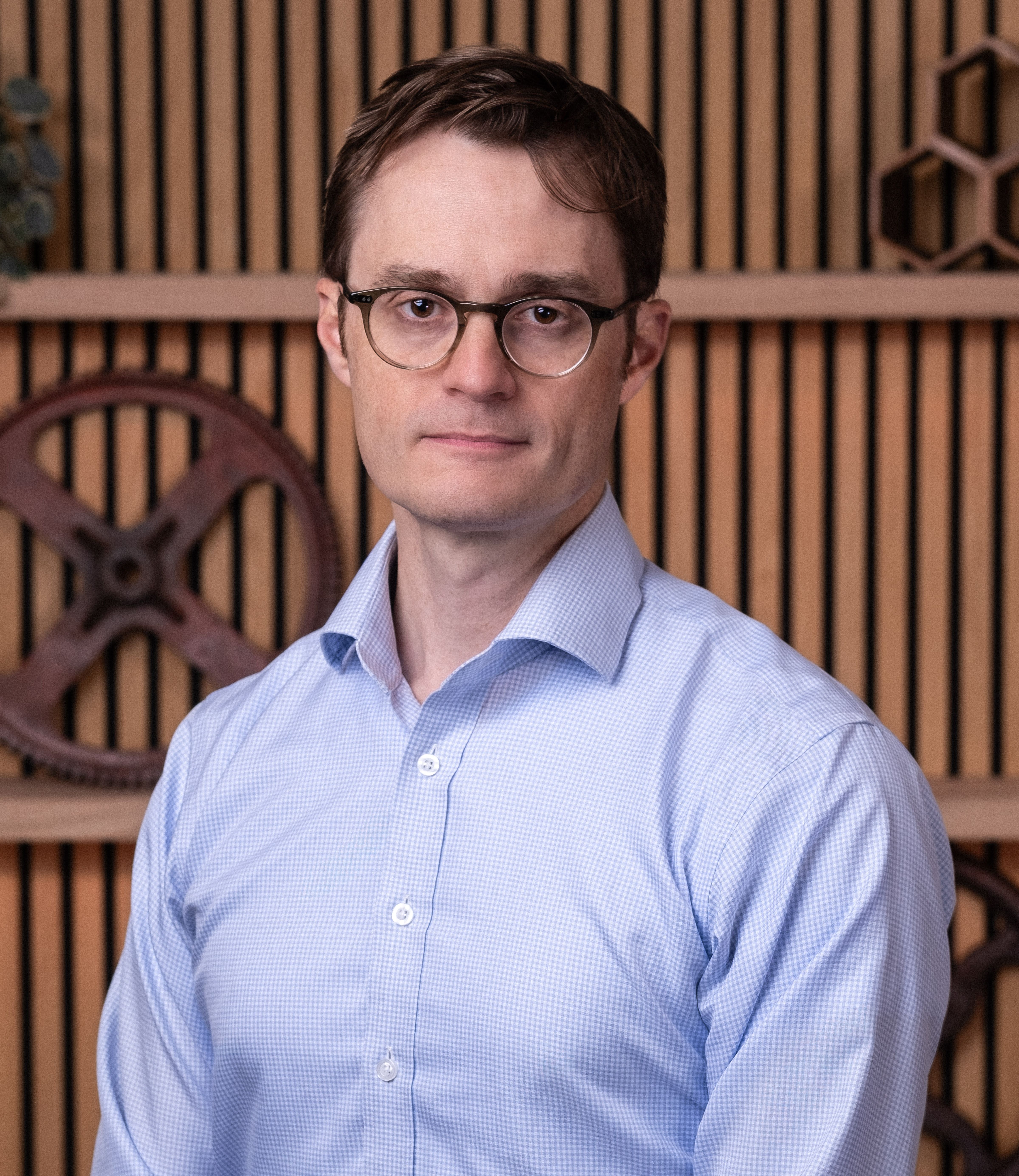
In this first episode, I host entrepreneur-turned-VC, Sunil Nagaraj of Bessemer Venture Partners. Sunil and I talk about how BVP decides to invest in your startup, what you may be getting wrong when you pitch to VC’s, and what you should expect from investors sitting on your board.
To find out about new episodes of this and other Heavybit podcasts, follow @heavybit on Twitter, and sign up for our newsletter for more great developer focused news, events, and announcements.
transcript
Sunil Nagaraj: A common mistake across the board for all companies when pitching is to not clearly explain what the company does in the first 15 seconds.
We do want to see a product that does something that is annoying to do otherwise.
As a board member, I would say we have two or three roles. First and foremost is not to get in the way of the company.
Tom Drummond: Hey everyone, my name's Tom Drummond. Welcome to Venture Confidential. This is a regular podcast featuring candid conversations with top VCs from Silicon Valley. On Venture Confidential, we dive into the fundraising landscape, offer insights on how VCs think about investment, and hear investors' perspectives on what great founders get right.
Venture Confidential is brought to you by Heavybit, a nine-month program for developer-facing startups. If you're interested in learning more about Heavybit, being a guest on this show, or you have a VC-related question, email me at vc@heavybit. com. In this first episode, I'm proud to host entrepreneur-turned-VC Sunil Nagaraj from Bessemer Venture Partners. Sunil and I talk about how Bessemer decides to invest in your startup, what you might be getting wrong when pitching VCs, as well as what you should expect from investors who sit on your board.
Inside Bessemer Venture Partners
Thanks for joining us. So today we've got Sunil Nagaraj from Bessemer Venture Partners joining us for a chat. Sunil, welcome.
Sunil: Hi Tom. Great to be here. Thanks for having me.
Tom: Yeah, pleasure. Do you want to tell us a little bit about Bessemer and the kinds of things that you guys do?
Sunil: Sure. So yes, I've been at Bessemer for four and a half years and Bessemer Venture Partners, we are a large global venture capital firm. We have a $1. 6 billion fund that we're investing out of. And I guess given or rather despite that size, we invest in a variety of companies across a variety of stages, anywhere from fifty thousand dollars to fifty million dollars, that the same team will evaluate opportunities and invest the right amount of capital for that business at that stage.
Around the world we have forty-five investors in offices like Menlo Park, California, in the San Francisco Bay Area, that's where I'm based, in Boston, New York, Israel and India. And we work together as a global team. We do our partnership meetings together so we can all help out all the different companies in our portfolio, which is fairly extensive.
I might venture a guess and say 90% of what we do is tech investing, and then we have a good chunk of investing in life sciences, healthcare investments, and then more recently we've started investing in space and space tech, which is another area I lead up for the firm.
Tom: Great. And what did you do before you joined Bessemer? How did you make the transition to Bessemer?
Sunil: Well, right before Bessemer I was an entrepreneur. I was running a five-person online dating company called Triangulate. We were based in Palo Alto, ran for about two and a half years with about a million dollars in seed financing from Trinity Ventures. And had a fun time doing that, learned a lot about dating.
Happy to go into what we did in our take on dating later in the interview if you have time. Prior to that, I spent some time in consulting and then as a programmer.
Tom: And how did you make the transition into Bessemer? Did you join as an associate or?
Sunil: Yeah, I joined as, we call it senior associate. I joined right out of shutting down my company, Triangulate. At the time when I was shutting my company down, I was trying to find my soon-to-be former employees new jobs.
And so I reached out to all my venture capital friends and asked them if their portfolio companies had openings. When I did that, one of my friends at Bessemer said, "No, we don't have openings for them, but we have an opening at Bessemer for you." And two days later, three days later had the offer and accepted very quickly.
Tom: Congratulations. Any advice for anyone else who wants to get into venture capital as a young entrepreneur or a young founder?
Sunil: So a lot about getting into venture capital is being in the right place at the right time. I think there's that famous quote about the harder I work, the luckier I get. And so there is some element of being in the right place at the right time, but there are definitely things you can do to improve the chances you're in the right place at the right time and how prepared you are.
So for anyone wanting to get into venture capital, I would say make sure that you know a particular domain really, really well from top to bottom. That might be developer tools, that might be software as a service, SaaS. To have some domain knowledge is really helpful.
Number two would be to have a really strong network of entrepreneurs and individuals in the space. And then number three would be to have some familiarity with how venture capital works, some of the deal terms.
That last one I think turns out to be the easiest. I mean I think with a couple of web resources you can figure that out. The domain expertise could take months or years to develop and that'll be the most valuable to evaluate investments, especially if you're doing early stage investing.
Tom: And what's your domain at Bessemer? What are the kinds of things that you're looking at for the fund?
Sunil: Yeah, at Bessemer I have, over time we change, just as the world changes. But at the moment I'm investing in three areas. First is developer tools, which is why I'm really happy to be here at Heavybit today. Number two is space and space tech investing that includes rockets and satellites and propulsion technologies. And then number three is security.
Developer Tools at Bessemer
Tom: Very cool. And so, can you give us some examples of recent deals that you've done in some of those areas?
Sunil: Yeah, absolutely. So I'll start with developer tools. In the developer tools area, Bessemer, we have a broad portfolio of developer tools investments. We love the area, that's why we're partnered with you here at Heavybit.
And our portfolio includes companies like Twilio, where we were the very first seed investors and have invested all along the way to their phenomenal rise, SendGrid, Nitrous.IO, CrowdFlower, Auth0, npm, Intercom, and a few others I'm probably forgetting along the way.
Tom: Yeah, no, I have to say you guys have one of the best portfolios of developer products and developer tools in the Valley, if not the world, right?
Sunil: Yeah. Well, we really are all in on this bet that developers are important people in the world because of changes in the broader ecosystem allow developers' impact to be felt anywhere in the world.
To be really precise, and I'm borrowing this from Jeff Lawson at Twilio, who's really a visionary here.
He says that code used to be something that was between a monitor and a keyboard. And now code is anywhere in the world.
So the code that sits on my phone allows me to hail a car because there's code in the car, there's code in my hand, there's enough sensors and actuators to make that whole experience possible. So developers, we're all in this idea that developers are really rewriting the world, the world is programmable. We also love several other things about developer businesses I'm happy to go into in a few minutes.
Tom: Yeah, I mean what kind of things are you looking for? I mean it's still, within that category, right, there's still a bunch of things to look at. I mean, how can you tell an interesting developer product from maybe one that's not quite as investable?
Sunil: Yeah, it's a good question. Well, I told you I was a developer earlier in my career and even at the online dating company Triangulate, did a lot of development and that was not too long ago, four or five years ago. And so that definitely informs how I initially react to a lot of developer tools, developer platforms.
The story behind two of the investments that I led at Bessemer, Nitrous. IO and Auth0. Nitrous.IO makes it possible to code in the cloud, removing a lot of the setup of your local machine that you need to do to start coding. Almost every startup I know of has a cheat sheet of here are the ten steps new developers need to perform in order to set up their machine.
And then it turns out when one dev on the team adds a new package to the repository, every other developer needs to keep up to date. And so by moving to the cloud, you remove a lot of the trouble of keeping machines up to date, you can also code on more powerful machines, you can also collaborate more easily.
These are pains that we felt directly at Triangulate, trying to keep our code stack up to date, because the development environment needs to roll forward along with the code itself. And so it's a little bit of a fallacy that you can version your code independent of the actual development stack.
The other investment that I led in the developer tool space is a company called Auth0. They're based in Seattle and they make it easy to outsource all of your login and identity functionality to the world's experts in authentication. In the same way that with Twilio, one line of code connects you to the telephony system and with Stripe one line of code connects you to payments. Here, one line of code connects you to a full industrial strength authorization system.
To be really precise, you don't need to make your own username password table, you don't need to worry about the 20 or 30 social logins, and potentially most complicated one, you don't need to worry about connecting to a customer's enterprise Active Directory server or LDAP server.
With one line of code, you get all that. And in addition, you get a full suite of custom rules like multi-factor authentication, which is a checkbox. So again, at Triangulate, we felt these pains directly in managing that and keeping it up to date.
Never mind the business decision maker, they're thinking about the risk of getting hacked. And so by having, again, the world's leaders in authentication doing your auth stack, you benefit from that as well.
Tom: Is that kind of part of your diligence process then, like going and actually using the developer product, like spinning up a machine and trying it out yourself?
Sunil: Yeah, I definitely try to now. It's not my day job coding anymore. So I like to rely a lot on a lot of experts.
So there's probably 15 people I'll ask about developer tools investments who are CTOs, who are engineers up and down the organization at different sized companies to get their sense of how they react to this. Both how they react to the initial pitch, how they react to the documentation, how they react to the interface, how stable it is, and luckily with developer tools, especially the current crop of developer tools, they're easy enough to onboard that we can ask somebody very quickly to see how they feel about the product.
So the diligence definitely involves a lot of experience with myself and having new people play with the product.
Tom: When do you kick off that diligence process, are you sending interesting developer tools, products, companies around to your network really early on or is it kind of once you get to the point where, how formal or how informal is that kind of diligence process for you?
Sunil: Part of the reason I enjoy investing in this world is that I do have a natural group of friends who are developers and so we'll always talk about this. There's one friend at Google, every time I see him, his first question isn't how are you doing or what's new. It's, "What are the latest DevTools companies you've seen?" He's just curious. He's always curious about what the latest stuff is.
And I think that's because built into the culture of development is the idea of code reuse and building on top of others' work. Isaac Newton talked about standing on the shoulders of giants and that's part of the ethos of being a developer. So everyone always wants to leverage the latest tool set. And so people quiz me and ask me about the latest dev tools I've met and I share them.
Whenever we're looking at a particular company and we're pretty deep into conversations, that's when I'll trigger my really serious requests to 10 or 15 people to ask them to play with the tool, evaluate it. And I value that tremendously.
Another signal that we look for, which is related, is something we call developer love. I wrote a blog post about this for Auth0 when we invested. The signal there was really developer love and by that I mean that developers talk, they talk a lot, and they talk in public forums.
It's a very meritocratic culture. And so we always want the best thing to win. And best is defined in really simple terms.
The best product. Not the cheapest, not the most expensive, not the one with the best financing. It's just actually the best developer tool.
And so the developer love that we seek is often manifested on Twitter and Stack Overflow and Hacker News, other forums where developers hang out and talk.
Tom: Is that something you try and kind of quantify, or is it really just more of a qualified judgment around, yeah, actually this seems to be something the developers love, or...
Sunil: You know, going and measuring how many tweets per... I guess if it were as simple as counting tweets, I probably wouldn't have a job for very long. So we don't just look at simple counts, but we do want to see a certain volume and enthusiasm in the developer community for a product.
One of the benefits of developer tools, which I alluded to earlier but didn't say explicitly, is that they usually have very low sales and marketing costs. And that's because the product and customer support garner such loyalty and enthusiasm around the product that sales and marketing can be very, very small at the very beginning.
And so if sales and marketing truly is small, then we should hear people shouting from megaphones about how wonderful the product is. And so it's not counting twenty or fifty tweets. It's just seeing a strong movement emerging around a particular product.
Community and Critical Mass
Tom: Is there some kind of critical mass you need in a community for it to be successful, do you think, or is that not something you worry about?
Sunil: Well, I'm very familiar with critical mass and network effects from running the online dating company. You need enough guys and you need enough gals in a particular geography to really get the site working.
Here with developer tools, it's not strictly the case that you need more than a couple folks using a product. In general, these developer tools have standalone value. You use Twilio because you want to send a text message or make a phone call from your app.
In terms of building the community, what a lot of developer tools companies can do in the beginning is fill in the hole by offering really good documentation and really good events and really good meetups that they sponsor themselves. And then very quickly they're jump-starting the community with their own dollars and their own efforts.
And hopefully very quickly a community emerges and grasps onto the tool and then it starts to do the work for the company because the tool is so useful and is so interesting to talk and meet up about.
Tom: But there's a point, right, where it goes from being something that your users love, your customers love, to something that's actually investable. Have you got, I don't know, rules of thumb or ways of thinking about, actually now this is a point where they could afford to take some money, or this is a point that there's enough traction and momentum, or are there enough indicators that it's worth placing a bet here?
Sunil: Well, because we invest even at the earliest of seed stages, with Nitrous.IO, I met the team before they built the product and then I met them again two months later after they built the first version and that's when I led their million dollar seed round with the five hundred thousand dollar check.
So in that case there were no concrete metrics that could even have had a chance to develop before we invested. I think in certain instances we really have a strong conviction that the idea and the product will be really useful from firsthand experience and also from surveying other developers.
In other instances, take Auth0, the product had been in market for six to nine months. They had garnered a set of users, they had garnered a set of key customers, they had a meaningful revenue at the time. And so in both, and with Auth0, we did a million dollars in their seed round.
So I won't say there's hard and fast rules. We do want to see a product that does something that is, with a lot of developer tools, something that's kind of annoying to do otherwise, something that developers don't want to do themselves, something that can easily be integrated into your stack. Something that has very simple pricing, often usage-based pricing, that starts off with pennies, pennies per action, and then has a lot of developer love around it.
But it's hard to say that there's a firm rule. I know as an entrepreneur it might be helpful to hear, "When I get to this X bar, this is the time to go talk to Sunil and Bessemer." But really we're interested in an area like developer tools where we've invested so much. And we think we can be helpful across stages, we'd love to hear about developer tools companies as soon as they emerge.
A Roadmap-Driven Firm
Tom: But I mean, it's a big partnership, right, Bessemer? And you having a kind of gut feeling about this being a great opportunity or a new product having a potential for great success is different from getting buy-in from the whole partnership to do the deal, right? I mean how do you communicate that kind of sense of excitement, or how do you get deals done at an organization or partnership where you're not necessarily presenting them with the hard facts around they've got twenty thousand registered developers or whatever?
Sunil: So at Bessemer, we are a roadmap-driven firm. And what that means is we pick an interesting area, spend weeks or months getting to learn everything we can about that area, and we build a roadmap, an investment roadmap, with a really strong thesis as to how we think that ecosystem will unfold and what areas will be valuable.
We've done that with developer tools. My colleague Ethan Kurzweil and I have put together this developer roadmap. And we circulate that within the firm in such a way that everyone across the firm, all 45-50 investors, all know why we like developer tools, what we're looking for, what we're trying to avoid.
And so when we bring a developer tools company into the partnership, everyone has the same framework in their mind and everyone has a prepared mind.
We've all been initiated into this area.
In the same way when we look at a healthcare investment, that's an area that I personally don't invest in, but I've heard our healthcare roadmap and I know the signals to look for. Now I wouldn't be very valuable on the board of a healthcare company, but I can at least chime in and help to weigh in and evaluate healthcare companies because I've been given that framework to use to evaluate them.
For Bessemer, that's one way we deal with it, is part of it is we advocate strongly for a deal. We try to pull in as many metrics and as many data points, whether those be tweets or whether those be customer quotes or pilots. And then the final piece is we try to make sure everybody understands the broader context of where this company is coming from and why it's in an interesting area.
Tom: Does that kind of process differ for folks who are doing the fifty thousand dollar checks or the super early things versus the guys who are doing Series B's and C's?
Sunil: No, the process is broadly speaking very similar. When we write a very small check, we can do that very quickly. But anytime we're writing a check, call it a million dollars or more, we have a fairly similar process of trying to gather as much information as we can from the company, trying to spend time evaluating the data, crunching the data, and understand what trends and patterns we can pull out of their internal metrics.
Looking at the external ecosystem for experts in the industry, potential users, the current customers, and trying to understand how everyone around and in the company perceives the company's product and the opportunity ahead. That was true for Nitrous. IO when we invested five hundred thousand, and that was true for much larger SaaS companies when we've invested tens of millions of dollars.
Tom: Yeah. Well, I think Bessemer, you guys have a reputation for being a fairly metrics-driven or quantified fund, particularly later on. What are the kinds of things that you're looking at or that are interesting?
Sunil: It's a good question. So I know so far I've painted a story of mostly investing in things that we love on a product basis. Whenever there are metrics, we're able to quickly evaluate them and determine if the financials and the usage metrics constitute a fit.
Some of the biggest metrics I would say have to do with general growth, growth of the active user base, growth of revenue. We love recurring revenue as that produces a more stable foundation for a business and is typically valued higher in the market. So we'd like to see MRR growth in the double digits. That's really attractive. We'd like to see user growth following a similar path.
We'd like to see the majority of traffic, if not all the traffic, coming organically through Hacker News and tweets and articles or documentation or helpful tools that have been put out to open source community that still funnel traffic back to the main developer tool.
And then we like to see, to the extent that there is revenue in the business, we'd like to see zero churn or, the only churn being that one of the customers went out of business. That'd be the optimal.
We also really like to see expansion revenue. And I'll clarify what I mean by that. So if you had a hundred customers last month, when I say no churn, I mean that you have a hundred customers this month.
When I say expansion, if those hundred customers generated $10,000 in monthly recurring revenue, this month I'd like to see those same hundred customers generating eleven thousand a month in monthly revenue. This is on top of any new customers you generated in that new month. So seeing those cohorts grow over time is really a core reason why we love developer tools.
And so we want to see minimal churn, expansion revenue, that drives what we call negative churn, which is to say that you're netting, you're taking your gross churn and then including the effects of downgrades and upgrades and then expansion.
And then beyond that, we look at the pipeline if a developer tool is going after larger accounts and they might actually have a sales organization, and we'll look at pipeline coverage versus the plan. There's a few other metrics, but those are the high-level ones.
Common Pitching Mistakes
Tom: Yeah. I'm guessing, obviously you're doing a lot of direct investing, but you're assessing companies when they come and pitch, but you're also helping them when they go out to fundraise. What are the kinds of mistakes you see when people go out and pitch developer products or developer tools? I mean, going and seeing ten founders building a new developer product, what are the top three things that they're getting wrong when they come and talk to you?
Sunil: I would say a common mistake across the board for all companies when pitching is to not clearly explain what the company does in the first 15 seconds.
I think VCs are just like everyone else and we have an attention span. And if we hear too long of a buildup, and often buildups are twenty, thirty minutes of here are the trends, here's what's going on, here are some numbers, but we don't get to what you do in really clear and simple terms, it gets very hard to follow the pitch.
So with Twilio, I think we could describe them as a communications platform for the next generation of telephony. And I think most people would get lost when they heard that. But if you say a developer who's building an app can write one line of code that will trigger a text message or a phone call, that's a very simple, straightforward explanation.
So I would make sure that a description in plain and simple, like dead simple terms, no jargon, no fancy words, is given in the first 15 seconds.
Number two, I would encourage entrepreneurs to very quickly mention the traction that they have because it colors the rest of the pitch. I think if I know that you started the company six months ago and haven't launched a product, it changes the way I evaluate the rest of the pitch. It doesn't mean that we're more or less likely to say yes or no.
But it does change the types of questions I'll ask for the next 30 or 45 minutes. And a lot of entrepreneurs wait until the last 10 minutes to talk about the traction and the current stage of the business.
The flip side of that is if you actually do have thousands of customers and meaningful revenue, I would bring that up in the first, again, in the first 20 or 30 seconds of the pitch. This isn't really about bragging about these metrics, the whole pitch should be sort of advocating for your company. It's really just about setting the stage for the rest of the discussion that you're going to have in the right tone.
Market Size and Returns
Tom: Cool. So these guys coming in to pitch, they have a bit of traction and they have a clear value prop. But some of the pushback they get from other investors maybe is that this is just not a big enough market, right? There aren't gonna be enough big exits in this space to go and deploy a lot of capital into it.
What's your kind of take on that? I mean how do you advise founders to think about that?
Sunil: Yeah, market size is a funny thing in venture capital. It's an area where upfront the founders and the entrepreneur VCs should clearly articulate one of two things. They're either going after an existing market or they're helping to create a new market.
And if you're going after an existing market it's often with a disruptive strategy and specifically it's a lower cost or more functionality. And in that world the market size matters a lot. But a lot of developer tools are actually going after newer markets, offering newer functionality.
So if you asked, I think in 2009, when we first invested in Twilio, how large is the market for developers interacting with the telephony system, it would be very, very small. And some VCs would stop the conversation there, some VCs would ignore that data point. And that's what I mean when you should bifurcate the set of investors you're talking to to those that are interested in this.
It doesn't mean one is smarter or less smart than the other. It's just that certain investors have different strategies.
So market size has to be decomposed. I mean just because it's a new market doesn't mean you can't put some effort, some analytical rigor towards that. You could talk about how many developers there are and a couple trends in the future that should mean they'll need telephony systems.
I mean there's clearly a reason you can articulate as to why you find this market is interesting. But it might be harder to attach real dollars to it or to pull up a Gartner report. I mean a lot of these indicators are lagging indicators that follow markets that have already developed. And if you're building a new cutting edge technology, then you won't be able to point to real dollars yet.
Tom: Do you think the returns distribution for companies in this space is different to other sectors? I mean do you think we're gonna see, are they going to be as heavily skewed towards a few unicorns or are they gonna be flatter and more spread out, do you think there's a difference to products in this space than others?
Sunil: Yeah, it's a really good question. I'll say that network effects and a winner-take-all dynamic is what often drives massive quick outcomes. When it's clear that everyone is on Facebook because everyone else is on Facebook and all of my content is on Facebook so I'm sticking with Facebook, then very quickly the leader gets accelerating returns and can move more quickly.
With Stack Overflow, when that's the site that pulled ahead early on, it then accelerates the gap it puts between it and the next best place to go for answering your programming questions. So in those instances, whenever you have that winner-take-all dynamic, I think there is the potential for a unicorn.
My sense is that a lot of developer tools don't have that winner-take-all dynamic as clearly as web-based social networks that users interact with directly.
I think instead when you take a company like Twilio or a company like Auth0 that are doing work behind the scenes, instead, what happens is as the company gets larger and is more successful, they're able to negotiate better contracts.
So with Twilio, they're negotiating with the underlying telephone system. They're also able to include more user input, maybe user-submitted rules into the product. And so there is an advantage to being bigger. This is just sort of whether there's scale advantage, is another way of describing this whole topic.
And with developer tools, there are some scale advantages, but I might say that they don't follow the same exponential curve that follows with a lot of consumer internet businesses. So I think the returns curve, it'll be very attractive. We've seen that with several companies already, but I don't think that you'll see companies sort of start and then sell for a billion dollars within two, three years like you might with the consumer internet side.
Tom: Well, I mean I don't know, GitHub go out and raise a hundred million dollars at a billion dollar valuation.
Sunil: That's a good point. GitHub falls into the same category as Stack Overflow. I mean, in many ways it is a central social network where there is communication and the more people that are on it, the more valuable it gets.
But other developer tools like many of the ones at Heavybit, many of the ones in our portfolio, aren't sort of web-based interfaces where communications happen. They're sort of behind-the-scenes tools that are really valuable and scale with your stack. But you're not interacting with them face to face and using them to collaborate with others.
Tom: Do you think that means that they need to raise less money?
Sunil: I think there's probably a logical argument that if you're building a business that can grow really quickly and has a winner-take-all dynamic, you should raise money and run to go into the early lead because the early lead means the final lead.
And in a lot of other developer businesses an early lead may not be the final lead. Innovation and sort of smart marketing can continue to change who's at the lead. So yeah, I think you might have a good point.
I think maybe more predictable standard fundraising path of thoughtful capital infusions at major milestones in the company would be more appropriate. And I don't think amassing a war chest is really going to be as valuable for a developer tools company at this point in time at least.
Tom: What's the biggest investment in the space that you guys have made or the biggest check that you've written?
Sunil: The largest is actually funny because it was also a company we were the very first check into. So Twilio, which we've talked about a lot during today's conversation, two years ago we co-led their Series D and the round size was 70 million dollars.
Since then they have raised a Series E and I think that amount was just over a hundred million dollars. It was a hundred and thirty million dollars Series E in the company. And at this point, Twilio knows exactly how to spend that money to continue its growth and is investing that in product development, but also in sales and marketing to win more developers and also win larger organizations.
Sitting on the Board
Tom: Are you sitting on boards? Are you taking board seats for Bessemer with some of these companies?
Sunil: Yes, I am. I'm currently on the board of Auth0 and Nitrous.IO.
Tom: And what are the big things for you as a kind of board member that you want to make sure the company's doing or you're trying to take care of as a board member?
Sunil: So as a board member, I would say we have two or three roles. First and foremost is not to get in the way of the company. We invest in the company because we believe in the team and want to make sure that they... and remove as many obstacles for them as possible, but the last thing we ever want to do is create problems in the company from our involvement.
Number two is to help with a couple of key areas, specifically recruiting, fundraising, thinking about broad strategy, whenever we're asked to, thinking about product strategy.
And then the third area is general board governance, which includes thinking about if we're complying with the right process around options and hiring people, and at the end of the day as a board member we're tasked with providing governance for the CEO. CEO doesn't have a boss except for the board technically, and often the CEO is part of the board, but this is just standard governance.
Tom: If one of your existing portfolio companies is going out to go and raise money, how do you guys as a board get involved?
Sunil: I would say we get very involved. One of the things that VCs know best is how VCs think. And so we can very quickly assess how this is going to be perceived in the marketplace and how to pitch the idea, who to talk to first, how to sort of align meetings to garner the most interest and increase the chances of an exciting fundraise.
So we will make introductions to other VCs, we will help to evaluate afterwards how the feedback went. And then the board absolutely approves any fundraising. Before signing any term sheets, we're critically involved in evaluating and negotiating term sheets as well.
Tom: And it's a bit of a tough challenge, right? 'Cause you guys are insiders, obviously, you wanna make sure that if you're gonna deploy a lot of capital into the company that you can do so at a good price, but at the same time, you wanna increase the valuation because you're existing shareholders, right? I mean, how do you think about being both sides of the fence?
Sunil: Yeah. One of the nice things about being an insider in a company and doing your pro rata, and should I go into what a pro rata is?
Tom: Yeah, sure. Yeah, that'd be great.
Sunil: Sure. So if we invested in your next company, Tom, and we invested ten million dollars, we said your company is worth twenty million dollars and we'll invest five million dollars. So we'd invested five on a twenty million pre-money, or five out of twenty-five million post-money. So the whole pie was worth twenty-five million.
Our five million dollars from Bessemer buys twenty percent of the company. That was at the Series A, which happened a year ago.
Today you're going out to raise, and you're hoping to raise ten on sixty? Ten on sixty. Well, let's try that.
Ten on sixty. Oh, ten on fifty is probably easier, right? Yeah, let's do ten on fifty.
So you're hoping to raise 10 on 50. Well, just a second ago I said we own twenty percent of the company. And so if you're raising twenty million dollars, our pro rata is twenty percent of the new capital, twenty percent of ten million dollars. So if we invest two million dollars in the company, 2 million of the $10 million round, then when the round is complete, we'll own the same percentage that we owned before.
So I'll repeat that again so it's a little more clear. We bought twenty percent last time. If we take twenty percent of the new money, we'll have twenty percent of the company after this new Series B. It's important I include the caveat, we're ignoring option pools, but let's leave that out for a moment.
So if we do pro rata, if we do the two million dollars of the ten million dollar round, the nice thing that I was referring to is that we're completely valuation neutral. We don't care if the valuation is low or high. I mean there's other reasons we care, but in terms of buying up ownership or lowering our cost basis, it's actually identical, whether the valuation is a billion or valuation is 40 million.
The effect of stepping up our Series A shares is perfectly counterbalanced by the higher price we'll have to pay for Series B shares. And so generally with companies we're supportive of, we do pro rata, that removes a lot of the signaling risk and issues, and it also means that we're valuation neutral. So in many ways we can just be as helpful as possible without having to worry about our own internal valuation benchmarks or metrics for the firm.
Big Rounds and Secondaries
Tom: There's been some interesting research recently by Danielle Morrill over at Mattermark and the folks over at CB Insights that are showing how the amount of money raised that a Series A and Series B is really exploding. How do you think about those big rounds where people are investing twenty million dollars plus into a Series A?
Sunil: It's a good question. At Bessemer we're trying to be very disciplined about price and metrics and fundamentals, and we try to hold that through any market cycles, through any ups or downs.
So even as valuations increase, we are still trying to maintain a good amount of discipline, and that involves passing on deals whenever valuation is too high. Whenever we think we're overcapitalizing a business, then we'll also pass.
So we've adopted the strategy, and I think we're still paying higher prices than we were five years ago, but we'd like to think we're not getting caught up in the hysteria, and at some point when prices fall again, then we'll find it a more attractive time to invest.
Tom: Do you think it is a bit hysterical, some of the pricing these days? I mean, do you think we're in a bubble?
Sunil: I think there is definitely a troubling line of thinking that is a little too pervasive, and that is that a few companies make up all the returns, and so you should do whatever you need to do to get into those companies.
I think that may or may not be true. I'm not actually talking about whether or not that's true. I'm talking about the impact, the effect of everyone believing that statement and everyone acting on that is that everyone bids up every exciting deal.
That has the effect of potentially overcapitalizing a business, that has the effect of setting a price of companies very early on that removes different exit strategies. It also has the effect of the billion dollar club and unicorns and sort of comparing yourself based on how many billions your company's valued at. So it has a lot of negative effects that come from that.
Tom: As companies raise more money, the values at which they can exit just get bigger and bigger. And so the time it takes to get to those exit opportunities gets longer and longer.
We've heard more and more founders are taking money off the table early to maybe guard against the fact that they know that they're in it for seven or eight, nine years and they won't see that return themselves. Is Bessemer a firm that would consider a secondary or is that kind of out of the question?
Sunil: So when you talk about secondaries, and by that I think you mean when we invest money into a company, but the money doesn't end up in the company's bank account. Rather it goes to someone else, to another owner of the company that cashes out.
So that'd be the colloquial way to say it, is sort of, is it okay when founders cash out early? Yeah. And by that, they may have owned eighty percent of the company and they sell a little bit and now they own seventy-eight percent of the company, but they have a few thousand or a few hundred thousand dollars with them to remove the pressure.
I think that there's a, you know, I'm a former founder myself. I think that's a compelling reason. For every story of a compelling reason, there's probably a story of abuse behind that too.
There's tremendous signaling value at every financing. I mentioned us going pro rata earlier, but if someone asks Bessemer, "Hey, are you gonna invest? Are you gonna invest a lot or lower?" People read into that. In the same way if the CEO of a company who's out there saying, "Look at my amazing company, please invest," also in the same breath says, "Well, I want to sell some of my shares right now," it creates a weird signal, namely because the CEO should think that his or her shares are worth more, and selling right now would be a shame.
So I understand both sides of the argument. We have done many financings where there's been secondary. We've done, I'd say the majority, there's not secondary selling. And so I think it's really a case-by-case basis, but we're not categorically opposed to it.
Tom: So is it kind of come down to whether the founder wants to buy a yacht or he wants to buy a crib?
Sunil: I'd like to say that the underlying use of cash isn't communicated in board meetings, but often it is. It's more like very practical. I mean at the end of the day around the boardroom table, these are humans with feelings and emotions and lives to live.
And everyone understands, hey, if the CEO has been making fifty percent of market salary for three years, those debts have been accumulating. At some point they need some cash to, you know, and that'll be the extent of the explanation.
And provided we can still make a financing happen without too much trouble, in the past we have done that. We've acknowledged and accepted doing secondary in that situation.
Coding in the Cloud
Tom: Yeah, yeah. I was talking to another entrepreneur this morning about development environments and we agreed that we're waiting to see a company that comes up with the slogan, "Death to the development environment."
The premise being that you shouldn't really have a separate development environment. You should have a production environment that you have a copy of on your desktop or you have a copy of in a local area. But the development environment, this idea that you have separate settings for those environments, is just kind of detrimental to the overall ability to deliver software.
I mean you've obviously made an investment in a coding environment, an online environment for developers, Nitrous. What are the things that are interesting for you in that investment?
Sunil: Yeah, Tom, I fully agree with that idea. I think the idea that your development environment and production environment are different, the antonym of that is dev/prod parity, and that's a phrase used a lot, is a great idea.
Ideally you're coding and when you finish your code and check it in and push it to production, it is guaranteed to work because you're coding in an environment that was identical to the development environment. At Nitrous, we're full supporters of that and we're working towards that vision.
I'd say that the core of Nitrous is to move coding to the cloud. And one of the best ways I can describe that is that there's a great irony that developers are building a lot of services and tools that move the rest of the world into the cloud. Take Evernote. Instead of using Notepad you use a cloud-based editor like Evernote, or take Salesforce: instead of using a CRM that's on your local machine, you move it to the cloud.
But ironically, developers themselves are chained to their desktops. It's this very strange thing.
And the reasons for that have actually been pretty weak to date. And I think they're very much surmountable and we're seeing that with our, at Nitrous we have 250,000 registered developers. These developers are all part of this movement and are all supportive.
And I think some of the things that have held it back in the past are the robustness of the internet connection, you don't want any latency. You want to have control, your key bindings in your favorite text editor, Emacs or Sublime, you want to replicate those, and we're working through every single one of those issues to move coding to the cloud.
Because once you do that, you get all the cloud benefits. You get redundancy, you get stability, you get collaboration benefits, you get backups, you can roll your coding environment forwards and backwards more easily.
You get experimentation benefits. If I'm on PHP five and I want to try PHP six, I can do that. I can clone my box in ten seconds, try PHP six for five minutes and throw it away. Now that would be unheard of on a local machine.
So we think there's even more unexplored features, unanticipated features coming out of this with Nitrous. So we're really excited about this coding in the cloud. The movement is still early. I think we still have work to do on making this environment as industrial strength as possible.
And so I think two months ago we announced the launch of Nitrous Pro. And so this is a cloud-based development environment where you can do every single thing you can do on your local machine. In the past we were using VMs that didn't allow root access, for example, in order to make the cloud instance more stable, and we realized, no, we have to give people root access.
We've done a lot of learning over the last two years, and you'll see over the next few months a really robust product that development teams can use as their primary development environment.
Tom: All right. Well listen, I think that's all we've got time for this afternoon, but thank you Sunil for coming and it's been really interesting chatting to you. If people want to get in touch, what's the best way to reach you?
Sunil: Well, Tom, first of all, thanks for having me. I appreciate it. It's always fun to come to Heavybit, the ground zero for the developer tools movement, which I love.
I always make myself available for entrepreneurs, especially those building developer tools companies. Best place to reach me is by email. It's my first name, Sunil, S-U-N-I-L, at BVP, Boy Victor Paul, BVP. com. So please reach out if you have a business or if I can help with your developer tools company.
Tom: Fantastic. Well, thank you very much.
Sunil: Thanks, Tom.
Tom: Cheers.
Thanks for listening to this episode of Venture Confidential, brought to you by Heavybit. To learn more about Heavybit, visit heavybit. com and while you're there, check out our library, home to great educational talks from top investors, entrepreneurs and other industry leaders.
Subscribe to Heavybit Updates
You don’t have to build on your own. We help you stay ahead with the hottest resources, latest product updates, and top job opportunities from the community. Don’t miss out—subscribe now.
Content from the Library
Generationship Ep. #57, Attention is Currency with Navneet Kaur
On episode 57 of Generationship, Rachel Chalmers sits down with Navneet Kaur, founder of FemTech India and TechThrive Ventures. Together they explore why women's health innovation must extend beyond Western markets, how AI is reshaping femtech, and what founders need to understand about trust, culture, and personalization when building global healthcare companies.
Generationship Ep. #55, Faster Hypothesis Disproving with Sunil Dhaliwal
On episode 55 of Generationship, Rachel Chalmers sits down with Sunil Dhaliwal to explore how AI is reshaping developer infrastructure, venture investing, and computational biology. Sunil reflects on building Amplify Partners during the rise of cloud computing, why the best technical founders “live the problem,” and where he sees the next generation of AI tooling emerging. The conversation also dives into personalized medicine, AI infrastructure consolidation, and what remains fundamentally human about investing.
Generationship Ep. #23, Do One Thing Well with Timothy Chen of Essence VC
In episode 23 of Generationship, Rachel Chalmers welcomes Timothy Chen, managing partner at Essence VC, for a deep dive into the startup ecosystem. Timothy discusses the challenges founders face when raising capital and why traditional VC support often falls short. He also explores the importance of culture in startup success, the overhype surrounding AI, and his philosophy of working closely with founders to guide them through critical early stages.