Navigating Markets in Open Source As Your Startup Matures

What to Consider About Market Forces in Open Source
Why is Heavybit posting this extensive interview about how to navigate market forces like licenses, competition against massive publishers, and how to cross the chasm to sell not just to early adopters, but to broader enterprise customers? Open source, while still a vibrant space, has seen increasing friction as the commercial interests of open-source startups clash with foundations, communities, and massive vendors that don’t contribute upstream.
Does the conflict mean that founders must avoid open source entirely? Not necessarily, but there are definitely emerging factors to consider. CloseFactor founder and Redis’ former VP of Product Marketing Leena Joshi explains:
- Open Source Innovation vs. Massive Publishers: Aside from building empires on other people’s software, big publishers will try to push suites over best-in-breed
- How Licenses and Transparency Can Help With Defensibility: Licenses aren’t an all-encompassing defense, but they, and building massive loyalty with developers/users, can help
- The Opportunity for Open Source Going Forward: Right-size your expectations for an open-source project and your motivations for it. Are you going open source so that the community can contribute and drive the project forward? Do you want to eventually create an ecosystem, solve customer pain, and monetize?
- Distribution and Defensibility Through Go-to-Market: How to get distribution in a world where massive cloud vendors may already own most of your customers’ stack
- Do This: Avoid Rug Pulls With Licenses, Community, and Tech Stack: Avoid the trauma of sudden rug-pull license changes with deliberate research
- Do This: Cross the Chasm by Researching the Pain: One of the most effective sales tools can be helping prospects visualize the pain of a world without you
- Do This: Cross the Chasm by Discovering the Priorities: Selling into enterprises becomes easier when you understand the goals of executive decision-makers
Open Source Innovation vs. Massive Publishers
The founder doesn’t mince words about the challenges of using all-encompassing software “suites” from major publishers. “In terms of closed-source technologies that we use, I can see the difference between running open source ourselves versus buying closed-source from a vendor. In the case of these large software suites, some of them leave a lot to be desired.”
“At CloseFactor, we ended up using a lot of open-source software in combination with closed source. The challenge is that if you use some of the applications in a suite, these massive publishers have an opportunity to shove the rest of their platform of technologies down your company’s throat, rather than letting you choose best-in-class products. And quite frankly, I think that can be painful.”
The founder suggests that in some cases, massive vendors can also make measures like license changes in open source necessary. “For Redis, the dual license was something that made a lot of sense. This topic, where massive cloud providers that only minimally contributed to the community but made runaway profits from it, has come up before.”
“The lip service paid by the big vendors and the airtime they can command because of their distribution muscle make it an unfair fight, really. The years and years spent by open source founders and the community on innovating for the public good is at risk of being appropriated because of their giant market presence.”
“How is the community impacted by the massive publishers? Let’s be clear. The publishers have their own agenda: Keep customers on their platforms for longer and with greater lock-in. In the long run, this hurts customers–they pay through the nose, have less choice and have less control over their destiny.”

More Open-Source Resources:
- Article: How to Think About Positioning in Open Source with Emily Omier
- Article: Understanding Business Models & Defensibility with Adam Jacob
- Article: The Power User's Guide to Open-Source Licenses
- Article: How to Successfully Fork an Open-Source Project
- Article: What Success Looks Like for Modern Open-Source Software Startups
- Article: Understanding Legal Issues for Open Source Software Start-ups
- Video Archive: DevGuild Open Source Covers GTM, Security, Licensing, and More
How Licenses and Transparency Can Help With Defensibility
Joshi suggests that licensing choices, along with high visibility and transparency of project assets, can be a difference-maker for open-source projects. “I think the MongoDB model is a great case study. Before pivoting to the SSPL, they started with the AGPL license, such that even now, another vendor can’t call a similar product ‘MongoDB.’”
“I feel like MongoDB definitely set the standard in terms of what you can achieve as an open-source project. They did so many things right in terms of getting developers on board the platform, making sure client libraries were available in every single language, making sure documentation was available, and making sure learning resources were available.”
“They really cater to the developer community. And if an open-source founder came to me looking for advice, I would advise them to look at what MongoDB did.”
The Opportunity for Open Source Going Forward
Does the increased commercial pressure from competitors mean that open source will be a tougher market over time? Joshi offers, “There are two angles to this. One is your motivation as a founder. The second is what the overall market and tech stack look like.”
“As a founder, what’s your personal motivation? Is it to get the technology to the maximum number of people to build a community, and have a lot of people contributing to that community because that your software solves a very specific pain? And then, eventually, are you going to monetize it? Which means, by the way, that as you’re doing those first two tasks of getting technology out there and building a community–you’re making no money.”
“Well, that's still great! You're solving somebody's problem. People are happy to use a resource without paying a dime. And actually, they’re happy to contribute to the community if doing so does lead to solving their pain. But if you’d like to eventually monetize your product, you would want to ensure you selected a license that has the flexibility to let you monetize it.”
Distribution and Defensibility Through Go-to-Market
Secondly, the founder advises researching the tech stack your prospects are using to build–which can illuminate what opportunities exist for open source. “From my early days at Splunk, I will say that we were hugely popular as a company, and one of the reasons was our freemium model. (A lot of people thought we were open source at the time!)”
“While Splunk had a distribution advantage because of the freemium model, over time, as more and more entrants adopted that model, the tide turned and we realized that the only other way to get that kind of distribution was through open source.”
During the last decade, SaaS as a delivery model also became commonplace, and in this new world, if you wanted to build a wide distribution of users that were clamoring for your product, especially one catering to developers, then you would have to go the open-source route or build a freemium service.”
“Is this true now? It depends on what you're trying to accomplish. If you're trying to be part of the software infrastructure of a whole bunch of enterprises, you have to take a step back and think about how you play in this new world where the cloud vendors are already controlling a huge chunk of people's tech stack. And you have to think about how you get that kind of distribution–the kind that cloud vendors already have.”
“But if you are a founder who wants your project to sustain itself, and not fall into the hands of a major vendor, then you need to think about what your go-to-market channels look like. For example, you could seek a partnership with some of the incumbent ‘big vendors,’ or build your open-source project to be multi-cloud in some way, so that one cloud vendor cannot just ‘own’ your project.”
Joshi notes that some market changes may be for the better. “New and radical shifts in market direction present an opportunity for open-source founders. As the world adapts to the promise of generative AI, likely there will be a rebuilding or reassembly of applications to incorporate these new AI components, many of which are open source.”
“In a world where the big LLMs with public data are already well established, the opportunity for smaller players is around open-source LLMs, internal enterprise data, and weights and training, which can be a differentiator and provide unique grounding for genAI applications. In other words, change presents an opportunity.”
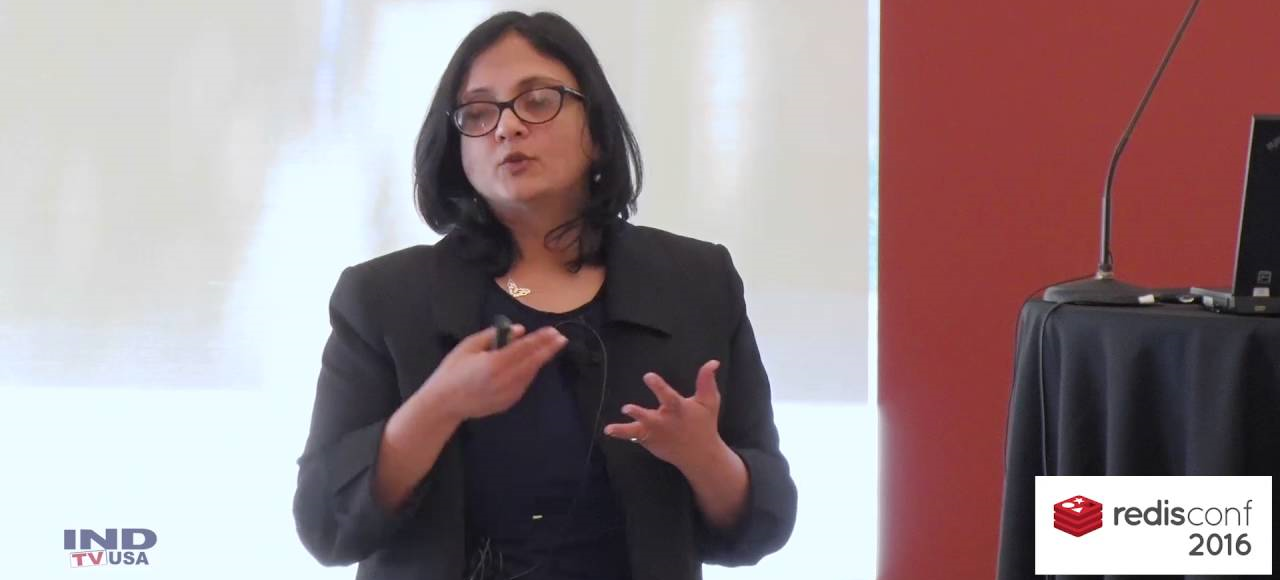
Leena Joshi discusses Redis' enterprise product roadmap at the RedisConf event. Image courtesy Redis
Do This: Avoid Rug Pulls With Licenses, Community, and Tech Stack
Joshi cautions founders to not underestimate the immediate pain and ongoing breach of trust that sudden license changes can cause. “Building an open source project and driving widespread community adoption is hard. I heard a talk by Armon Dadgar of HashiCorp talking about building a community for his company–that steady drumbeat to developers to motivate adoption for his company’s open-source products. For the first 10 years, he practically lived on a plane.”
“If you're going to put in that level of work to drive that kind of adoption, then you want to think through ahead of time what kind of community you're building, and you absolutely want to pick the right license that allows both for the community to contribute, but also prevents that the big vendors from just running away with everything.”
Do This: Cross the Chasm by Researching the Pain
For maturing startups, the founder frequently finds a struggle to promote deeper, land-and-expand-style adoption within organizations. “Very often, startups based on open-source software face challenges with the ‘growing up to enterprise customers’ bit. They go from having traction with individual developers, but can’t find the right constituents within those companies to get the enterprise deals they need.”
“If a senior decision-maker at the company where those developers work were to sign a deal–who would that person be? How would you get that deal? One thing to keep track of is to know what makes those accounts special–understanding why they're using your product, and not something else.”
“I’ve been in sales conversations where I’ve found it was critical to highlight the pain that somebody would have to go through without you. One thing that I learned in my own startup was, as you're selling, you’ve got to drag your customer through the glass. You show them how, if you’re not there, they're going to have to do these very painful things with some other software, or build it themselves, taking time away from high-priority goals.”
“Being able to explain how people won't meet their goals without you requires a very keen understanding of the customer pain you're solving. The second thing is to be very clear about whether the customer will pay money to solve this pain.”
Do This: Cross the Chasm by Discovering the Priorities
“When you try to sell into these organizations, it is critical for the salespeople to understand the pain (and whether they're about to pay money to solve the pain), and also: What is the top-level organizational objective that they're looking to solve?”
“That’s potentially the difference between having a handful of developers who are happy to pay for a few individual licenses and potentially landing an enterprise deal. When you can uncover the organization’s larger goals, you can start making more of a case to executive decision-makers that you do more than just make a few engineers happy.”
“You can show how you’ll help the entire company break into that new vertical or expand into that new market. It becomes easier to have a value conversation with the right people in the context of the enterprise’s larger objectives.”
Content from the Library
How to Make Agents Durable for Concurrent Systems
How Can Agents Be the Future if They’re not Reliable? Some reports suggest that as many as 25% of enterprises have adopted...
What if the AI Harness Was Your Computer?
Giving AI Data Ownership Back to Users Researchers have warned for years: Frontier models are potentially running out of data to...
How to Think About Positioning for Open Source
Positioning Open Source for Your Community (and Yourself) Why is Heavybit posting this extensive interview on thinking through...