Ep. #58, Quantum Uncertainty with Anastasia Marchenkova

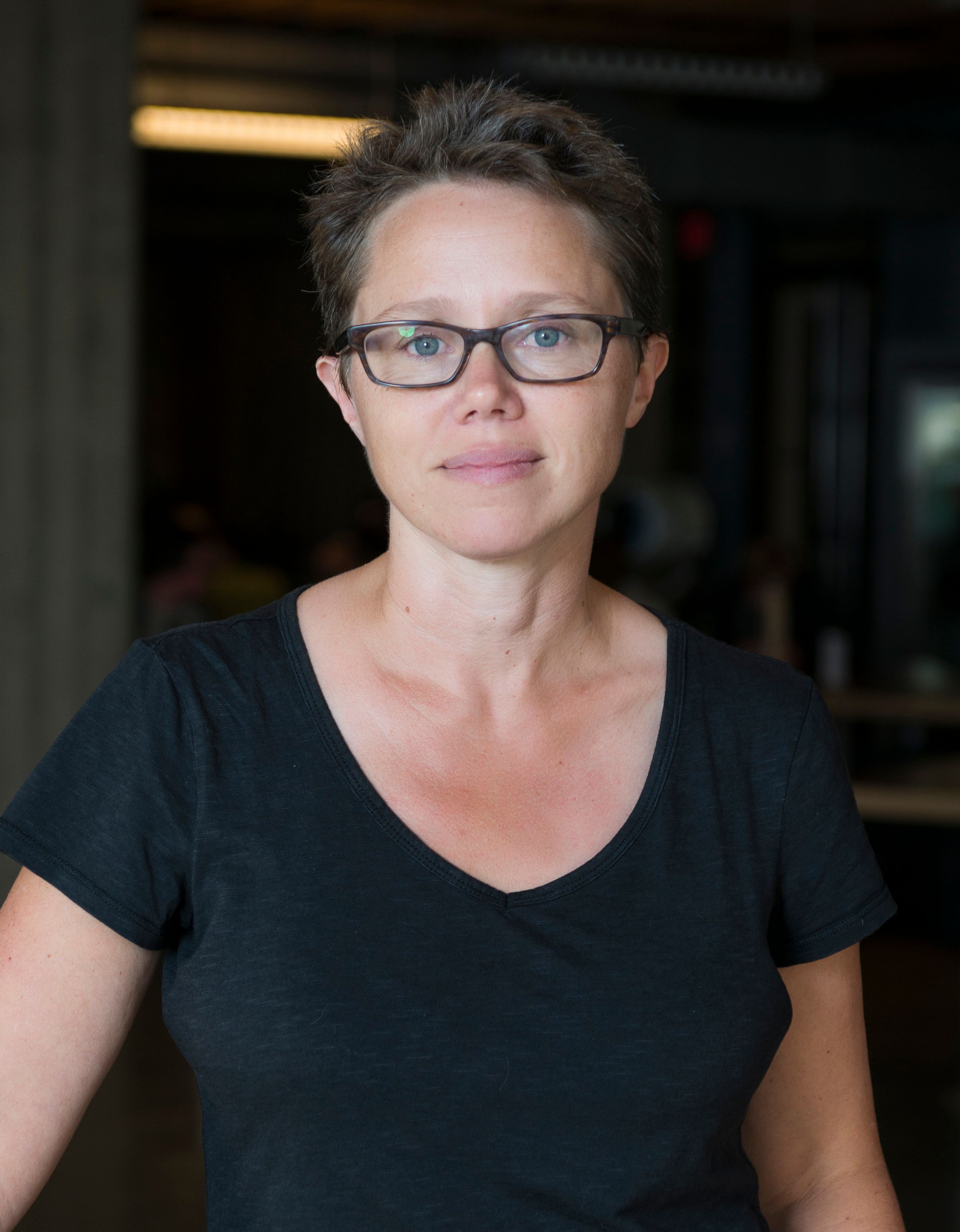
On episode 58 of Generationship, Rachel Chalmers sits down with Anastasia Marchenkova. They explore what it will take to move quantum computing from promising hardware to useful, production-ready systems, including better orchestration across quantum, classical, and AI compute. Anastasia also discusses open-source infrastructure, the limits of AI automation, and her larger vision of making powerful computing and scientific tools more broadly accessible.
Anastasia Marchenkova is a quantum physicist, three-time founder, and deep-tech investor with more than 15 years of experience in quantum computing. She is the co-founder of Marqov, an open-source orchestration platform for hybrid quantum-classical compute, and serves as vice chair of the IEEE Quantum Computing Standards Project while also investing through Strange Quark Capital and leading One Quark Media.
transcript
Rachel Chalmers: Today, I am so happy to have Anastasia Marchenkova on the show. Anastasia is a quantum physicist, three-time founder and deep tech investor with over 15 years in quantum computing. She began her career as a researcher at Georgia Tech's Quantum Optics and Telecommunications lab, then joined University of Maryland's Joint Quantum Institute, Lawrence Berkeley National Laboratory, and Bleximo, where she built application-specific superconducting quantum processors.
Today, she's the vice chair of the IEEE Quantum Computing Standards Project, defining global frameworks for quantum technologies, and works with Giga Global, a UNICEF ITU initiative to connect schools worldwide to the internet. She invests in deep tech founders through Strange Quark Capital and helps deep tech companies build credibility and investor traction through One Quark Media. Her newest company, Marqov.ai, is building the open source orchestration standard for quantum classical hybrid compute.
Marqov's suite of tools solves the complexity and cost of running hybrid workloads with an AI agent in development to assist HPC teams and computational researchers. She's spoken at South by Southwest, RSA, and the Quantum Innovation Summit in Dubai, and reaches over 160,000 followers across YouTube, LinkedIn, Instagram, and TikTok. Anastasia was recently named one of the top 40 Silicon Valley influencers. Welcome to the show.
Anastasia Marchenkova: Thanks so much. Thanks for having me. It's kind of a crazy background, but I'm so excited to be on the show and talk about Marqov and quantum computing in general.
Rachel: Yeah, seriously, when do you sleep? You've spent 15 years as a researcher, investor, now you're founding again. What does the researcher in you see about quantum classical orchestration that the market is still missing?
Anastasia: There's a lot, right? So quantum has been in such a journey. So when I got into the space, I say quantum wasn't cool back in the day. It was 2009.
I was doing quantum optics, quantum telecom, which is a backbone of quantum networks these days. But it was really funded by only the government. Pretty much you get NSF grants, you work with those bodies to do pure research.
And then about in 2014, everything kind of shifted over to this new model. Venture capital started getting into the play. Private industry started seeing that there's really interesting things going on and realizing they'd have to get into the space.
What has been interesting in the last few years is there's the economics side of it, which is companies are going public in the markets and being pure play quantum computing companies, even though it's still very early, right? But what we're seeing in that is that quantum is such a mind shift in how you work with things.
And I remember in undergrad, I'm going into my first quantum 101 class, and they go, so you know everything you've learned in classical mechanics? Forget all of that completely, and now we're going to go on to this. And it kind of feels like that way, right?
Quantum can be so powerful, but the idea that we have to have this entire workforce of people that have to have PhDs in physics, that's just not going to be feasible for quantum computing to actually get to quantum advantage and feasibility. So in the last few years, there's been a lot of upgrades on the hardware side. We're seeing very cool advances in logical qubits. But now the question is, how do we actually get advantage out of that?
And in the last few years, what we've seen, it used to be really cheap to throw compute at problems, right? So I also spent a few years as a performance engineer. So there were four people in this company, a data analytics company. And I called it, it was just like the SWAT team for the CTO, where the CTO would be like, This math is running slow. Go figure out how to fix it.
And that could be memory leak problems. That could be the databases. It's not being stored very efficiently. There's new compression stuff that we wrote, which is very like Silicon Valley TV show. But we were going all the way down to the chip level.
Now, not every company needed this, right? You spin up an instance on Vercel. You throw up another instance, fine, whatever. But the companies that needed it really needed it. And this was back in 2018 kind of times.
And now we're seeing the shift is, everyone needs more compute, especially in AI. And the prices are going up as well. So I wrote a paper last year solving the compute crisis with physics-based ASICs. So proposing a new type of chip saying, how do we democratize AI?
And I truly believe quantum is going to be one of those things. There's a lot of things going on in the supercomputing centers. So if you look at the stats there, I think it's in the US, 60% of the compute going on at supercomputer centers and national labs is going to quantum chemistry calculations.
So there's one problem taking up all this space. Now, how do we make that more efficient? Maybe it's quantum, maybe it's TPUs, maybe it's GPUs. But the problem is that energy efficiency is such a core here. And my background within the quantum and the efficient compute kind of all came together.
And I'm like, the only way we're going to squeeze out quantum advantage is to be very efficient this way. You can't just throw more qubits. You can't throw more chips at the problem. You have to go to the other layer, the bare metal layer.
Rachel: You have this great bullshit test for quantum claims. So apply it to Marqov. What needs to be true for this company to work? And what's still a physics problem versus an engineering one?
Anastasia: One of the reasons I started Marqov was I just wanted something that would be an engineering problem in some ways and not a physics problem. I wasn't really solving Nobel Prize issues at the time. But my bullshit test is really, how many Nobel Prizes do you need to make this work, right? And what needs to be true, right? We have a lot of theories there.
And the great part about Marqov is that it is almost the bullshit detector for the industry. Because then you say you have this new type of qubit that works out efficiently. Prove it. Let's run it against it. Let's squeeze out every bit of performance out of that chip as we can and then compare it to something else and see if that's legit.
That's what we're saying with quantum advantage, right? There's so many parallels of these problems: Grover's algorithm is going to speed up things quadratically. Okay, it's quadratically compared to brute force search, but what about the best classical algorithms? So Marqov is kind of built to be the bullshit detector of the industry.
Rachel: We should put that on stickers.
Anastasia: There's actually a Twitter account, I think it's dead now, called Quantum Bullshit Detector. So maybe I should grab the handle and be like, hey, can we buy it? And it'll just be our deployment.
But I think it's super important, not just in quantum, it's important in AI, right? Here, tokens cost less. We don't know that, and we don't know what that actually works in workload production as well.
This parallel in AI, I was just reading a paper a few weeks ago where even if you run the same problem on different GPUs, you can have 2x difference in cost and token output. If you do short context versus long context, the bottlenecks are completely different and your costs can be double, triple. That's a huge problem for the industry, right?
And so when someone's coming up to you with, oh, these stats, you don't know if the reality you're going to get out of it. NVIDIA puts out their stats, but you're only getting maybe 40% of the top line benchmark. In reality, what needs to work is that this actually needs to work in production. And that's pretty much it.
Rachel: And they're all black boxes. And any tool that can penetrate even a little way under the surface, hopefully, will be worthwhile.
Let's talk about replicability in computational research. It's a huge and underestimated crisis. Who is feeling the pain badly enough to pay for a solution?
Anastasia: We're still figuring out who's going to pay for it, right? But what we are seeing is that it's a huge issue. And I love to tell the story of me being in the lab. So I came from experimental. I'm one of those people.
And 3 p.m., every single day in the lab, we're seeing, in our quantum computer, the coherence time, which is the length of time the quantum information is stored, is just getting worse, right? The times are getting shorter. And we're like, why is it at 3 p.m.? What is happening here? Finally, after some time, we figure out what's happening.
Turns out at 3 p.m., the sun shines in from the light in just the correct direction that the sunlight hits the water cooler tube and the chiller that goes there raising the water temperature just enough that our qubits just got a little bit worse. So these are the problems we're dealing with in the quantum industry, right? Things are very fragile.
I hand-created laser locking boxes of my own, soldering back in the lab back in the day. And I'm sure those boxes are not very good. How do we deploy these systems? How do we make it more efficient?
When you are working at this scale, the one in a million chance that something goes wrong actually really matters. And if you're doing a calculation, like on a quantum computer or a massive training or inference problem, if it breaks in that pipeline, the entire thing is lost. That's lost money, that's lost time.
On computational research, you're looking at months, years of computational wall clock time. So we can't have that happen. For quantum, even more so than other things.
But again, as we're seeing this, this is an issue with latency and e-link. All these problems are coming together. And again, these are big problems, right?
I mean, it is a little bit some research problems, but these are applied to industries like pharmaceuticals. There are huge, huge industries, materials. Companies like Airbus and BMW are doing battery technology material simulations and speaking to them on there and they're like, anything can help us speed up the simulation time. That's great, right?
So there's a lot going on there. And while it is a little bit more on the research side, this translates to real value and real dollars and actual just amount of save money and time for the researchers.
Rachel: A million here, a million there. Pretty soon you're talking about real money.
You're building your orchestration standard open source. How do you think about building a business on top of open source in deep tech without giving away the durable value?
Anastasia: Open source is really an interesting kind of category right now. But it is a little bit taken out of the NVIDIA flywheel, right? So at GTC this year, Jensen talked about 20 years of the CUDA flywheel.
And they just took up the mindshare of developers. And that allowed them to sell a lot of things. For them, it was hardware, right? But as they're starting to move into the quantum space, they're not owning that hardware anymore. They're connecting it all together.
So the thing is, if you can control the mindshare of the developers and have them truly love and use your product, it means you can get a lot of data there. And that's kind of the moat.
So things have really changed, I think, in the AI industry last few years, right? A lot of these orchestration agents are good, right? Again, it's the 90% problem. You can probably vibe code a 90% agentic solution, but for problem sets where these things are millions of dollars, that extra 1% or 2% that you can get with a distribution that is cross-modality, cross-chips, that has these deep partnerships and data modes, those actual percentages add up to a lot of revenue and much bigger problems.
So that's kind of the thing. You give away the 90% for free, and then that last 10% where that really, really matters and you're squeezing out the last bit of performance that could lead, again, to quantum advantage that could lead to millions of dollars saved in compute costs. That's really important.
Going back to my story, when I was a software engineer, I had a three month project. And there's some jokes about developers: how many lines of code did you write today? And it was a three month project, it was probably not a lot of code in the end, but it saved the company $2 million a year perpetually in cloud costs.
So my raise was much smaller than that, but I think I proved my value, even though that was my one commit for the three months. And that's kind of what we're looking at. These are not the things that you can then vibe code overnight. They require deep understanding of not only the software part, but also the hardware part, which we have a lot more insight into.
Rachel: The challenge, though, with doing it this way is you're going to have to keep developers happy. Isn't there a way where you can just keep throwing out slop code and cranking up the prices and everybody hates you, but you're getting rich off it?
Anastasia: I've seen a couple of companies that there's one that we want to be friends with, but it's the best they got. We can do better on that, right? So yeah, that is one of the strategies.
But we're not an NVIDIA where we can get away with something like that. We're not a Red Hat.
What's a tool everyone uses but still hates? I mean, Teams, on the--
Rachel: Microsoft. We love you, Microsoft.
Anastasia: We do.
We like what you're doing, especially on the quantum side of things.
Rachel: But Teams is terrible.
Anastasia: Companies can move slower on that because they are entrenched, but the more you can get entrenched and actually be loved, and I think NVIDIA is a good example of that, where they're listening to their developers, they're listening to the user experience and truly understanding the problems that people have. I think that's a great place for a company to be and hopefully not let go of that spirit.
Rachel: Let's nail that down. You've said AI can vibe code, but it can't build a new chip. Where are you drawing that line for hybrid compute orchestration? What does AI actually help with here versus what still absolutely requires human expertise?
Anastasia: It's one of those things where we'll see how things change, right? I'm giving a talk later this year on quantum EDA, right? And so the idea of electronic design automation actually designing the chip itself, right?
When I say design the chip, it's like AI is not putting into production yet. There's no humanoids. It's not doing that part of it.
But I think where orchestration is coming into play where AI has to be a part of it is scaling, right? So even when you're looking at coding for just several dozens of qubits, things change so quickly, right? And so you do have a little bit of intuition as a developer, as someone in the quantum space of, okay, I know how I can write this algorithm theory, but when you actually have to apply it to the hardware, there's no way you can keep all those variables in your head. And that's where AI can come in.
So having this research side of things and being able to take those pieces of new research that's coming out, new papers, all these caveats, I think AI can help with that. It can help collect all that information, but you as the researcher, when you're taking the problem that you have in your head. And I think that's a problem we had in the quantum industry last 10 years.
We go up to customers and say, okay, give us a problem that our quantum computer can solve. And they just don't even have the intuition to do that, right? That's where the developer comes in, where they are working on these things.
And I think what we're seeing is what's going to be the very important thing that the developer will do is take away all this massaging of the qubits, but actually come in, test ideas, bring in the research, understand how the actual problem in the industry works, and that intuition is the thing that will be kind of the moat against the AI that doesn't know.
It'll give you kind of the basic stuff and it'll give you, again, the 90% solution, but that extra part of the developer and the user that hopefully doesn't even need to know in the long term that it is a quantum computer or it is a TPU or it is a GPU. It can just optimize exactly for the resources that you have and move you through the stage from the experimental design all the way out to production.
Rachel: Another guest on our show, Salma Mayorquin, has called a related category "experiment ops." And that feels really resonant. You want somebody to handle all of the backstage stuff of running experiments for you so that you can focus on different approaches to solving a particular problem.
Okay, so here you are, three-time founder. Now you've got a massive media platform. You're an investor with a portfolio.
And you decided to do a new startup as well. Which of those identities is hardest to put down when you're in pure founder mode?
Anastasia: Honestly, the investor mode, mostly because I'm very hard on myself. And so, seeing what everyone is doing at the quantum companies and everything around it, you go, how am I going to compete with NVIDIA?
Where you're looking at everything else and you're like, well, would I do this? Am I doing something really, really dumb? I think that's the hardest, the critical part of me.
And having been a scientist for a long time and a woman in the field, you're always just living on the edge of uncertainty, which I think is a great thing that I took from science, right? Or just being comfortable with ambiguity and startups are the same way and being able to go out and experiment. And this is the ICP. And how do we do a quick experiment and talk to someone and not feel stupid?
But sometimes you go down to my investor hat and I'm like, well, you should have done this. And it's just a very obvious thing.
So a mentor once told me, he's like, just don't overcomplicate things. And I think that's the best way to look at it is experiment, iterate, talk to people outside, touch some grass.
I think I'll do that with the LLM. Sometimes I go outside, I'm like, LLM's driving me crazy. I go and talk to someone and I'm like, I'm probably still 10% insane. But if 90% is good, the 10% is what gets used to the next level.
Rachel: It's such a challenge turning off that critical faculty, because you get into startups because you love startups. You've invested in startups. But now you have to forget everything in you about how many startups fail and have that incredible commitment to your one idea in spite of the odds.
It's just like if you love art and you draw, you compare your drawing to the best drawings in the world. You've got to switch off that part of your brain.
Anastasia: And it's just that audacity, right? Where it's like you're looking at it from the outside. I'm like, some days I feel like I'm crazy. And I'm sure looking from the outside, someone is like, what are you doing?
But I legitimately believe that without this, we will not get to quantum advantage as fast as we should.
Rachel: And you can't manifest things unless you're out on the edge of what's possible. You can't invent the future unless you're doing things that look ludicrous, because the status quo is what it is.
It is. You've got to seem a little bit crazy. That's why I like it out here in super early stage land.
Anastasia: And especially with science, what I found so fascinating is I live in downtown San Francisco, so I talk to so many AI engineers, and I feel so behind every single day. But then I talk to so many researchers, and they're like, not even using Cursor.
And I'm like, oh, okay. I can live in that gap, right? That's really fine versus thinking about the frontier ML guy that's at the cafe today doing the craziest thing. And I'm like, how am I competing with that?
Well, they don't know about quantum, right? Or they don't know about this. We can still play in this massive gap. Maybe the NVIDIAs of the world, right, are going to own their slice.
But if you look at the data centers, 95% of them have a bunch of other hardware. They work with Hewlett Packard. They work with Dell, people that I talk to every day that also have this ecosystem that needs to be built out. And you can play in that gap as an early stage startup very easily and don't have to stress about—
I have the meltdown like once a week about competing with NVIDIA. And then I take a walk outside and feel better.
Rachel: I mean, I'm competing with Sequoia and Andreessen Horowitz. I mean, I share the delusional aspects. But they do have blind spots and they can't do everything. So there is space around them.
And you're right, you hit on something really key there, which is that our job a lot of the time is information arbitrage. And San Francisco is one of these moments where so much future is happening here that you talk to somebody in Palo Alto and they feel like they're a little outside of the loop. It's interesting times for sure.
Anastasia: Every time I go home to my mom, she's like, who pays you? I'm like, well, kind of no. And we probably don't have a plan to do that. And also self-driving cars are awesome.
And she's like, I want to get in one. And I'm like, it's the safest thing ever. What do you mean? They drive better than I do.
That's the thing. I'm like, I don't want to own a car again. It's just such a crazy time. And thinking about how all these pieces fit together.
But again, like you mentioned, there are a lot of blind spots. There are a lot of—just living on the edge.
And part of the cool thing that I have from this media side, and again, having grown up in the industry, being in quantum for 17 years now— I know every founder. I can text every founder in the space, right? And they trust me as someone that's in their space to truly understand and communicate that.
That means I have an insight where I feel like I'm a year or two ahead on a lot of things versus a competitor or someone in a certain modality, on the hardware side, maybe they could build it, but they just don't have as many connections as I do. They're not going to have that trust within the industry because they're looking out for themselves.
And I think that's kind of the new world, right? With AI, where a lot of people can code, a lot of people can build products, but what information do you have? What data do you have that someone else doesn't?
Rachel: What's your network advantage?
Anastasia: Yeah, exactly.
Rachel: Great lead into the next question. What are some of your favorite sources for learning about AI?
Anastasia: I mean, I scroll LinkedIn. I scroll, people scroll Instagram, which is an actual problem. I had to move it to my phone.
Honestly, people say X and Twitter is dead. It's not dead. The algorithm changed a while back. So just following all the frontier researchers in the space there has been absolutely incredible.
And honestly, I think we should go back to basics, the books. We should be doing these things.
I have been reading the AI Engineering book cover to cover for the foundational knowledge. So I think that's one of the best books that you can read on the space.
And following the actual researchers in the field, reading papers, arXiv, and even just going to conferences. So it's not really one resource. It's actually taking the time to sit down and do the hard work instead of reading the AI slot summary of, wait, what does this actually mean? How does this connect together?
I have an amazing prompt that I just discovered, a Feynman AI tutor, and I put it into Claude.
Rachel: Break it down into the smallest concrete examples. How cool.
Anastasia: Exactly. And then I have to explain it back. It gives me the reading. And then we iterate on this. And I think that's just such a powerful thing to really go down.
And I think the part of physics that's cool about studying is you really go down to first principles, right? And what do you actually know that's true?
And the same thing that I apply with my bullshit detector, right? Okay, but what needs to be true for this to happen? You should apply to a lot of these, AI and the research. What's the edge case?
And being an experimental, I'm very hands-on. Hey, there's a new prompt, there's a new model, there's a new this.
Let's run that experiment. Let's go back to back. Let's see. Let's push it to its absolute limits and see where it is.
So Opus 4.7 came out. I was fascinated for like two hours. And then I found the edges and I was like, ah, yep.
We still have a lot to go with AI. We see, even with a lot of training data, maybe you get a couple percentage points increase on some things, but it's not something that's even close to full automation.
Rachel: It's been a while since we've had a real qualitative shift in the quality of the models. We do seem to be on Gary Marcus's trajectory of incremental improvements. And we probably need something quite different for the next step change.
Anastasia: And that's when we go back to talking about new models or even new architectures, right? Transformers have taken over. But the last NVIDIA release with Ising for quantum calibration and decoders is actually convolutional neural networks, right? Are you really going to sit there and try this out?
So Marqov's kind of goal is to make that easier. It's like you may not know exactly what's better, but you should be able to experiment across this much more easily and do small enough experiments before you spend millions on doing the big simulations, calculations.
Rachel: You've convinced me. I'm going to make you prime minister of the galaxy.
Anastasia: I'll take it.
Rachel: For the next five years, everything goes just the way you'd like it to. What does the world look like in five years?
Anastasia: Oh, I mean, the magical quantum computer that I have that's actually solving real world problems.
Rachel: I mean, yeah, it can tell us the prime roots of 15.
Anastasia: No, no.
Oh, I got such arguments with Bitcoin bros this week. It's been a time. Save your time. There's no arguing with them. I won a few over, right?
But it's this kind of weird time in quantum where we see a lot of the hardware improvements.
We're coming up to a place where people are no longer questioning if we're going to get there. And I think that's quite a shift.
So 2019 was one of the shifts with the Google Quantum Advantage paper. And we have this conference called Q2B that's every year in December. And we kind of call it the quantum holiday party. We all kind of chill and catch up on what we've done for the year.
But I was sitting with a couple of people that were kind of even more skeptical than I was. And they're like, you know what, I think we're going to make it. We're going to make it in the quantum industry.
And it just does feel like a fundamental shift of new error correction regimes. People are seeing AI being applied to new research papers. We're seeing a lot of very, very new things coming in where it just feels inevitable at this point, which is great because then I haven't wasted two decades of my life.
This research field, it was the friends you made along the way. Yeah, exactly. But I'd like to actually have quantum be a thing. And then in this kind of next era, what I'm really looking for is this new algorithm improvements. And why that's in general so important to me: obviously, I mentioned better materials, better medicines.
There's so many things. And for me just personally, I thought in the medical space, just seeing friends that have passed away recently in the last few years off things that personalized medicine could solve, or we could get there on that.
But in general, it feels like the gap is widening between the haves and have-nots in terms of computation, right? And so this was a line in the paper we wrote last summer, but we're seeing the costs of AI going up. And that means the rich people will have AI and have this totally new standard of living and that gap is going to widen.
And I feel like that's kind of my energy: if we can lower the cost of compute, we can have more compute to share. Compute is now a finite resource. And that's kind of scary to me.
And there's other ways—working with these AI chip companies is also incredible. And that's why Marqov is also very interested in TPUs and everything else, right? But if we don't democratize access to that, that's going to be a problem for future generations. And that's kind of terrifying to me.
Rachel: So quantum computing for all is your five-year plan?
Anastasia: Compute for all in general. Compute for all, research for all, science for all, right? That's the thing. I'm really excited about AI for science generally, right? And I think Marqov is just one of the solutions that we're looking at in general in this space.
But science brought me to America. Science taught me everything.
And I think the more people are excited about science, have access to these things is really important. I was at a Berkeley dinner a couple weeks ago, and we were talking about what do we even teach kids these days if coding's out. But science, I think, is one of the ways we can save the world.
So the more we can put these tools into people's hands, the more I feel like I can fulfill—I grew up with a dad that was a physicist. So I was in the science labs as a kid. I'm climbing cryogenics.
The more we can do that access, I think the better off the world would be.
Rachel: Good news: your position as prime minister of the galaxy comes with a company car. It's a generation ship, a starship that takes longer than a human life to get to its destination. What would you like to call it?
Anastasia: Oh, okay, so I have this favorite video game from 1990 something. I still remember sitting on my dad's lap and being able to play it. It's called Alpha Centauri, so it's like the Civilization in space. So I would name it after one of the bases or one of the secret projects that was in Alpha Centauri. I was thinking through it, so maybe I'll just call it Alpha Centauri, because I think that's the coolest thing.
Rachel: And likely our first destination.
Anastasia: Exactly. So I think I will bow to Sid Meier, who is amazing physicist and philosopher and just amazing quotes. I think about it all the time.
Rachel: Awesome. Anastasia, what a delight to have you on the show. I hope you'll come back, and good luck resolving the quantum uncertainty.
Anastasia: Well, we'll try and do our best. Thank you so much for having me. It was a great conversation.
Content from the Library
Open Source Ready Ep. #43, You Can't Fork a Protocol with Madelyn Olson
On episode 43 of Open Source Ready, Brian Douglas and John McBride speak with Madelyn Olson. The Valkey maintainer and AWS...
Third Loop Ep. #12, Shipping at the Speed of Understanding with Steph Hippo
On episode 12 of Third Loop, the Progressive Delivery team speaks with Steph Hippo, Platform Engineering Director at Honeycomb,...
Generationship Ep. #59, Containers Should Actually Contain with Emily Long and Alex Zenla
On episode 59 of Generationship, Rachel Chalmers speaks with Emily Long and Alex Zenla, co-founders of Edera, about rethinking...