Why We’re Talking Code Generation at DevGuild AI Summit III

How It’s Going
At this time last year, AI gave rise to lofty promises to the developer community. You–the community–told us you had more questions than answers. And because of that, we shifted our typical DevGuild event to an unconference format.
And to be honest, this time together as a community was just what we all needed. One participant shared, “the format was unique: a concentration of founders and operators in the DevTool and Infra space openly discussing the future for AI and LLMs. It was amazing!” Since then we’ve hosted two DevGuild Summits with hundreds of founders and engineers to discuss–privately–their emerging use cases, concerns, and questions about AI and software development.
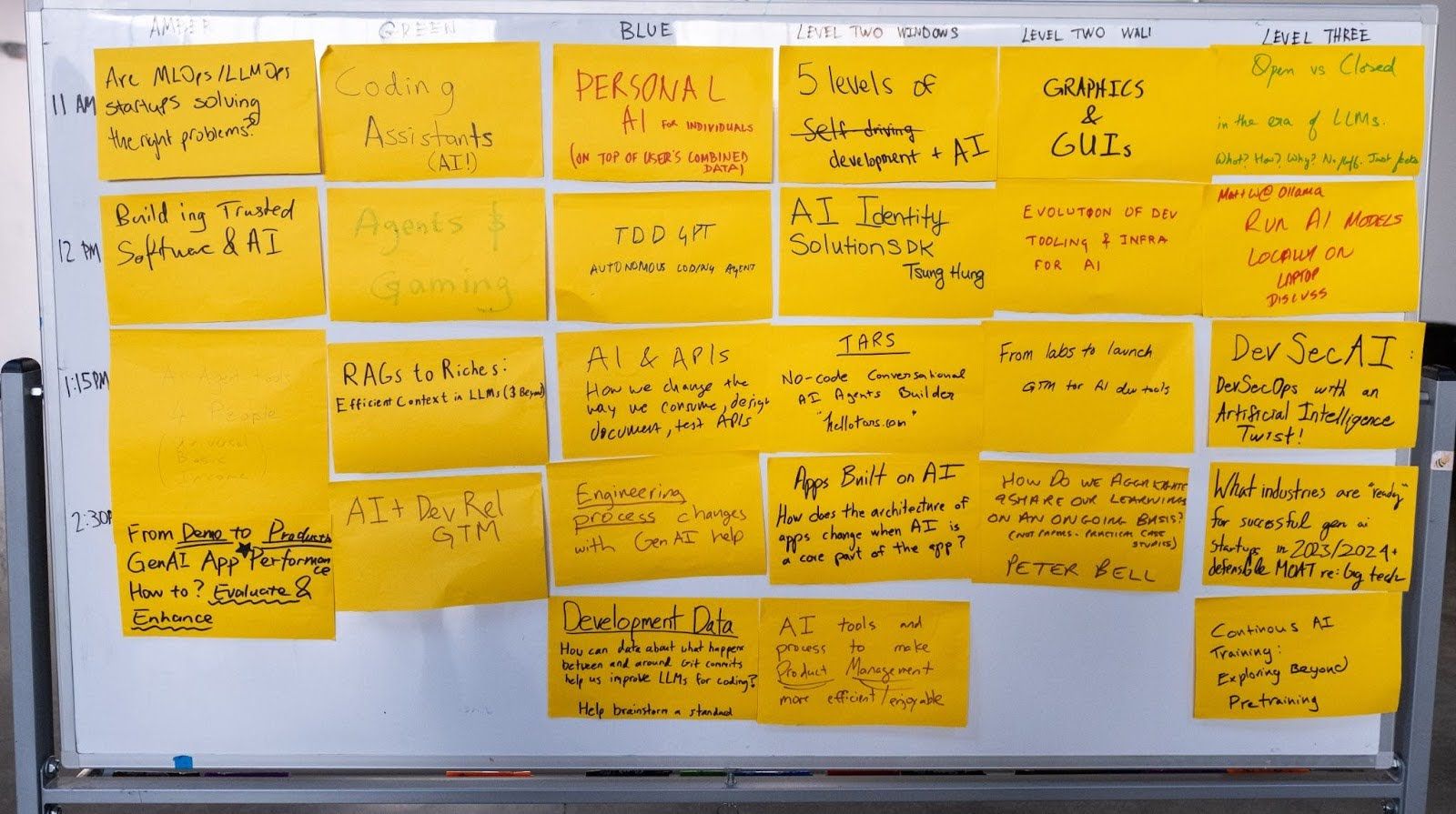
The topic board at our inaugural DevGuild AI Summit: Participants were starting to crack open foundational AI subjects as they related to software development.
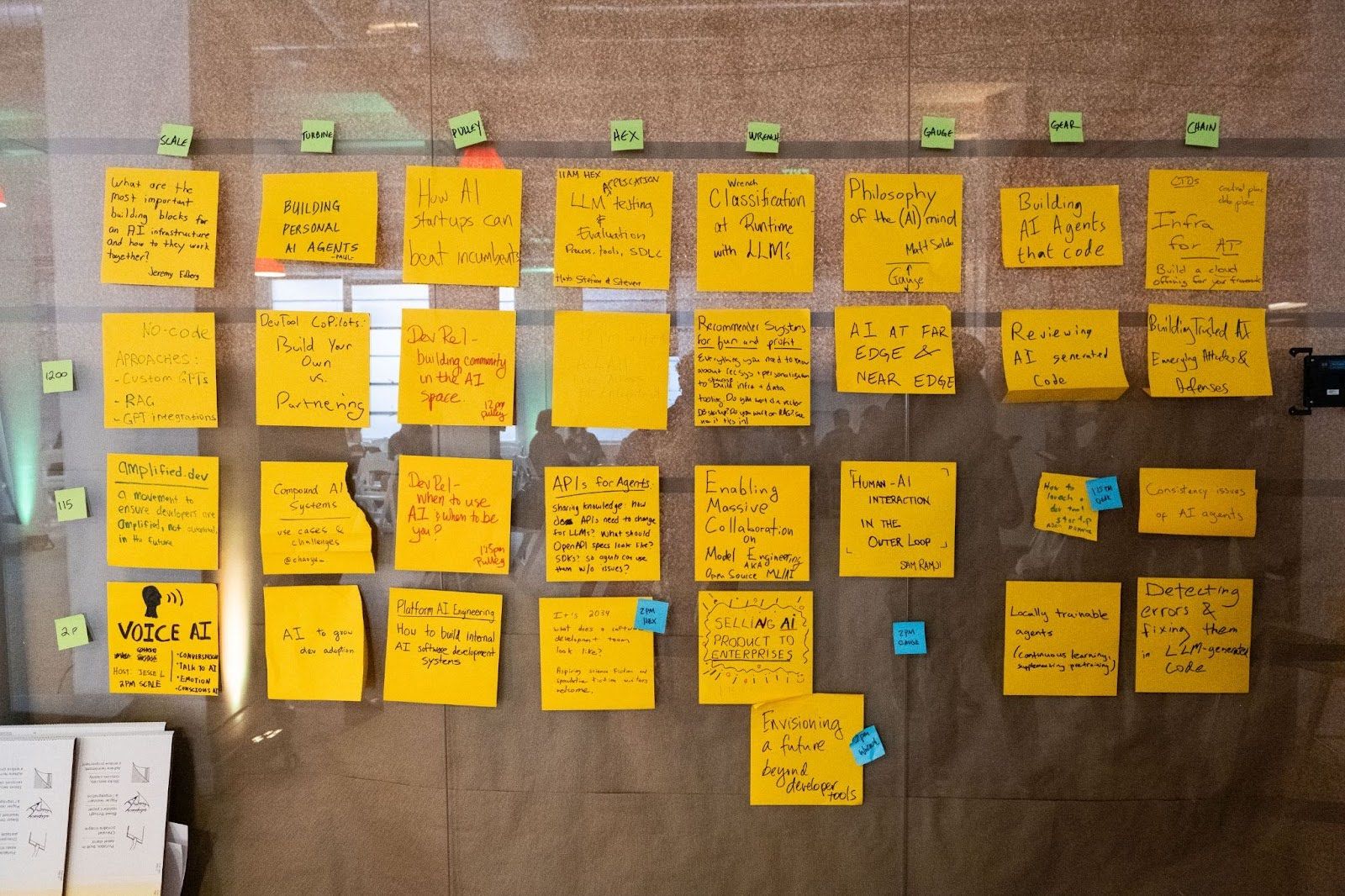
Our second summit dug deeper into the topic of AI in software development to discuss more practical concerns and best practices for AI in development, both for startups and enterprises.
Why It’s Time to Talk About Coding Assistants
We always expected to narrow the topic of our summit events as key pillars in AI-first development emerged. And after many conversations we’ve had with engineers and founders like you, we understand that it’s time to focus the conversation around the most visible AI use case in software development - Code Generation.
Code-generating apps, plugins, and full-blown platforms have made their way to the inner loop for many developers. And with this tectonic shift in the way developers write code, we are left with even more questions about how this next era will play out.
There is a genuine opportunity to help define what constitutes “good” quality in code generation. While everyone’s talking about code-generating AI tools, not many seem to be talking about the whys and hows. What actually makes a coding assistant “good”? Can they be “great”? Rather than rely on anecdotes, we believe what we need is a real framework to understand them–one that applies no matter where they are being used, from startups through to the enterprise.
If you want to contribute to the creation of such a framework, you are invited to participate.
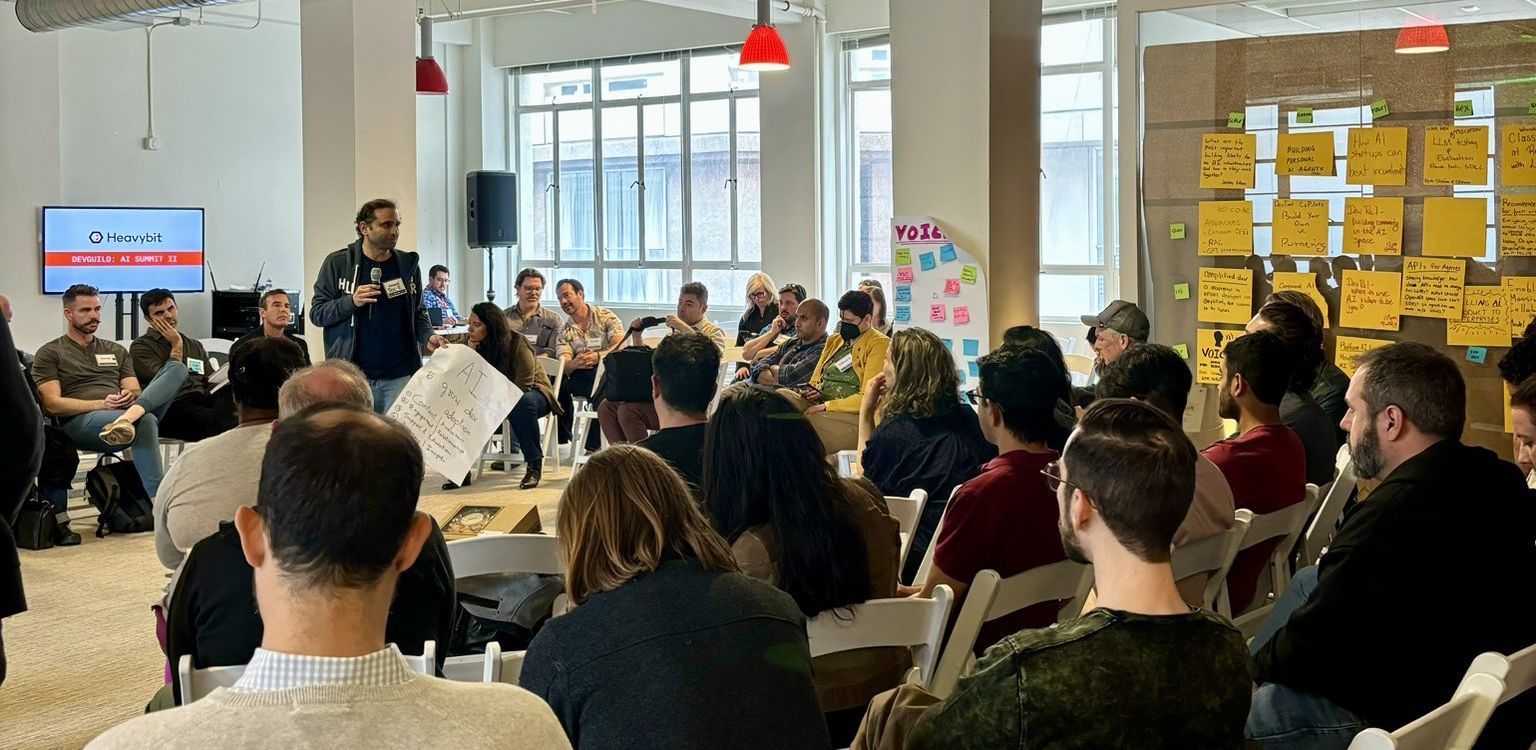
Founders and engineering leaders converge in San Francisco to discuss AI in dev at DevGuild: AI Summit II.
Devs Will Lead the Way to AI Revenue
Gartner predicts that by 2028, 75% of enterprise engineers will be using AI coding assistants (with 63% of surveyed organizations already using them).
AI-powered assistants are already amplifying day-to-day software engineering. So, how will their proliferation affect the business of making and selling software moving forward?. If every engineer leverages AI coding assistants, how will the change affect the fundamental architecture of software going forward? How will coding assistants affect the hiring process for engineers–and what software teams will ultimately look like? And how will everything add up to actual products that generate real value, and AI startups that generate real revenue?
Now Is the Time
At DevGuild: AI Summit III on October 30, 200+ startup founders, tech leaders, and AI experts will convene to discuss the future of coding assistants, and coding-assisted development teams. The summit will once again offer a confidential, judgment-free environment where no questions are off-limits. At the event, we’ll work together to chart a successful future course for coding assistants–and for what an AI-powered future looks like for devs. The goal is for all of us to figure out where this is headed, together.
Content from the Library
Open Source Ready Ep. #46, Don’t Ask Claude to Push the Button with JT Archie
On episode 46 of Open Source Ready, Brian Douglas and John McBride sit down with JT Archie. When an agent skips a command or grabs the wrong branch, a better prompt may only get you so far. JT explains how Steps uses structured pipelines to give agents clearer inputs and boundaries, then joins the hosts to explore SQLite, tool permissions, and the limits of fully automated development.
Generationship Ep. #61, Such a Beautiful Craft with Gabriela Moreira
On episode 61 of Generationship, Rachel Chalmers speaks with Gabriela Moreira, co-founder and CEO of Quint, about building trust in AI-generated code. Gabriela explains how executable specifications help engineers explore software behavior and why passing tests can offer false reassurance. They discuss making formal methods more accessible while preserving the judgment and curiosity that good engineering requires.
How It's Tested Ep. #18, When Code Outruns Your Tests with Jake Schuenke and Kevin Clark
On episode 18 of How It's Tested, Eden Ful Goh speaks with Jake Schuenke and Kevin Clark of Phantom about scaling quality assurance in the age of AI. They explain why faster code generation demands better testing, review, and release processes. From AI-assisted triage to real-device testing, they share how their team balances speed with the trust users place in a crypto wallet.