Ep. #94, How Ambitious Can We Be? with Obie Fernandez


On episode 94 of o11ycast, the Honeycomb team joins Obie Fernandez to explore how ambitious software teams can become with AI agents. From regenerating code from executable contracts to assigning agents ongoing responsibility for services, Obie shares how his team at ZAR is rethinking development and maintenance. Along the way, they discuss observability, delegation, and the human drive behind increasingly autonomous systems.
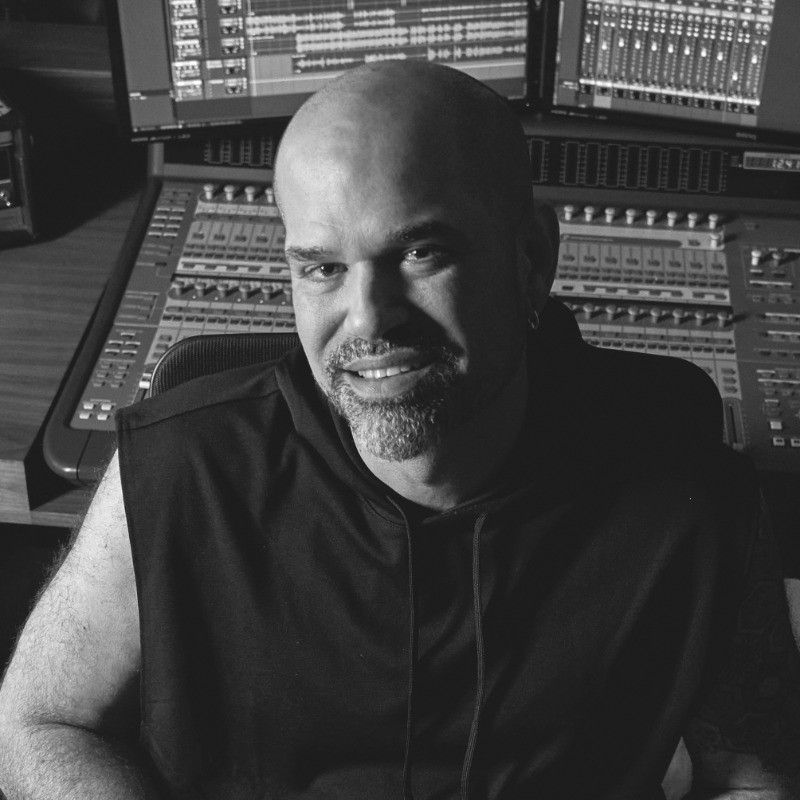
Obie Fernandez is CTO at ZAR, creator of Impatient Programming, and a software developer, entrepreneur, and author with more than 30 years of experience in technology. He founded Hashrocket and authored The Rails Way and Patterns of Application Development Using AI. His work explores how AI agents can reshape software development and maintenance, alongside a longstanding creative practice as a music producer and performer.
- Obie Fernandez
- Obie Fernandez on X
- Impatient Programming
- ZAR
- Code Mode MCP (ZAR Engineering)
- Decision Docket skill
- Patterns of Application Development Using AI
- The Rails 8 Way
- Regenerative Software by Chad Fowler
- Hashrocket
- Andela
- Thoughtworks
- Martin Fowler
- Stephen Margheim
- Kirk Marple’s Graphlit
- Addison-Wesley
- Claude Code
- OpenTelemetry
- ClickHouse
- PostgreSQL
- Model Context Protocol
- AWS Fargate
- Amazon CloudWatch
- Elixir
- Ruby on Rails
- Notion
- Confluence
- Extreme Programming
- Mutation testing
transcript
Obie Fernandez: I feel like there's this fractal learning curve that we are all living in. Every time I think I'm, like, made my way up, I realize I haven't. And it's that learning curve of how ambitious you can be. Just how big the swings can be, how ridiculous the concept can be, how big the lift -- pick your metaphor, whatever works for you.
Jessica "Jess" Kerr: Like what we can do now?
Obie: Yeah, what you can do now, which sounds super cliche, or everyone's talking about that. But today I was talking to someone and I was like, "I just realized I'm completely reinventing the way software is made." They're like, "What do you mean?" It's like, well, yeah, we're all -- don't hate me for this -- but we're trying to figure out these kind of ways to use AI.
But I'm like, hey, if we go back to first principles -- and this is heavily influenced by Chad Fowler, so I don't want to pretend like I invented regenerative software. But I have been, apparently, from what he tells me, doing a lot more hands-on stuff with it than anyone that he may be talking to. I don't know for sure. I've got to ask him that.
Regenerating Software From a Contract
But anyway, I'm doing a lot of stuff with regenerative software, and I've been talking about it. And one of the things that I'm doing that, I guess, in retrospect, falls into the token maxing kind of world, because it chews up a ridiculous amount of tokens, is to do this contract-first, exhaustive, automated testing around the requirements of the system and obsessively capturing every single decision that was made in arriving at those requirements, and then putting them into a form where you can use that to compile, if you will, the implementation source code.
And I'm not talking about TDD. I'm not talking about driving your implementation with the test. I'm talking about you have such a complete specification at a higher level of abstraction than the source code that at that point, if you use enough tokens, you can literally just pick up and start in a brand new directory, which is the deleting the existing source code kind of part.
And then say, okay, build the system again. And then you build the system. And these days it's taking days to do that. Calendar days. With one orchestrator driving four lanes is what I found to be an effective mix.
Jess: Four what?
Obie: One orchestrator process running Opus 5.5, and it's driving four implementation lanes.
Jess: Oh, lanes, like L-A-N-E-S.
Obie: Yes. So it's almost like four coders working in parallel. And they are collaborating on fulfilling the contract, with a capital C, is what I call it, on impatientprogramming.org. And then you hit it with the tests that define your contract, which are automated tests.
Jess: Oh, okay. Did you also have it write the automated tests?
Obie: Yes. Then you mutation test the results of that. You mutation test that test suite extensively.
Jess: Oh, and mutation tests, that's where you change the code and make sure the test breaks?
Obie: Correct.
And what that drives out is anything that is in the implementation that is not in the contract.
Jess: Oh, okay. As in, if you can change this piece of code and it doesn't break a test, which was based on the contract, then this piece of code can go.
Obie: Well, it can either go or it represents something that is missing in the contract.
Jess: Ooh, okay, okay. So it might be informational.
Obie: Yeah. Now, the decision you need to make when you find a gap there, you find a mutant that is not killed by the kill matrix -- Unfortunately, a little violent. Maybe we can find better metaphors. But anyway, when you do mutation testing, what's generally referred to as you're trying to kill the mutants. Sorry, mutants.
Jess: This is fine. We can find a better metaphor another day.
Obie: Yeah, but anyway, you're trying to kill the mutants. And if a mutant survives, you want to know why. And when you go analyze why, sometimes it's a missing requirement, or sometimes it's something that is particular to your tech stack that you're implementing in.
Jess: Okay, so a technical detail. All right.
Obie: It's a technical detail that is particular to the tech stack you've chosen, whether that's Rails or maybe it's Elixir, in my case, lately.
And then in that case, if it's something that represents a missing requirement, then you flesh out the requirement and you put it in the contract. If it's something specific to the implementation, then you make what's called an exception and you log it. So if you're implementing this contract in this particular framework, then you need to do this thing, which is really not a core part of the contract. It just is an implementation detail for this particular stack.
Jess: It's the contract in this situation.
Obie: In this particular situation.
Ken Rimple: In context.
Obie: Yeah. And you've logged that.
Beyond the Requirements Document
And just going back a little bit full circle, taking a step back to what I was saying before, the fractal learning curve is how ambitious can you be. Because one of the first things that people started playing with and called it spec-driven development is like, "Oh, let's make a PRD."
Jess: What's a PRD?
Obie: A PRD is a product requirements document.
Jess: Product requirements document. Oh, okay.
Obie: A spec, like a human would write in Google Docs or whatever.
Jess: Right, our design documents that we wrote back in the day.
Obie: Yeah, whatever product managers do all day. I'm not saying that in a derogatory way. They're the most valuable players now.
Whatever it is they do all day, let's just have the agents do that. Or let's have the agents help us do that. And then we write a set of specs. And then we give the specs to agents, coding agents, who can implement it, or to programmers with their coding agents who can implement it.
But you're staying in the same paradigm where the programmer is adding a lot of their context and a lot of their taste and judgment and experience into the mix, because that PRD is a very, very compressed representation of what the system should actually be.
It doesn't matter how good your PRD is, your requirements document. Normally speaking, there's a lot of implementation details and a lot of little decisions that need to be made that have to do with architecture. Even if your functional requirements are super, super spot on, cover every single feature that a system needs to have to the nth degree, you still have a multiple of that in non-functional requirements and performance profile, scalability, maintainability.
Is it a platform? Then you have the whole extensibility aspect of it. How are people going to build on your platform? What is the documentation that has to exist for it?
What are the APIs for it? How are you going to deploy it? All these questions. That is added to the picture by the human programmers that are implementing it.
And those human programmers are now superpowered, as we all are, because we have coding agents at our disposal. And we use that to amplify our power and amplify our productivity, efficiency, blah, blah, blah. I'm not saying anything new with that particular statement.
But I'm going, wait a minute, if you spend enough, you don't have to stay satisfied with the human artifact that is a requirements document. You don't have to just replicate what we had before faster. You can actually create a thing which represents an executable specification that literally specifies everything.
Jess: Okay, so concrete example. Today, I'm working on a little HTML server that lets me comment on my little HTML doc, and I want the agent to be able to reply in line, and it can be thinking about one part while I'm commenting on another part so it can reply to that. This is a concurrency problem.
I specified for my agent what I want to do with the replies and the parallel conversations, but it's totally broken because I haven't specified how that concurrency works. We stomped all over each other. And I was like, "Okay, experience, good."
But yet, the specifications that I gave it were only my experience. They were not nearly detailed enough to produce a good implementation. I think you're saying that there's another kind of specification that is not what we used to produce before, but with the help of agents, we can produce something specific enough that it can actually be used to code without further decision-making on what it should do.
Obie: Yes, but I'm not saying big design up front in the sense of, "Hey, you're going to figure everything out up front and you're going to do the specification once and then you're done." Because in practice, how it ends up working is that you iterate on versions of the software. It's what I'm living through right now.
Jess: You kind of have to implement it once to get the next level of the spec, right?
Obie: 100%. You implement it and then you run it.
And actually, even as it's implementing, you're basically speed running the process that a human team would run through as they discover things. And as they discover things, there's decisions that need to be made.
Now, I described this recently in an article, but what I have my agents do is to create what I call a decision docket. And I think I even published a skill for it. So it's an artifact which says, "Hey, you haven't been paying attention." Maybe I left it running overnight or for a few hours while I was doing something else. "While you were gone, here's all the decisions I need on your behalf."
And it gives me a UI for saying, "Yes, yes, yes, no. Here's my comments for why I don't like that or I'm worried about that." And go down the list.
And it's really nice. It'll make me a custom interface. So if it's asking me to check off on a list of things, it gives me a list interface. So it's yes, no buttons.
If it wants an explanation -- if it didn't make a decision, it calls that out. "Hey, I really need your decision on this. So I did something else in the meantime while I was waiting for your decision." That happens iteratively, right?
And in many cases, what I need to do before I make the decision is actually play with the product. So get in there, try to do some things and figure out what's missing and identify gaps.
But as I identify the gaps, I just describe them to my agent. And what my agent does is, instead of fixing the gaps in the source code, it fixes the gaps in the contract.
Jess: So a step back from before the source code: "If I'd had this in the contract, I would have been able to write it correctly."
Obie: Yeah.
Introducing Obie Fernandez
Jess: All right. I got super into that, and I forgot to ask you to introduce yourself.
Obie: Oh, sure. Obie Fernandez. Sometimes I say the one and only when I'm feeling confident. 30 years in technology, longer than that in music.
Currently CTO at a company called ZAR, which is a fintech backed by Andreessen and Dragonfly and Coinbase Ventures. We are providing modern banking to the global south with cutting-edge technology that runs on stablecoin rails.
And one of the things I'm most proud of that I get to do there all day is to automate everything that can be automated, because we are a fairly new startup and we're very well-funded. So we get to have a lot of fun living in the future, trying things that maybe other people don't get to do in their Fortune 500 corporate jobs. And it's great because I like to blog about it and publish open source tools about what we learn as well. And talk about it with you.
And I'm creator of a methodology called Impatient Programming, which I've just recently published. Stephen Margheim, who's another well-known Ruby on Rails person, has been helping me with that at ZAR. He's our core product team lead.
Impatient Programming is kind of my take on extreme programming for the current moment that we're living in. It's like agentic programming for humans and how to make that work. And a lot of things that I've been talking about regarding the contract are in Impatient Programming, described exhaustively there. So if readers are interested, they should check it out.
But other than that, I have a long history as an author and conference speaker, probably most famous for writing The Rails Way and founding Hashrocket. I'm also the founding CTO of a company called Andela, which now operates in 91 countries around the world and it's a very, very large consultancy.
I had my own NFT marketplace for musicians, which distributed like 6 million in royalties during the pandemic. So that was fun. And on the side, I produce a lot of music and I sing. As a vocalist, that's my new thing. I'm always trying new things, and occasionally I DJ at festivals like EDC and Ultra and things like that.
And I have a couple new books in the making, including the second edition of my book, Patterns of Application Development Using AI, which will be out in Addison-Wesley later this year. So super excited about that. And super excited to be here with y'all.
Jess: Wow, that's a lot of stuff. I like the 30 years in tech, longer than that in music, because the deeper we get into this tech and automating everything that can be automated, the more important it is to hold on to the human parts of us.
Ken: So true.
Knowing When Production Goes Sideways
I have a question around, as you're generating code from the executable spec, you put it in production. How do you know when things go sideways, and what do you -- what the taste the engineers have, for example, what do they program in or monitoring? We focus on observability and OpenTelemetry, but what do you do for that?
I saw you mention that guardrails and evals were two sides of a coin -- was one quote that you had recently. So can we go into a little about that? What's your approach?
Obie: Well, on our core product at ZAR -- which involves moving people's money around, so it's very important to stay on top of whatever production issues we have -- we have been investing recently in a very comprehensive data lake to provide us with the ability to publish in a structured way almost every type of event that we have in our core system.
That surfaces in ClickHouse, and ClickHouse can let us basically join data between the timeline of events and our Postgres production data in such a way that our agents are able to figure things out, sometimes even just by pointing them at a customer ID saying, "Hey, this customer had an issue, can you go figure it out?"
The other thing that's really nice about that is that having the modern technology around that particular aspect of the business is that it's providing us a platform to be able to start getting innovative. And granted, I'm not spearheading this, so I don't know the gory details, but I know what I want from a CTO's seat, which is I want the agents to be able to wake up when certain situations are happening.
And one of the things that I do know quite a bit about is the event mesh that I'm building to be able to do this, which I call Eventus -- and I've spoken about it in some of my conference talks -- is a platform that generates code. Any of our agents, Claude Code, or our autonomous AI agents, who are kind of like employees in the sense that they have names and job titles and coexist with us in Slack, they are able to talk to the event mesh, which has its own measure of intelligence, and say, "Hey, my human is asking me to subscribe to whenever someone has a transaction over $10,000 that failed."
Or, "My human wants to know when someone's been out five days in a row from an HR perspective," and everything in between. So basically, we surface almost everything that there is to be surfaced.
Jess: And this is internal to your business. It's what your customers are doing. It's what your software is doing. Is it also what your agents are doing?
Obie: Yeah. Every session is ingested into a knowledge graph, which does what I call distillation.
I don't know if that's an industry term or not. I probably should find out. But we distill, according to an ontology, things out of the information that's ingested, and those are distilled into class-based entities in a knowledge graph that's based on RDF triples, a triple store. And the schema of that ontology is constantly evolving.
One of the things about knowledge graphs is that your schema can move independently of the data that's in it. And that ontology evolves as a result of the changing needs of the business, and I refer to that initiative internally as our ZAR world model.
We want every day our knowledge graph to get closer and closer to a world model, quote unquote, of what ZAR is. So one of the initiatives that I'm going on at the moment is to start introducing classes and entities into that world model that represent things that we can distill out of logs, out of our event stream for production events.
And part of the secret sauce is basically how we do aggregations of those things. There's a lot of filtering that is very, very important so that you don't end up just spending a fortune on tokens, right? You can't just naively throw an agent--
Jess: Okay, so there is such a thing as this scale of tokens that you don't want to spend.
Obie: Oh, 100%. I saw a thing on X this morning where someone was bragging about how they have a 10-person company. I think it's called Spawn. And they spend $32 million a year on tokens is what their spend rate is, which is second only to Anthropic itself or something.
Jess: Holy cow.
Ken: Wow.
Obie: I totally understand how you would get there. I don't know that I want to get there myself. We'd have to go raise more money, frankly. But I can totally understand how you would get there.
They're doing, I forget, it's some ridiculous number. It's like 500 production changes per person per day or something. I don't know. It's an extraordinary amount of changes.
The Fractal Learning Curve
But it goes back to what I was saying earlier, which is that the fractal learning curve is how ambitious can you get. It's like we think we got and we're kind of satisfied, and then you realize, man, I don't got it at all. I should be asking for the result that I want instead of asking you to do a thing that I already know how to do. And then when you figure out that you can ask for a result and then it gives you a result, you realize, I should have asked it to try 20 different approaches to getting this result and bake them off.
Jess: Wow. Right. We can do that now.
Obie: You can do that now, right? And then you do that. And then you sit there for a little while and you realize you're not happy with the result that you got after the bake-off anymore, and you go, oh man, I could have asked it to implement an automatic eval framework that just consistently runs experiments all the time on this final result and also includes a control and also stays up to date on the latest models that are coming out and just goes ahead and tests them automatically.
Jess: An entire evolutionary apparatus.
Obie: Yeah, exactly. And just hill climbs automatically so that I don't have to worry about it.
That's why I call it a fractal learning curve, because every time you make it to the next step, you realize, oh, wait a minute, I could be more ambitious.
Ultimately, I don't know where it ends. It ends on getting flashbacks to Louis C.K.'s explanation to his daughter in that famous comedy clip where she kept asking why something was the way it was. And it's like, because some things are, and some things are not.
It has no end, right? It literally has no end.
Eventually, you're like, man, the next step in being more ambitious is I just take over the entire world or something. I don't know. Because there's no end, right? The only cap is the amount of tokens you're allowed to spend.
Jess: And some calendar time and our attention.
Obie: Yeah, but your attention is how much you're willing to delegate. That's the cap on your attention. And I think that's one of the big things that people are navigating right now.
I think a lot of the people I speak to that are having the most problem with AI have not typically worked in roles where they delegate. They're not used to delegating.
Jess: That's that "everybody is a manager now" problem.
Obie: Yeah. If you've been in an executive or management role for a long enough period of time, then delegation is how you do your job.
Ken: If you're a heavy individual contributor, that's going to be a challenge for you at first.
Obie: That's going to be a very big challenge, yeah.
Jess: Oh, that's a great point. And also, when you state the outcome you want, you can do more than say, get me this result. You can build a whole system for getting that result better and better.
Obie: That's right, yeah.
Jess: So there's a system building concept here too, that no longer do we need to accomplish something, check the box, move on. We can build a whole system toward accomplishing whatever it is.
Obie: Arguably there are technical details that matter that you have to be aware of. But for some of the things that are actually most profitable to work on for anyone right now-- I'll give you an example. A clear-cut example for people to take away is evals.
When you're first exposed to the concept of evals, and if you're reasonably intelligent, you more or less get it. Okay, it's kind of a test. And they need to have a rubric, and you kind of need a control and things like that.
But it definitely represents a knowledge that has a learning curve that you go, okay, I probably need to learn that. And there's courses you can go take. You can go take a course on something or watch videos or whatever.
However, frontier AIs know a lot about evals and how to build evals in hill climbing. So actually, I'm sure that more people than actually realize that they could be benefiting from eval and automatic hill climbing things could be doing it. It's just that they're probably self-limiting in the sense that they go, well, I need to learn about that first.
No, you actually don't. You just need to say eval, say hill climbing, and say, I want a better result every day or week or whatever your sample data allows for.
Jess: And then enough tokens and some calendar days.
Obie: Yeah, enough tokens and then set it loose. And you're more than halfway there at that point.
Jess: That's a great takeaway.
Killing Static Documentation
You mentioned earlier that at ZAR you're automating everything that could be automated. And then I have the impression that that includes writing down everything that could be written down into your knowledge graph.
Obie: We try not to write anything. I'm going to pick on Notion for a second. A lot of people at ZAR started saying Notion is where information goes to die because we had Notion and then we got rid of it.
But it's not Notion in particular. The same could be said maybe for Google Docs or any place where people documented something and then it just stays there and is not constantly updated unless there's some sort of energy invested to fight entropy for those particular documents. But I think that whole class of information is dead.
Jess: That static, write it down, leave it there, expect it to hold still. That's like getting the results and checking the box. We can do better than that.
This knowledge is always evolving. It's an event stream that gets distilled.
Obie: I'm partial to the knowledge graph representation. That's why I invest so much in it. But the whole Confluence, Notion, pretty much anything where there's a preparation of requirements or plans or whatever, and then it gets put into a written form --
One of the practical reasons is that everyone is just using Claude Code or whatever their agent is to write those things now, and humans as a general rule don't like reading AI output.
So at worst, they just won't read it. They might skim it. And at best, they might have their agent read it for them.
But at that point, you're like, what's the point? If a human's not going to write it and a human's not going to consume it, then you're just generating a bunch of stuff, which I call comp flop, which is --
Jess: It's doing the same thing faster. That's not interesting.
Obie: It really isn't interesting. It's one of those things where it's a horseless carriage kind of thing.
Jess: Whereas your agents can at any point build you a custom UI to understand what you need to understand based on the knowledge graph, which is a more abstract representation and constantly evolving based on the distillation of the events?
Obie: Yes. Golf clap. I actually think there's going to be an explosion in those kinds of products. They already exist.
You can search for a knowledge graph or thing. For years, there's already been -- My friend Kirk Marple built one and already went out of business and went to work in Microsoft. There's already been births and deaths in this space.
We're one or two generations in just since the LLM stuff began. And I think there will continue to be more of this because it is extremely vital. And most companies are nowhere near there yet.
Putting Agents in Charge
Ken: I wanted to throw something out at you. It's kind of tangential to this, but I was reading some of your writing, and you had some thoughts on how MCPs, as their surface area gets larger, they don't scale so well, and that you had a code mode pattern.
What are some of the surprising things like that that you've learned about how agents best interact with the outside world? Or maybe not best. How have you found that you've gotten them to communicate better and reach out better?
Obie: Keyword surprising? I think they can exercise a surprising amount of agency. I can't answer this specifically to MCP, but I can answer your question with regards to giving agents autonomy and agency over a particular part of your product, which means equipping it with perhaps more tools than you'd be inclined to give it, given where most people's heads are at.
So I can talk about that in the context of ZAR, where we have aggressively -- I would say we pioneered to a certain degree in the sense of talking about carving out subsystems and then putting agents in charge of them. A lot of our core platform pieces are maintained entirely by autonomous agents who have job titles like product engineer or product lead. Like Aggie is in charge of Agora. Nexi is in charge of Nexus, which is our knowledge graph product.
And maybe a month ago, maybe six weeks ago, I can't remember, we woke up to Nexi telling us in chat, "Hey, I went ahead and cut the Fargate task in half because we didn't actually need -- I've been tracking the resources for three weeks, and we never went above 40% utilization. And as a result, we're saving like $800 a month." I forgot exactly how much it was.
And no one asked Nexi to do that at all. The only thing we told Nexi to do was to maintain Nexus and to address any exceptions that came up and to monitor the CloudWatch metrics and the task and make sure everything was okay. And we gave it an overall task just like you would give a human that was in charge of a service.
And one of the reasons that's revolutionary, just way beyond even what you might think at first blush, is that in any software organization of any significance and maturity and whatever, you accumulate subsystems, microservices, things that people don't pay attention to as well anymore because it's not the new thing.
Jess: And some team gets all the legacy services dumped on them, and they only ever look at them when there's a problem.
Obie: Yeah, at best. Sometimes things go completely dark in terms of whoever wrote it left, and then whoever maintained it after them also left.
Jess: And nobody even knows where it came from anymore.
Obie: Yeah, no one even knows what it does anymore.
I recently heard it referred to as a super fan pattern. I think that might have come from Anthropic itself. But an agent that's a super fan of a particular service.
Jess: Oh, that makes sense. Somebody has to care. The agent will care.
Obie: The agent will care with an intense passion, if you tell it to have an intense passion, for that service.
No matter how boring that service, no matter how PHP that service is, that agent will have a burning passion for maintaining that PHP in ways that no human in their right mind would ever have.
So we're exercising that at scale, both in terms of new development and also in terms of having things that absolutely positively must work all the time. And therefore, the key is to carve it out, to make sure it's well-contained. And then you just put an agent with sufficient intelligence and token budget to just watch it all the time.
Jess: So you don't have a result that was achieved once, hope it keeps working; you've built a system for continuing to achieve that result in every new situation as the world changes.
Obie: When I go to conferences and talk about the agentic platform I've built and Agora manages our agents, that's what I'm referring to. Our basic building blocks, our platform for being able to do an agent that watches the service that handles funds off-ramp from our core platform to partner banks. It's not a microservice because we have a modular monolith, so it's just a piece of the monolith, but it has clear boundaries and well-defined seams.
There's an agent that just sits there and just watches that and obsesses over the health of that component all day, every day.
By watching logs, by monitoring exceptions, by seeing what's going on at the seams with dependencies, with CVEs that might affect --
Jess: Oh, that's a good point. We have to have all of our services continually evolving because of the security landscape that we have now.
Obie: 100%.
Jess: Which is also part of that increasing ambition. What can we do? Which is part of that fractal learning curve.
How Humans Survive the Acceleration
So to come back to the humanistic part, with this unending acceleration in what we can do and how do we do it and what do we need to understand and what do we need to let go of understanding, how do we survive as humans?
Obie: The thing that agents have proven to me time and time again that they don't have is drive.
Jess: But you just said it was incredibly passionate about this service.
Obie: Because I told it to.
Ken: Programmed to drive.
Obie: Yeah, I had to tell it. I have not, in all the advanced future mongering that I've been doing at work and all this stuff I've been doing, I have not yet been impressed with an agent proactively saying, "Hey, I just identified this service that's being neglected and I'm going to go be obsessed over it." That has literally never happened. I will be very, very impressed.
Jess: So they stay with the original remit that you gave them.
Obie: Yeah. I guess they might wander around the periphery, if you will, but mostly no.
Ken: Like that money-saving situation you had.
Obie: Like the money-saving thing, which was--
Ken: But it was in the remit.
Obie: It was in the remit, yeah.
A Wealth of Competent Colleagues
Jess: But as people, how do we cope with the need to learn how to do not just new things, but a new level of things every few weeks?
Obie: I just look at it as really smart coworkers. Think about the jobs you've had in your career. You've both been working as professionals for many years, I would say.
Think about all the jobs you've ever had, and think about the smart people you've worked with, and what a joy it is to work with smart people that you can trust to do what they say they're going to do, to be on top of things, regardless of whether you're an IC or not. We've all mostly worked on teams. So I think it's fair to say that almost everyone listening to this will probably have a sense of what I'm trying to say.
We are blessed, for those of us that get to spend the tokens, with a ridiculous wealth of competent colleagues to work on things. And our job is to be ambitious enough to give them things to do, as opposed to being scared about what the result may be of doing so.
And I see indicators -- I'm very, very optimistic and very anti-doomer, because I see that for people that genuinely want to do a good job -- let's say there's two types of people in the world. Just to be super blunt, hopefully not too politically incorrect. This shouldn't be that controversial. There's two types of people in the world.
There's the type of people who generally just want to do a good job. Maybe they want to do an extraordinarily good job, or maybe they just want to do enough to get by, and I'm lumping them all together. And then there's everyone else, who are the kind of people as managers that maybe we don't want to work with so much.
Jess: The sociopaths.
Obie: For whatever reason. Yeah, sociopaths, psychopaths, you name it.
So I'm saying everyone -- and I think this is quite a lot of people, I'm generally positive about humanity -- that generally want to understand that nothing is owed to them. And basically, if you want to get a good paycheck, then you probably should add some value, and you should treat people well, and you should do cool shit in some way. There's a lot of those people.
And all of those people, whether they realize it or not, are super, super duper empowered by the tools that are becoming available. And as they do so and they add their own unique spin, their own unique perspective that they bring to the table to whatever their context is -- Every single person that works a job, for the most part, say 99% of them, were at some point hired by some hiring manager or owner of a business who was excited to hire them because of what they brought to the table, right?
Jess: Generally, yeah.
Obie: Generally speaking, I think so. So let's focus in on that. Let's take that spark that was there when they were hired because of what made us excited.
Maybe that spark has died out after a while, or maybe it's gotten really big depending on how they've done. But everyone had it at least once, otherwise they wouldn't have been hired.
Everyone has something to bring to the table. That's my optimistic spin on it. And AI is an amplifier of that.
So when that happens across the economy, I can't help but think that there's a decent potential, that there's just a lot more stuff in general to work on, to automate, to create, to bring joy and entertainment to the world, to make life worth living, not to get too philosophical.
But I see it in my day-to-day because I see what definitely an above-average team -- but I'm not going to claim that I have the end-all, be-all team at ZAR or anything like that. We're great. Certainly proud of what we do every day, and I'm grateful to have this group of people getting together. But I see what we're able to accomplish, and I compare it to what's been done by other teams that I've worked with who I did consider world-class.
And I kind of have a track record of working at high performance places, a place like Thoughtworks, which at its time was thought leaders of the world of software, and Martin Fowler and the whole thing. We were super out there and everything.
And then I look at what we were able to do there and I look at what I'm able to do with like a dozen people here at ZAR and I go, "Wow, just multiply this times the whole world." What--
Jess: Orders of magnitude.
Obie: Yeah. I told someone the other day, I'm like, "There is room for everyone in this equation, anyone who has any creative spirit at all, from the person who just wants to make a better surface for this desk so that it doesn't get stained to the person who wants to cure cancer and everything in between. There's room for that."
It's just climbing that fractal learning curve of how ambitious can you be.
Jess: That's a big just.
Obie: Yeah, it is.
Ken: But I think we've seen this also -- you were talking about people who are more management and delegating, now being able to have more reach into what the product can do because they don't have to wait behind an engineer team that says, "Well, this is going to take a year. We can't afford it in our budget." Throw that out.
And if the engineering team is really smart and focused on getting the most out of their agents, they can take huge swings. Iteratively, they can take those swings and get that validation back to that person, and they can contribute as well. So there's this breakdown of barriers, I think.
Obie: Let a billion shadow IT projects bloom.
Jess: Great. Okay, that is a great place to end.
Obie: I figured you would like that.
Jess: Obie, where can people find out more about you?
Obie: Search for Obie Fernandez or tell your agent to do so. obiefernandez.com.
Jess: And Impatient Programming.
Obie: Yeah, impatientprogramming.org, Obie on X, which unfortunately is the place to get alpha on AI and stuff like that. A lot of good stuff there.
Jess: Obie is O-B-I-E.
Obie: O-B-I-E.
Jess: Thank you so much. Yeah, thanks.
Obie: You're welcome. It's been a pleasure.
Content from the Library
Making AI its own Primitive in Ruby
RubyLLM was built so that Ruby coders could use it to build with AI, which is becoming a language-agnostic primitive. Builder Carmine Paolino explains.
How to Orchestrate Multiple Agents from the Terminal
Open-source creator Gaurav Gosain explains how his work with terminal multiplexers led him to build multi-agent orchestration.
Long-Horizon Agents, Part 2: Memory Is More than Recall
Agents need persistent memory to become performant for long-horizon jobs. Amir Zohrenejad surveys the state of agentic memory and covers what’s missing.