Ep. #55, Faster Hypothesis Disproving with Sunil Dhaliwal
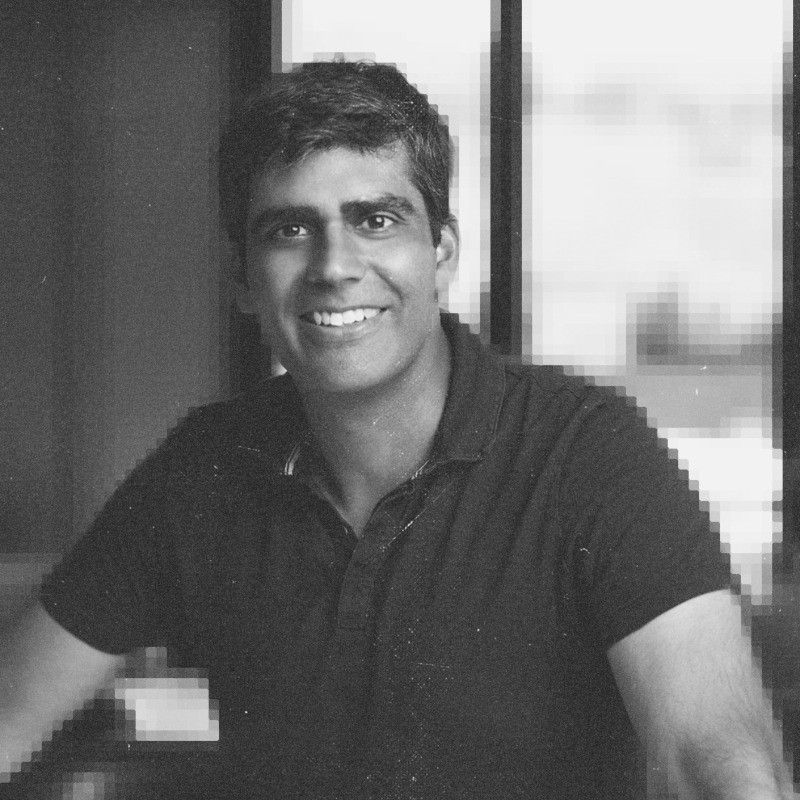
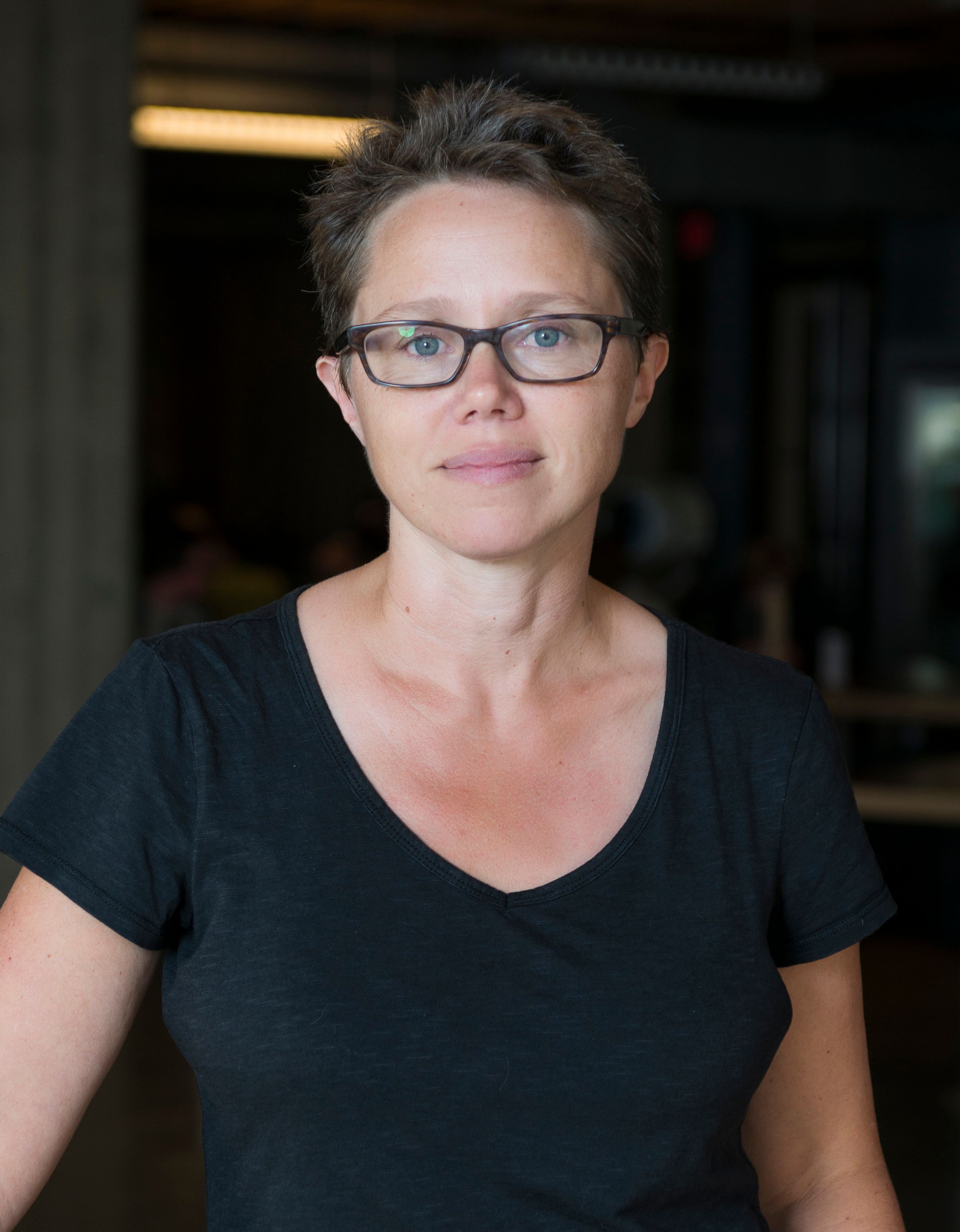
On episode 55 of Generationship, Rachel Chalmers sits down with Sunil Dhaliwal to explore how AI is reshaping developer infrastructure, venture investing, and computational biology. Sunil reflects on building Amplify Partners during the rise of cloud computing, why the best technical founders “live the problem,” and where he sees the next generation of AI tooling emerging. The conversation also dives into personalized medicine, AI infrastructure consolidation, and what remains fundamentally human about investing.
Sunil Dhaliwal is a co-founder and General Partner at Amplify Partners, a venture firm focused on backing technical founders building infrastructure and developer-first companies. With decades of experience in venture capital, he has invested in companies like Datadog, Fastly, and Temporal. His work centers on identifying founders with deep technical insight and helping them build category-defining businesses.
transcript
Rachel Chalmers: Today, I am really excited to have a long time hero of mine, Sunil Dhaliwal, on the show. Sunil founded Amplify Partners in 2012. It was one of the first solo GP, deeply technical sector-focused VC firms and Sunil designed it as a durable platform rather than a one off vehicle.
He's spent over 25 years backing category defining infrastructure companies like Splunk, Datadog and Fastly across multiple market cycles. He systematically backs domain experts building in hard computer science areas by evaluating founders through their intimate experience with technical problems.
And unusually, he focuses on how AI and computing will remake the life sciences through foundation model companies like Boltz Bio and computational drug discovery companies like Tahoe Therapeutics. Sunil, such a joy to have you on the show.
Sunil Dhaliwal: It is equally a pleasure of mine. It's great to see you again.
Rachel: How on earth did you go solo GP? I've just raised the fund with Michelle and I cannot imagine doing it alone. Like splitting the burden made it just intolerable. Like doing it solo, I can't even imagine.
Sunil: Well, literally before you hit record on this podcast, the last conversation we were having was about doing things that are hard and if they're done with joy, like how much it shows and how much it doesn't. And I'll have to tell you that anything entrepreneurial, and you've lived this through your life as an investor, you can kind of see what's joy and what's toil on behalf of founders.
And I always hesitate to say that people like you and I are founders, even though we do found funds and we birth them into existence and have to do lots of the stuff. It ain't the same when you have a 2 and 20 business model. But getting something off the ground matters. The passion matters a lot.
And I think when you asked, how did I do it, it was something that I really wanted to do. It wasn't something that I imagined doing forever. I didn't think in 2012 or probably in 2010 that I cared to start a fund. I was a GP at a large firm and everything was ordered and it made sense. But there was a couple things that really changed, both in that firm and my position in that firm, and the things that I was doing, the things that people cared to really invest in, but also things that were changing in the world around me.
This was the real Cambrian explosion of AWS and the cloud as a platform, and this idea that developer tools were interesting and that DevOps as a discipline was going to usher in a new era of how he thought about infrastructure. You just kind of reach that moment, I think, sometimes where you go, not only do I keep seeing the problem that's out there that needs to be solved, but I don't think anyone else is going to go solve it. I think I should go be that.
And that was a thing like even before your fund, before Amplify, before Heavybit, there was this gap of people who would back technical founders doing really technical stuff. And that was luckily the gap that I decided to jump in and fill. And it's been 14 years of joy ever since then, to be honest.
Rachel: I mean, there's probably a generation of kids who've grown up never hearing the phrase "no money in tools," which was, you know, VC's watchword for 20 years. They wouldn't back developer tools. And really Splunk was the first massive corrective to that state of mind, wouldn't you say?
Sunil: There was developer tools. I mean, broadly, like people said, you can't, there aren't enough software engineers to sell things to. But I think you hit on Splunk and, Splunk first, Datadog right behind, which they weren't exactly developer tools. No one went into those things to, quote, unquote, build software, but they were the tools that were used by engineers to maintain and to manage.
You know, there had been some good systems management companies, you know, IBM and OpenView and, you know, the CA probably built, bought in the Unicenter product at some point. And BMC acquired or built their way into Patrol.
There were some products, but they were never really high growth, hyper valuable things. And the reason was they could not be incredibly valuable software markets until they became incredibly large end markets. And you needed that explosion of limitless amounts of compute capacity, servers on demand, individuals who needed to think about and reason about infrastructure at massive scale that was way beyond what they fit in their server closet. Until that happened, you didn't have the opportunity to build these massive companies where everybody needed it and everybody needed these tools at scale. And I think that's a lot of what the cloud era ushered in.
Rachel: It's funny how incredibly formative Splunk was for me, because I wasn't even an investor back then. I was an analyst, but I was one of the first analysts to cover it. And I was literally, before you and I got on this call, talking to yet another founder who was trying a top down go to market strategy and saying developer facing or engineer facing product led growth will beat it every time, and telling the story about how sysadmins they weren't even SREs back then, would download Splunk and answer their boss's question in five minutes rather than five days.
And all of those people who were early adopters of Splunk, that was the next five years of their career, that was their next promotion, that was their career making moment. And for me, that was my conversion to PLG and the engineering space and my career ever since was if you give people tools that will make them enormously better at their jobs, you will build great software companies.
Sunil: Yeah. Yeah. And at that moment in time, I think people were asking me, why does this Splunk thing matter? You know, why is it investable or going to be big? And the analogy I used then, and I've still used it to this day, is:
Never underestimate the value of a flashlight in a dark room.
Rachel: Yep.
Sunil: And when you just don't know what's going on around you, a tool as simple as a flashlight is incredibly valuable. And then the analog to that or I should say the addendum to that truism was: The value of the flashlight expands in two ways. One, depending on how dark the room is. And the second is how dangerous it is to be moving around said dark room.
So for people who, it's like, it's really rough when I don't know what's going on, it's expensive, it is scary, it could bring down my entire firm, you know, they'll pay a lot for a flashlight. And the other one, which is like when there's a limitless expanse around you and someone has a small flashlight versus a bright spotlight, a bright spotlight's worth a lot more.
And in these markets that we're talking about, what did that sysadmin have to go through in that moment of time when somebody said the site is going down and we don't know why? Right. The value of that question is not very high if it's your photo sharing site for you and your three siblings.
It's super high if it's a photo sharing site for you and everyone on this side of the Atlantic Ocean who's using Smug Mug or Shutterfly or kind of the early photo sharing companies back then, who I remember were incredibly focused on downtime and performance and availability. And all of a sudden the scale of those end markets brings these problems into relief and tools start to matter a ton in ways that they hadn't.
Rachel: And of course, we're in an exactly analogous moment now to the beginning of cloud, where we have this enormous explosion in the capacity of our platforms, in what they're able to do and who they're able to reach, and the enormous demand for tools to make sense of that complexity. Tools, which are themselves taking advantage of this huge leap forward in computational capacity. So I don't know about you, but I'm super excited about the new Splunks.
Sunil: Yeah. And I agree, and I think that tools in general are going to take on different shapes and forms, but when you're given new primitives, you always need tools to exploit those primitives. And those tools are valuable regardless of if anyone says, "well, you can just build the tools in two seconds or the system's gonna be smart enough to give tools to you."
That idea of all knowing, self introspecting, no outside checking, no outside awareness, doesn't really hold well to me. Like I see across the history of human time, we, we're always creating kind of critical systems and then we're always giving ourselves the ability to safeguard and balance those critical systems.
I think AI is going to be an incredible critical system for how we do everything around technology. It doesn't change the fact that you're going to need an even newer, more powerful, slightly differently shaped set of utilities and tools to help people safeguard it, monitor it, manage it, utilize it more efficiently, take control of costs, do things that allow it to be compliant, particularly when there's regulation, safety and security involved. Those very human dynamics aren't changing. And every other platform shift before us has only expanded the opportunities here. So I think that this is going to be the exact same.
Rachel: Yeah, yeah, I've expanded my definition of dev and infra to be like the interface between human beings and machines. And I don't think machines want anything for themselves. I don't think they have any desires. It's humans that want to sit in the garden and read library books and need to build systems around us to make that feasible.
Sunil: You're smart to redefine that boundary of what that actually means to think about systems or think about tools. Because I think years ago when people started working outside of compilers and Assembly, and they're like, yeah, well, there's interpreted languages. And people are like, well, all the tools are going to go away. And you're like, well, no, no, maybe your tools to work on your compilers aren't going to be as valuable because there's these abstractions above them that you now think about, but those abstractions opened up this even greater surface area of things you need to think about.
And when I see people get particularly worked up around saying, well, what's the need for server automation and for infrastructure as code when you've got systems that can reason about all these things independently and be trained through language models, I go, you're right, you don't need the exact same set of tools you had a generation ago. But the idea of what those tools give you at scale, you know, the things that you as a human want for in running a system, those wants aren't going away and you just need to think about what the new abstractions are and how those new abstractions will create opportunities.
Rachel: This is a little bit of a tangent, but it's been fascinating to me having these conversations with people who say, "oh, there won't be any more developers, there won't be any more programmers. It's a dying career." A, because I've been hearing that for 40 years and that hasn't been true yet, but B, because it reveals a lot about what the questioner themselves think about what this is all for.
I mean, I've always been very clear that my entire tech career is the infrastructure for me to have a horse and go ride every afternoon. It's a little dismaying to me when I talk to people for whom the tech career is the end in itself. I'm like, as the kids say, maybe consider touching grass. There's a whole world out there, that these tools are supposed to support you in living in.
Sunil: To bring it to the touching grass and what the kids say, one of the conversations I was having just this weekend around the what does AI all mean for us? One of the things that we talked about was, well what it definitely is going to bring is change. And change can mean a lot of things to you depending on where you feel like you sit related to that change.
It can be super scary, it can be super exciting, but change is happening. And I think it's a pretty good barometer for resilience when you think about what a lot of this means to people. And I think some people can say, "yeah, a ton of change is coming. And that is frightening, full stop."
And then there's other people who say, "Yeah, a lot of change is coming, that might actually be something interesting for me, like I might be even better off than I am now. Or it can help me in these ways."
It's a really kind of interesting Rorschach task to talk to people, even in the tech industry who are super close to it, about what they think it means to them as the folks who are closest to it, probably best suited to navigate it, have the intellect, hopefully the curiosity, maybe the desire to not do the exact same thing over and over again until they get carried out in a pine box.
But it's very funny to me that certain people entirely view it through this lens of what do I have to lose versus what do I have to gain? Or why could this be interesting? It's a wild personality barometer when you talk to people about this.
Rachel: Yeah, we could talk a lot about this. But moving on, one of your practices that I've long admired and sought to emulate is your assessment of the difference between a founder who's lived an infrastructure problem versus one who's just studying it from an ivory tower. How do you gauge founder-market fit? What are some of your techniques?
Sunil: I mean, number one is people who understand problems deeply, and who are well solved to suit them or solve them, they are shipping code. Right? The people who actually produce things. And a lot of these people I'm going to name check, you're going to know in common through shared history.
But when Adam Jacob wrote Chef, he didn't academically say there needs to be a different configuration management system. He had been a sysadmin. He lived deeply in the Puppet community. He was a Puppet contributor and said, oh, there's a different thing I think we need to do and I can't get it done within this community. I'm going to go build my own.
And that's a person delivering a solution entirely out of some need that they feel like they have. Right? And that's a practitioner who's working on something and knows it from 2 inches in front of their face.
When Artur Bergman started Fastly and thought that there needed to be an alternative to what Akamai was offering him in the delivery space, it came from a place where he was a CTO of a wiki publishing company called Wikia. So this is basically doing self hosted, user generated content at scale, but they had to be in the business of running it and delivering it on behalf of all their users. It was a runtime effectively, and a delivery platform rolled into one.
He had a very specific problem, which was, "Akamai is going to charge me this rate and they can't really do what I need, which is lots of small objects delivered and refreshed quickly." And that's not something that Akamai does because it's a brand new problem that nobody else has, other than if you're hosting a site for wikis, which are lots of little small objects generated by users faster than you can update them.
Rachel: Microservices, you might say.
Sunil: Yeah, but it was at its core, a problem that's not going to be apparent to anybody until you are literally running that business. And you go, "oh man, this is new. And I can articulate to you what the problem is, why Akamai can't solve it, why they don't see that it's a growing problem."
And then you get to look as an investor for the next things which you see, which is, "hey, Artur, is this just your problem or do other people have it?"
And he's like, no, all these other people that I know that are my peers are asking me how I can use it. And I showed them this thing I did with open source varnish, and I'm thinking about using this type of network to actually run it in aggregate. And now you've got someone who deeply understands a problem.
The Datadog story is almost identical. Olivier and Alexis were using the cloud at scale as early users in their day job. There were no tools to efficiently monitor or manage anything that they were doing. They were forced to build a version of this for themselves. When they were working at Wireless Generation. They thought that other people like them needed this. They could clearly articulate what was lacking in the ecosystem today and what they thought a better way would be. And they probably had some stuff shipped that showed you, hey, this is how we would go about solving this, or how we have for ourselves.
That's historical examples. I'll bring it all the way forward to today. A company that a lot of infra people know well, but I don't think the mainstream knows super well yet, is Temporal. The folks who run Temporal, they are probably the most powerful way to run distributed systems at scale and reduce complexity. They have invented the category of durable execution.
But why did we back them? And why did they think this was worth the company? It's because they had built and done this thing to solve this problem already. I mean, most recently, they had done it at Uber around a product. They built a program called Cadence. And Cadence existed to simplify the execution of complex microservices and distributed systems where all these things had to hold state and work together.
And that's really freaking tough to run and build on your own. And so they said, "well, I think we can build this one for ourselves." And they did. And then they realized they could go build it more broadly for everyone. And we saw that same gap that they saw. And I think that problem plays out or that dynamic plays out constantly in all these domains, is you've got people who live and breathe a problem and then they can stand up and go, "yeah, there's something more here than just what I need."
Rachel: What patterns that rhyme with the ones from those years are you seeing emerge now in the world of AI infrastructure?
Sunil: Yeah, I think the AI ones are really interesting because the most common patterns I see is where people have a lot of tools, capabilities, they have a lot of AI infrastructure expertise, they might be less familiar with a particular domain. So as you bring application logic closer to AI and you say, here's a space, I might want to solve something, you get really compelling insights and answers when you have people who know the vertical domain and can bring together the AI capabilities.
And so we've seen that across marketing and customer service, and we've seen it in a lot of vertical markets. But that same dynamic exists as well when you start thinking about how you're going to actually improve developer tools and developer infrastructure. That is the same dynamic where there's kind of hybrid teams that both understand the domain deeply but also have strong AI credibility.
They bring this marriage of, we both understand the tools we need to use, but we have a really good empathy for the user because we've kind of lived in their shoes and lived all their problems. That's probably the most typical pattern we're seeing for how founders are going after some companies now.
Rachel: Yeah, obviously a ton of VCs are chasing these AI applications. Michelle and I looked at a lot of application layer startups in the beginning, and, you know, I discovered my own investor market fit. I was like, I have huge respect for people who can assess a biotech or a medical or a legal application, but what I've lived for the last 30 years is dev and infra.
I know how to invest in companies like that. And so we pulled back from application layer stuff and refocused on dev and infra. Is that where you're still betting? I know you're starting to look at life sciences as well. Do you want to talk about that?
Sunil: Yeah. Amplify, at its core, has really always existed for technical founders, and that part has never really changed. Researchers, engineers, scientists, academics, practitioners, you know, again, the people closest to the problem domain. And that persona, I think, is what we have really excelled at, both identifying, working with, and helping to build some, some great companies.
But the flavors of what kind of particular vertical and domain have always changed. You know, I think our first AI investment was in 2014. This was deep learning applied to a vertical market for image recognition. And we didn't stop to say, "well, is AI even a thing?"
We kind of said, "no, this is a really novel technical tool that this kind of really geeky, appropriately geeky group of founders believes can be big. How do we help them see their vision?" when we've evolved.
And one of those evolutions you mentioned is thinking about the life sciences as a place where data and AI and computing can really, really be brought to bear, we saw some really powerful similarities. You've got very technical founders. They're domain experts. Our particular version of founder tends to be equally versed in computer science, AI, data as they are in the life sciences. They bring a unique appreciation to a problem, but they also have a very good understanding of how computation and AI can be really powerful tools to be the solutions.
And what's interesting is they're a group of people that really does need to be understood. You have to be conversant in talking to them about how you'd apply capital to build and train models, how you would deliver things that might look closer to software than anything else from what the customer is expecting to see.
But you also have to trust their instincts and know how to keep them on the right path when they are fundamentally talking about a scientific domain in biology and life sciences that is not the same as the scientific domain of distributed systems and computing and technical infrastructure.
So the human dynamics are shockingly similar. A lot of the business model dynamics, particularly as AI and computing converge with some of these vertical markets, very, very similar. What I think has been the most interesting part is the lingua franca is biology just as much as it is binary.
And that is certainly something that has been an exploration and a growth for us over gosh, I mean 10 years, truly 10 years we've been doing this gradually but in the last two or three what we decided was this needs to be a first class citizen because of some of the domain differences and hence Amplify raised its first AI Meets Bio fund which we originally called Amplify Bio 1 last year to go along with our sixth main fund.
So now they're both efforts that sit together under the same roof with teams that overlap in some cases between the two funds and in some cases are distinct. But the funny thing is we all sit in the same staff meeting and are talking about foundation models and we're talking about tooling and we're talking about computing infrastructure. And it's shockingly similar across almost all these companies.
Rachel: You're a braver man than I am. Haha. The FDA is the other variable there. That alarms me whenever I think about straying too close to the wet labs. It's just a more highly regulated environment. And my go to of product led growth is not necessarily something that biologists approve of or see in a wholly positive light.
Sunil: Yeah, it's scary in one way and I know exactly the way in which you mean it. You know, iterating to product market fit is just a hallmark of what software companies do even beyond dev and infra. I gave a talk probably a decade plus ago at the Velocity conference, shout out to Velocity. That talk was like Why Software Companies Fail.
And I think the number one thing I said of why software companies don't fail is like software companies never fail because you couldn't build the software. Like the code will compile, it'll do something. The big question is like did you build the thing that actually matters? Like does it do what a user needed in a way that their problems now solved?
And what's kind of wild about your, "ugh, scary biology" appropriate comment is it's actually a really different riff on that where biology companies really don't fail because they build a thing that nobody really cared about. That can happen but it's pretty rare. They generally fail because you actually couldn't get the code to compile. You know, in this case you couldn't get the biology to function in a repeatable way that was safe for humans and effective against the condition you were treating.
So when you and I, as technical investors, think about like, we're comfortable taking technical risk, the biologists take real technical risk. They spend years working on something and they go, "at the end of the day, the hypothesis was not valid and the science didn't work." Which is the cool part about why the application of AI and data and computing is so amazing is because it's this really powerful new toolkit. It's not a magic pixie dust that solves things, but these are really powerful arrows in the quiver for scientists to get higher fidelity answers, move quicker, move with more confidence in every step, right up into the point where they introduce some new bit of chemistry or biology into a human and get the answer of, well, did my code compile?
Right? Did the product actually function? It's a different way of thinking about risk in this domain, for sure. But the parallels in terms of what tools can do and how they make the practitioners and the researchers and the engineers superhuman in their capability, it's remarkably similar. Remarkably similar when you think about it from an investment perspective.
Rachel: Yeah. And when you think about science as the random search and the scientific method of testing and disproving hypotheses, being able to radically accelerate disproving hypotheses is going to be an incredible, incredible boon.
Sunil: Oh, perfectly said.
Radically accelerating the disproving of hypotheses is easily half of the value proposition here in a nutshell.
And I think a lot of people who are either overly optimistic and think that it is magic pixie dust and we're going to have computer engineers that'll eliminate the need for research scientists, you know, the same reason they're wrong and the same reason the other side, the people who say, you know, you don't understand biology, it's all about being in the lab and doing experimental work, and that'll never change.
They're both guilty of the same extreme thinking, which is that, no, no, it's about making processes go faster and disproving hypotheses at scale, like you said, is a really useful tool for doing scaled science.
Rachel: And having said all of that, I am acutely aware that if demand for pure software AI does ebb with all of this infrastructure that we've built out, scientific computing is going to be what fills that gap and uses up those spare cycles. So maybe I should rethink my entire thesis. Haha!
Sunil: I don't think it's going to ebb at all. I firmly believe that each new platform and each new abstraction that comes on top of it creates more need, so I don't lose any sleep over that. But I, but I do agree with you that the shape and form of what those abstractions are and therefore what the tools are, that's got to change pretty quickly.
Rachel: We're seeing this massive build out of compute orchestration data pipelines for AI. What do you see as the biggest gap that nobody is filling?
Sunil:
The massive amount of tools we have coming forward to help AI developers and software developers do their work is nothing short of a Cambrian explosion. And one of the things that I think we take for granted in traditional software development or traditional systems operations is the stacks are pretty well understood. And so I think one of the biggest gaps we have right now is stacks are not standardized and unified.
Each component can change very, very quickly. Model evaluation, your serving infrastructure, your inference provider, can you do things in a parallel way or sequential way? These are all decisions that are basically being foisted upon users. And everyone shows up as a vendor or as an engineer and saying if I just make this little change, you're going to get a 10% speed up or a 15% cost reduction production.
And they're not wrong. But when I think about gaps, one of the lessons that you and I learned a long time ago is that as these stacks standardize, you can absorb a lot of those optimizations into a platform. And people, users ultimately want to default to reliable, consistent interfaces. Whether it's to build on or to connect to through APIs or to run at scale, there is a level of consolidation and consistency that actually helps people do the end work that they're trying to do.
And so when I think about gaps and opportunities, one of the reasons we're really excited about some of the platforms that somebody might today just say, oh, they're an inference provider or they just do compute, is there is a really interesting intersection of converged runtime and converged developer and builder experience where you're both surfacing tools and you're providing compute that creates really nice abstractions for people to work with.
"Oh, I can bring my data and you've got models for me to choose from," or "I can run my inference in different ways," or "I can scale things up and down independently. "Oh, you've made an optimization in your platform that makes everything go 20% faster or reduce my cost for equivalent work of 20%."
If I have to think about each one of those things and make technical trade offs and worry about how they all work together, that's a very, very large drag on my cycle time and my progress. And so I think that a lot of consolidation and standardization is going to help people go faster versus a lot of that is sometimes viewed as making people go slower.
Like, "oh, don't over optimize yet. We need to broaden the space and kind of keep pushing the frontiers."In some dimensions it's going to make a ton of sense to push frontiers, but around reliability, operations, scaling, developer experience, agility and quick time to get kind of new products out to market, I think unbounded creativity in some ways is the enemy of that.
And so some of these abstractions and simplifications I think are going to be even more valuable and we can pick them up and down the AI value chain.
Rachel: Yeah, especially for fast followers. And that's where you really get the hockey stick growth.
Sunil: Yeah, that's right. We don't see that all of the leading indicator companies, some of the fastest growing folks, are always great proxies for what the mass market's going to need to broadly consume things. But in some cases they can be really helpful guides about telling you which way the puck's going.
Back to that question of like, what do we really want and see in technical founders and who do we try to back? You know, it's people who are close enough to the details to understand those nuances. You know, why building for this AI song generator is a really good idea, but this AI video generator is a bad idea. Which one of those problems can generalize and which one can't? We have these conversations with our companies all the time right now.
Rachel: That is a perfect segue to my next question, which is what is the biggest mistake technical founders are making, pitching AI infrastructure?
Sunil: Boy, it's hard for me to say the biggest mistake, but I'll say a common mistake is we get a lot of people who are talking to us about their innovation in that stack, their optimization, as if everything around them is staying constant. And so I call this the shifting sands problem. Right? We got silicon that was standardized with very low level programming and hardware based instructions that were built on top of that.
And then we had compiled languages and compilers and we got interpreted languages. And then we get in operating systems and we get so much standardization all the way down in a stack that we take it for granted when someone's like, I log onto a browser, I spin up an IDE and I can just start working and shipping like its abstractions all the way down.
I think people take for granted that there's decades of trust and built in verification and integration and ecosystem development. That allow that to happen and now jump over to the AI world and say, well, we're what, five years in, six years into this Cambrian explosion, where, yeah, we have a whole bunch of primitives that are great in the computing layer and everything that lives, you know, goes up to the keyboard.
But if you run that analogy forward, how many of the primitives that you're imagining optimizing are even going to exist as primitives in the AI infrastructure stack or the AI developer tool stack? So many of these things are bound to be reshuffled and consolidated and themselves standardized in service of what users really want.
And I think it's very tempting for a lot of technical founders who forget that to imagine that this current state of the ecosystem is the long term state and that we're not yet, or that we have already settled out and we have already standardized. And then they make these kind of five year assumptions on the company they want to build when there might be 6 or 12 or 18 months cycle time till their entire domain kind of being standardized, commoditized, integrated in. So these short term optimizations are tricky.
Rachel: Yeah, another great segue. You built Amplify to be a durable platform across market cycles. Is there a fundamental state change with AI? What is going to be continuous through this phase?
Sunil: As an investor?
Rachel: Yeah, as an investor.
Sunil: Yeah.
I think investing is still at the end of the day about judgment. The situation on the playing field changes every day. How things are valued, what the market opportunities are, where the talent's available, what the customers want, and also kind of the most human element of it. This is not an objective game. It's a subjective and relative game.
What I care about, Rachel, is not that I build a great company. What I care about is that you're willing to pay more for the company that I invested in after I've invested in it. And that's a reductive way of thinking about investing. But, it's a truth that if people make things valuable, algorithms don't make things valuable.
And so understanding what we'll appreciate and value is fundamentally about understanding what people will care more or less for over time. That's an inherently human activity. And so what I think stays the same is judgment and decision making and understanding which way the puck is going and why others will perceive it to go there is kind of the core discipline that we have and that ain't changing.
So with that in its backdrop, I think what we spend a lot of time thinking about is who are the people that have the mental flexibility to imagine those changes and to not be maybe caught into a lot of the patterns that they have worn into their soul from 20 and 30 years of pain like you and I.
It's a trick to be able to take the good parts of all the pain and experience that we've all learned through hard fought lessons, but marry it with this ability to reframe and recast an intellectual framework. All of that's basically to say like this is a people gig. You gotta find great people who think that way, challenge ideas together, can see around corners a bit.
That's what I think it looks like going forward. Are we all gonna use tools? Are we already using tools that make us more productive in processing information and more helpful in terms of expanding our knowledge and network out to our founders? Of course. Like we're going to do the job differently. But what the job is I don't see as fundamentally different in the AI era.
Rachel: Yeah, I've started talking about it as interestingness and this is like an aspect of founder market fit. Like if founders are endlessly interesting when they're talking about their problem, I kind of want to give them some money and see what they'll do next because that's going to be interesting. And if I'm interested, I'm very easily bored. If I'm interested, I think a lot more people are going to be interested as well.
Sunil: I think that's right. And I think you're speaking to just the asymmetries of what we do, particularly as early stage investors is, you probably know, we all know that the mathematical likelihood is that a brand new investment will not succeed. That's just kind of what the math says. On a binary basis, It's more likely to fail than it is to succeed.
So you have to kind of believe in the asymmetry of that creativity. Like that's an interesting idea. More people will find it interesting, it could get bigger. That continues to be the gig I think at the early stage is what stuff has that potential to break out of that kind of scary math that like, "yeah, I think it's cool. It's probably not going to work, but we're going to do it anyway." That's a different kind of behavior that early stage investors have to exhibit on a daily basis.
Rachel: Deluding ourselves that it's all gonna work out okay. Haha.
Sunil: Deluding ourselves. Exactly.
Rachel: What are some of your favorite sources for learning about AI?
Sunil: I think that it is domain specific, but my sources are people. I'm more inclined to read or skim other people's written content than I am to think that one person has the most important voice in the room all the time.
Jack Clark and his substack, I think, continue to be just a top of mind one for me. He's been doing this for a while. That's Import AI. I love what Jack says.
My partner, Sarah Catanzaro, to plug her has been curating for years now a collection of technical papers into a blog called Projects To Know where she's constantly looking at what things are interesting in the open source domain and the research domain and why these projects are compelling and meaningful. And it's just such a great compilation of what's next. She puts that out every few weeks. It might be down to once a month now, but it's so incredibly well curated.
And then the other stuff that I go to tends to be a little bit more domain specific. So as mentioned in the AI bio stuff, Elliot Hershberg, his Century of Biology, for anyone reading about AI and bio, is awesome. I also really like Decoding Bio, Elliott's kind of more of his own thoughts and musings and decoding is a little bit more of like an interesting collection of what's happening in the ecosystem this week. Those are all great sources, but they're all written, so it's all newsletters and stuff that I read.
Rachel: If everything goes exactly how you'd like it to for the next five years, this is me asking you the founder question, your five year projection, you get to push everything in the direction you think it should go. What does the future look like?
Sunil: Are we talking about our global future, our collective future, or the amplified future, or something in between?
Rachel: So it's fascinating how different guests take the question at different levels. I think it's really telling where people choose to answer it.
Sunil: Yeah, well then I'll give you the global one because I think it is in a weird way tied to what I'm doing at Amplify. We did start the Digital Biology fund last year. It has been a lot of focus of my time for the last few years. And I think given my background in the companies that you mentioned that I invested in and was fortunate enough to be close to, a lot of people go, "all right, you're a dev tools guy. Like, how the hell are you talking to me about digital biology and medicine?"
I do think about it in terms of the problems that are actually worth solving. I love solving computational problems, I love computer science and I love infrastructure and distributed systems and everything that's kind of come before. But I'm really passionate about how this can be used to help everyone and why it's going to be a meaningful piece of how we think about evolving and caring for ourselves as a species.
Personalized medicine really is the linchpin of that for me. And I think when you think about a domain that's as complex as biology and the need for truly superhuman computational tools to help us address that problem space, I really would like to see in five years, the promise of one disease, one patient, one cure, or one treatment start to come to the forefront.
And we've seen little bits of it. It's still kind of heralded as these amazing things when there's kind of CRISPR editing done. To baby KJ, who went from having a debilitating and fatal disease to being perfectly healthy and being solved by--
Rachel: That was astounding.
Sunil: And those ideas are not science fiction. What we're talking about now is questions of scale and repeatability and manufacturability, deliverability, and how quickly and cost effectively can we make those diagnoses and reducing cost and getting distribution of the tooling. Things that everyone in the tech world knows about that kind of adoption curve between when a cool thing is first done and when it goes mainstream.
We are literally in that moment for so many things around personalized medicine. And we could talk forever about gene editing for rare diseases or personalized cancer vaccines, or personalized immunological treatment for how your own immune system works. These are all not just coming in some abstract sense. They're all here. They're just not clearly understood and clearly distributed and made perfectly economical. And like, in five years, we're gonna see so much more of that.
Rachel: I look forward to that magical stuff. You've read The Emperor of All Maladies?
Sunil: I have not, but I know it.
Rachel: Oh, my God. It was the one that really brought home to me an understanding of cancer pathways and how the human genome has bugs and the bugs may be fixable. It was a great book.
Sunil: It's on my list now.
Rachel: Last question. Favorite question. So we called the podcast and the fund Generationship for a bunch of reasons. But a generation ship is a starship that takes longer than a human life to get to its destination. It's a lifeboat. As prime minister of the solar system, you get your own generation ship as your personal vehicle. What would you like to name it?
Sunil: I love this question. And you were kind enough to share it with me in advance so I had a few minutes to think about it, because It's a question worth thinking about.
And not to be too sappy, but I would hope that any sort of interstellar colony ship is really at its core, I think it's about preserving and extending our humanity. And I think that the name that I would pick is Kinship. And besides being just a lovely play on words, as every ship name needs to be, I just like that idea about a ship that's prioritizing what's central to the human experience: Family and ties that bind us together and connection across generations. So, yeah, it'd be kinship.
Rachel: I love that because all of those other resonances came into us choosing the name Generationship as well. You know, Michelle and I are a generation apart. We want to foster the next generation of folks coming into the industry. Relationship across generations is a big part of what we're about and I think a big part of what venture is about.
Sunil: Well, I love it. I think it's a great name for a firm.
Rachel: Thanks, Sunil. Amazing to have you on the show. I hope you'll come back and good luck curing cancer for each of us personally. That's fantastic.
Sunil: Awesome. And good luck with all the exciting new things that I know are coming from you soon.
Rachel: Thanks so much.
Content from the Library
Open Source Ready Ep. #43, You Can't Fork a Protocol with Madelyn Olson
On episode 43 of Open Source Ready, Brian Douglas and John McBride speak with Madelyn Olson. The Valkey maintainer and AWS...
Third Loop Ep. #12, Shipping at the Speed of Understanding with Steph Hippo
On episode 12 of Third Loop, the Progressive Delivery team speaks with Steph Hippo, Platform Engineering Director at Honeycomb,...
Generationship Ep. #59, Containers Should Actually Contain with Emily Long and Alex Zenla
On episode 59 of Generationship, Rachel Chalmers speaks with Emily Long and Alex Zenla, co-founders of Edera, about rethinking...