Ep. #53, The Era of Reimagination with Dr. Mehdi Nourbakhsh
On episode 53 of Generationship, Rachel Chalmers sits down with Dr. Mehdi Nourbakhsh to explore how artificial intelligence is transforming the physical and digital worlds. They discuss the origins of generative design, why many AI initiatives fail inside organizations, and how leaders can move beyond experimentation toward real adoption. Mehdi also shares practical enterprise AI use cases and his perspective on how AI can augment human decision-making.
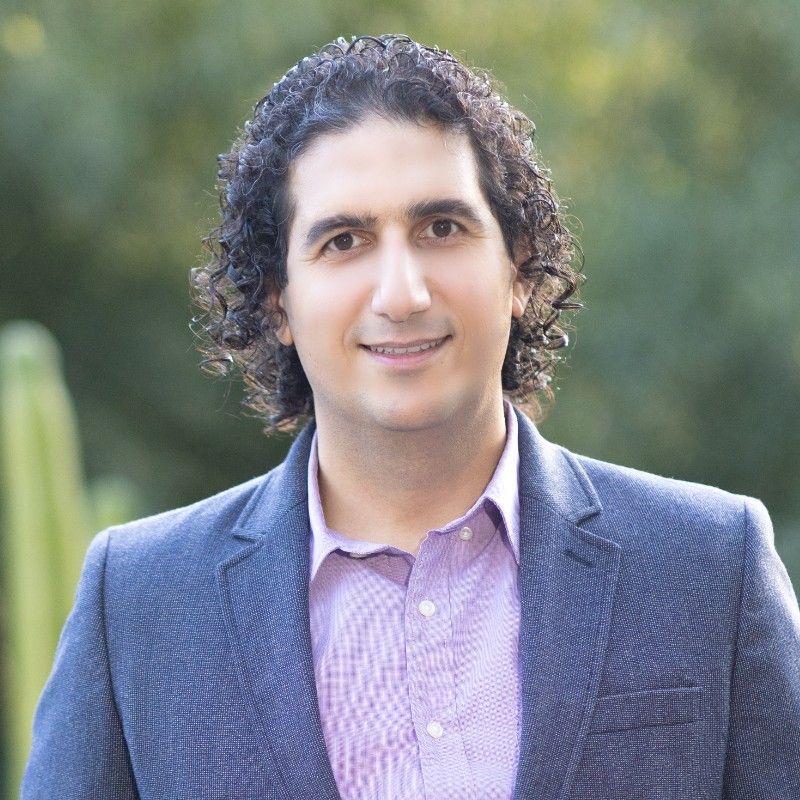
Dr. Mehdi Nourbakhsh is an AI researcher, author, and strategic advisor focused on helping organizations adopt AI responsibly and effectively. He is currently CEO of YegaTech. With a PhD in AI and a background spanning structural engineering, architecture, and construction management, he works with executives to develop AI strategy, governance, and implementation frameworks. He is the author of Augment It and Disrupt It and holds multiple patents in artificial intelligence.
transcript
Rachel Chalmers: Today I am thrilled to have an old friend and colleague, Mehdi Nourbakhsh, on the show. With a PhD in artificial intelligence and a decade in the trenches, Mehdi is a global thought leader on AI's role in reshaping how we design, build, and manage the physical world.
He is the author of Augment It and Disrupt It, both available on Amazon and wherever fine books are sold. Mehdi works closely with C-suite leaders to decode complex AI trends and drive meaningful adoption. Mehdi, it's a joy to have you on the show.
Dr. Mehdi Nourbakhsh: I'm super excited to be here today.
Rachel: You have eight patents on AI. Which is your favorite? Which are you most proud of, or which problem surprised you the most?
Mehdi: So you're asking which of the children is the best?
Rachel: Exactly, exactly. And rejecting all of your other children.
Mehdi: All right, so which child is the best? There was a research we were doing decades ago around how to generate functional geometry. The research theme was generative design. And this was basically helping people and designers to set some goals. For instance, I want to design a chair that can hold 500 pounds. I want to design a car chassis that is connected to the wheels and to the other geometries. And I want this car chassis to perform this way.
So we were designing an algorithm that generates geometry based on the goals of the user and also the functions that the user wants the geometry to perform. A couple of years ago, I was reviewing my colleagues, another colleague of mine that was, we were working on this project reviewing a letter that the lawyers wrote for him for the visa application.
And lawyers did the research, and they basically wrote that the research that we did at that time and all the publications that went into it became inspiration to a lot of generative AI tools today, in generative AI. I was like, oh wow. If this is 5% true, this is amazing.
Rachel: I mean, I think it is true. I mean I remember this is how you and I met. We were at Autodesk and I was getting you to show me some of the amazing organic shapes that you'd 3D printed from this software which we then called Generative Design.
I think you can draw a straight line from that to the generative AI that people are talking about around the large language models. Even if it wasn't a direct inspiration of the technology, I think the idea that the software itself could come up with ideas that the humans can't, I think that was the kernel of what led to things like OpenAI.
Mehdi: Yeah, yeah, absolutely. And the thing that's always think about is that even the designs that are today, images that are being created today, or the shapes that are being created with the current generative design models don't have that functionality that we need in the physical world.
So I still think that a lot of those research is applicable to extending the boundaries of AI where it is today.
Rachel: Yeah, absolutely. A lot of what we talk about, about the limitations of particularly the language models, but also the visual models, are that they don't touch grass, they don't have any context about the physical world or the properties of matter. And this is a huge deficiency. And your generative design software started from an understanding of the physics and the functional uses to which these objects would be put.
Mehdi: Yeah, absolutely. I'm quite excited about that. So maybe that's my favorite child. And I think it still has so many applications in the real world.
Rachel: What made you decide that AEC (Architecture Engineering and Construction) executives needed their own AI consulting firm? And how did you then expand from AEC into other markets?
Mehdi: You know my career path, so I started as a structural engineer. I went to construction to build what I designed and during my PhD I did the PhD in architecture and design computation. And that was a time that I learned about AI.
So in my past life I've been a designer, architect, engineer, and construction manager. And fast forward, when I started working in technology and combining all of these together, I started realizing that not a lot of these technologies that we are building are being transferred into the world of the companies and enterprises today.
And during my tech time I started working with a lot of kind of enterprise level customers of the technology company I used to work with to create a strategy, execution plans, governance and really try to help them to get these tools adopted in their organization.
So I started seeing why some of these AI projects are successful in some companies, why some of these AI projects fail. And that was the time I started putting together my first book Augment It and created a framework for the organizations to leverage AI the right way. Fortunately, the book was published six months before ChatGPT was released. And that was the time that people were like, why do we need AI for doing this or for that?
Rachel: It's hard to imagine now, but that was a real time in history.
Mehdi: Yeah, the rest is the history I guess. So I started with my co-founder of the company and over time there were more and more demands on creating a strategy, governance, execution plans, preparing the culture for this new era and helping AI get adopted across the organization so we can get value out of it.
Rachel: In Augment It, you talked about finding AI problems with high return on investment and I honestly think we're still struggling with this. Everybody has a mandate from the CIO to use AI in all kinds of functions, but we're still in the prehistory, I would say, of figuring out where the big bang for the buck is.
Like a lot of people are putting a lot of faith in CodeGen, but anyone who's having to review generated code is finding their job got worse. What are some applications of AI that you've seen that really do deliver a great return?
Mehdi: A lot of our clients, and these are clients that are in the service industry, engineering firms, you know, architecture firms, construction firms, manufacturing firms, a lot of these companies, in order to win a project, they need to write a proposal. And the way that it works, like if it's a government project or you know, private project, they put a RFP or RFQ out there and then you kind of respond to that.
And to do that you need to write the right response with the qualification, the statement of the qualification that you need to have. You need to put together the right team. And this is a quite tedious task done by the usually marketing team inside these organizations.
So writing proposals can be easily done with the help of AI. But AI today, there are lots of tools out there that you basically introduce a database of all the past proposals you have, all the people with the right qualification and it can help you to draft a 80% good proposal that then you can take a look at and take it to the final level.
So proposal, I think, is a no brainer for all the companies that are doing it.
Rachel: Although my heart goes out to the people who have to read those proposals, because my heart always sinks a little bit when I realize I'm reading something that was AI generated.
Mehdi: Yeah. Now, on the other side, when we work with the government agencies, they're like, "why should we read this?" Haha. "Why don't our AI agents do that for us and give us a summary of this and summary of that?"
So, anyway, human produces it with AI, and I guess on the other side, human with AI will read it.
Rachel: Yep. Can we spend more time sitting in the garden drinking lemonade? Does this automate our lives a little bit?
Mehdi: Coming soon.
Rachel: It's been coming soon my entire life, but I believe you this time for sure. I want to go on a little bit of a tangent here, and I think you and I have talked about this before. Your generative design produces these beautiful biomimicry, wonderful network shapes and make possible kinds of construction at affordable costs that we've never had before.
So why, like, 10 years after generative design in architecture, how come everything we build looks like a McMansion or a tacky hotel?
Mehdi: So--
I don't think that these tools are getting adopted as fast as they're being produced.
And the adoption of those requires a lot of different things that I'll be happy to talk about. But most of the work that is being done in practice are the things that being taught in schools over the past fifty hundred years. And one of the reasons that we are producing buildings, bridges, and things like that, in a way that we've been doing it forever and really didn't take advantage of all this technology, is that I don't think we had a good educational system in place to take advantage of these.
By the time that younger students come to practice, and if they don't learn that at the school, which they don't, they get absorbed by the corporations that want to do things in a certain way that they have done it before.
Rachel: Cheaply.
Mehdi: Yeah. So there are lots of gaps between what we have and what is being used in practice.
Rachel: Can you and I build an architecture school in a building that's made of steel that looks like a cross between Baba Yaga's house on chicken legs and a bridge designed by Santiago Calatrava? Could we do that?
Mehdi: Of course.
Rachel: Let's do it. When you run AI workshops with C-Suite executives, what's the biggest misconception that the executives walk into the room with?
Mehdi: Well, I think at the moment, so these misconceptions if you ask me six months later, I'll give you a different answer.
Rachel: Of course. Yeah, because the market will have moved on.
Mehdi: I think at the moment is, a lot of executives have tried tools like ChatGPT or Copilot. And first of all, they think that AI is just ChatGPT or Copilot and things like that. But AI is a lot bigger than that. But they've tried it and they got disappointed because it didn't give them the response that they hope for.
So often they think that AI is not ready for me as an executive to use in my day to day or make better decisions. And there's a subtle shift there that I often discuss in our workshops or sometimes in our keynotes. And that is--
What if the role of AI or generative AI is not to give you the answer, but is to ask you questions to help you come up with a better answer? So instead of asking AI to give you the answer, maybe AI can ask you better questions, more profound questions, so that you can kind of find your blind spot and, as executives, come up with a better answer for your organization.
Rachel: And conceptually that works really well, I think, because particularly the language models, because they're doing this predictive token construction. One thing they're really good at is regurgitating conventional wisdom. And so I've found it really helpful to think through, you know, projects or strategies with an AI agent because it will reflect back to you things that other people may have thought of that you may not have thought of.
So I do agree that that stress testing your partial perception of a field against, you know, the repository of conventional wisdom in that field is one of the things I've actually found really useful. That's a good insight.
Mehdi: There's actually a really good body of research that as you get more experience in your career, your brain starts creating these shortcuts, which could be biases towards certain things. And that's how our brain works. And what if there was another kind of entity, coach, mentor, whatever you want to call it, that could help you see that problem decision that is in your hand a different way? That could be a contribution that these tools can have at the highest level in the business.
Rachel: I mean, it's why we as investors love founders who have co-founders already, because you've got two brains working on the problem. If you're harnessing AI to be a lot of brains, presumably you will come up with better decisions.
We haven't seen that yet, but again, coming soon to a world near you. Do you think that your past as a structural engineer and construction manager before AI, do you think that hands on experience changes how you approach these questions?
Mehdi: I think so. I think as a software engineer or working construction as a manager, I walk the walk of the adopters of technologies today. One of the things that we always emphasize in the organizations and when we start working on AI strategy projects, the first thing we do is a company wide training and education.
And 99.9% of the time when we ask people, when you think about AI what are the emotions that come to your mind? So 99.9% of the time, half of the company are super excited. Oh my God, this is amazing. This is like we can't live without it. And the other half are very skeptical, they're fearful. So you have all sorts of negative emotions and the other have all sorts of positive emotions.
And until you address those both sides of the spectrum and bring them together, nothing really is going to change in the organization. So our job, first job as educators is to show them how AI is being used, could be used, in their day to day and what are the possibilities and potentials that are out there so that the ones that are kind of afraid now become curious or maybe skeptical.
And the ones that are like overhyped about it was like, oh, we can, you know, these are the things that we can achieve at least today so that becomes a foundation for the company so that we can build on top of that.
And I think my job and my past experience as a structural engineer and construction manager and being in the shoes of the end user really gave me that perspective to start with culture and emotion of the people rather than just throwing technology at them.
Rachel: Empathy is still the number one human skill. I've always identified as curious and skeptical. And I think that served me very well in my career.
What is the difference between companies that successfully scale AI and the ones that pilot one of everything and just stay stuck in purgatory?
Mehdi: The shiny object syndrome.
Rachel: Yes.
Mehdi: Short answer to this is that part of it is the perception or kind of the mindset of the executives. A lot of companies see AI as like a tactical initiative where they send their IT director, CIO or CTO and say, hey, go and figure it out. So the board or the CEO says this, go and figure it out. Good luck.
And what happens is that these people go to this conference or that trade show or this or that, and they try to bring this tool and that tool. If you ask them what's your AI strategy? They show you a handful of tools and solutions out there, but it doesn't really add up to anything.
The moment they want to get adoption, people resist. And they're too busy doing our job. Do we want another tool to do our job? So they get lots of resistance in the organization. The other side of it, instead of tactical, some companies see this as a transformational initiative and see this as a way to improve the culture, thinking about their business model and how it can help them to do better job in operation.
And typically the executive of this company, the CEO and with the support of the board, are the ones that are overseeing this initiative across the organization. This is like change management, 101 from day zero. And if you just ask an IT person or a CIO to do this, it won't succeed without the support of operation and everybody in the organization.
So going back to your question, why are some of the AI projects successful in some companies, but others don't, I think goes back into how we execute this in our organization. And what is the mindset that senior executives have in their organizations?
Rachel: So let's reveal the mindset that a lot of senior executives have is "let's fire everybody and have agents do all of the work." Which is where that fear and unhappiness that you were talking about, a lot of that comes from.
You know, your first book, you talked about AI augmenting our capabilities rather than replacing them. But do you think there are roles that will disappear in the next five to ten years? Are we going to replace all the podcast hosts and all of the consultants?
Mehdi: Of course. Haha. The short answer is, of course. Well, you know, if you look back, a lot of people use electricity and AI, like, say this is like-- The thing that I like about when electricity came was kind of the stages of adoption of the electricity. The first kind of stage was more about substitution. And the kind of selling point of electricity was, hey, you can save on fuel. Instead of gasoline or gas, you know, you can use this. It's going to be cheaper, it's going to save you money.
So the first maybe decade was all about that. And then the second decade after that came the era of reconfiguration. So soon a lot of companies realized that, especially the new manufacturers. In the first era we had these giant structures because they had to support huge engines, you know, steam engine or gasoline engine. And as they switched to electricity, they realize that we don't need this huge, massive engine. The engine becomes a lot smaller.
And we don't need to have this huge infrastructure. Like the structures were big, structural beams, columns, so we can go smaller. And then all of a sudden in the reconfiguration time, they started thinking that, hey, maybe we can design our space in a better way. And the noise is lower, so they start kind of switching around, optimizing the space based on workstations and things like that.
And the third stage, and that was maybe a couple of decades later, was the era of reimagination. And this was a time that we had new things that we couldn't even imagine. Elevators, we had, you know, phones and computers and all of those things.
Rachel: My wonderful electric car.
Mehdi: Yeah. And I think where we are right now, we are still in the first phase. We are in the organization. We are thinking about substitution. And as we go through this phase and go to the next phases, there will be jobs that will be lost for sure. But as humans, we always came up with the next things. We always learn the next things. And sometimes my co-founder, Dr. Sam, she always talks about is this really our job as human to do this? Or we are a kind of interim job? We are having interim job or position to get us to the next level.
She gives an example of the people working in the elevators to push a button because the technology wasn't there. But that was our interim job. And once the technology got there and that job was eliminated those people found a better job and they kind of moved on to the next level.
Rachel: That's a fascinating framing because when I think about what are the human jobs? What are the jobs that you really want a human doing? My mind immediately goes to raising children, caring for the elderly and making art, you know, punk bands and paintings and yeah, I would love to free up more of our time for doing all of those things.
Mehdi: Yeah, exactly. You know when I was a kid, for my grandfather, sitting in front of a computer was a bizarre thing. He was like, do you want to get a job? And I was like, "this is my job."
He was like, "but you're sitting in front of a computer, go get a real job." So maybe he was right. Maybe our job should be beyond just sitting in front of the computer.
Rachel: That sounds good to me. Okay. I'm the CEO of a mid-sized firm. I have zero AI experience, but I have real budget allocated for this. What is the first project I should tackle in AI?
Mehdi: I will say, for the CEOs with budgets, first off, education and training. So right now if you ask 10 executives what AI is, you get 20 different answers. So making sure that you, the board and the people in your organization are talking and thinking about the same thing. So training and education becomes really important.
And I'm not talking about how to prompt this and prompt that. I'm talking about training beyond just generative AI, showing people how this could be applied to your day to day tasks and day to day job and where AI is today and where is it heading. Once that is established, the second thing after that is to make sure that you have a dedicated team in your organization responsible for AI.
So we often call this the AI Task Force. We kind of form these teams in the organizations and these will be the team that will be responsible for-- We teach them how to create AI, strategy, execution plans, governance. But ultimately this is a team that will be responsible for AI.
As the front end of AI changes, as your business is changing, this team will be the one go-to in your organization and eventually this team will be the one that will educate the rest of the organization about anything and everything.
So to summarize it, learn more about what AI is, what it is not, have a team, a dedicated team for this. And my hope and dream is that executives see this as a transformational initiative. So going beyond efficiency gain and focusing on effectiveness. And what are the things that now we can do that we couldn't do before.
Rachel: What are some of your favorite sources for learning about AI?
Mehdi: I love books. And so we have a book club for CEOs of different industries and companies. Once a month we meet and we discuss, you know, I introduce a topic and core ideas in the book and we have a discussion around that.
So my favorite source is not only getting inspired by the author, but also in a group learning what is working, what is not working in the organizations, and how we can all help each other to move faster and get these adopted faster. That's my favorite and it's free for everyone who wants to join.
Rachel: That sounds fantastic. I'm going to make you Prime Minister of the Solar System. Everything is going to go exactly how you want it to go for the next five years. What does the future look like?
Mehdi: Maybe creating more arts, spending more time in communities, doing things that really matter to humanity, and yeah, being more human.
Rachel: We call this podcast Generationship after this thought experiment about a starship that takes hundreds of years to reach its destination and has multiple human generations living on it. As Prime Minister of the solar system, you get your own generation ship. What would you like to name it?
Mehdi: Is it all mine?
Rachel: It's all yours.
Mehdi: Okay, so I'd put my last name on it, the one that you pronounced perfectly. So Nourbakhsh in Farsi means the giver of light. So maybe I name it The Giver of Light.
Rachel: That's beautiful. I really love that. Mehdi, it's so wonderful to reconnect. Amazing to have you on the show. Good luck with everything and I hope you'll come back and talk to us soon.
Mehdi: Yeah, absolutely. Thank you for all your great questions and for your audience. If any of you love to get connected, I'm happy to connect and yeah, I look forward to staying in touch and getting these tools adopted inside the organizations.
Content from the Library
Generationship Ep. #59, Containers Should Actually Contain with Emily Long and Alex Zenla
On episode 59 of Generationship, Rachel Chalmers speaks with Emily Long and Alex Zenla, co-founders of Edera, about rethinking...
Lab Notes Ep. #5, The Voice AI Turing Test with Aoden Teo
In episode 5 of Lab Notes, Amir Zohrenejad speaks with Aoden Teo, co-founder and CEO of Miso Labs, about what it will take for...
O11ycast Ep. #93, Adaptive Sampling Strategies with Mike Goldsmith
On episode 93 of o11ycast, Ken Rimple and Martin Thwaites sit down with Mike Goldsmith to explore how teams can control telemetry...