- Library
- Podcasts
- Generationship
- Ep. #49, Dumpster Phoenix with Denise Koessler Gosnell and Kathryn Erickson

Ep. #49, Dumpster Phoenix with Denise Koessler Gosnell and Kathryn Erickson
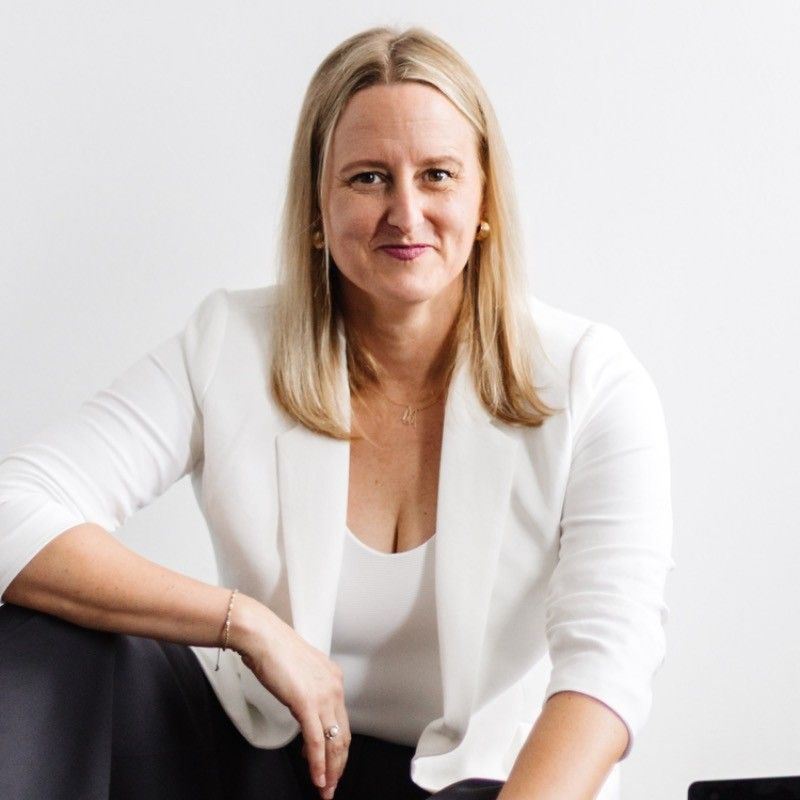
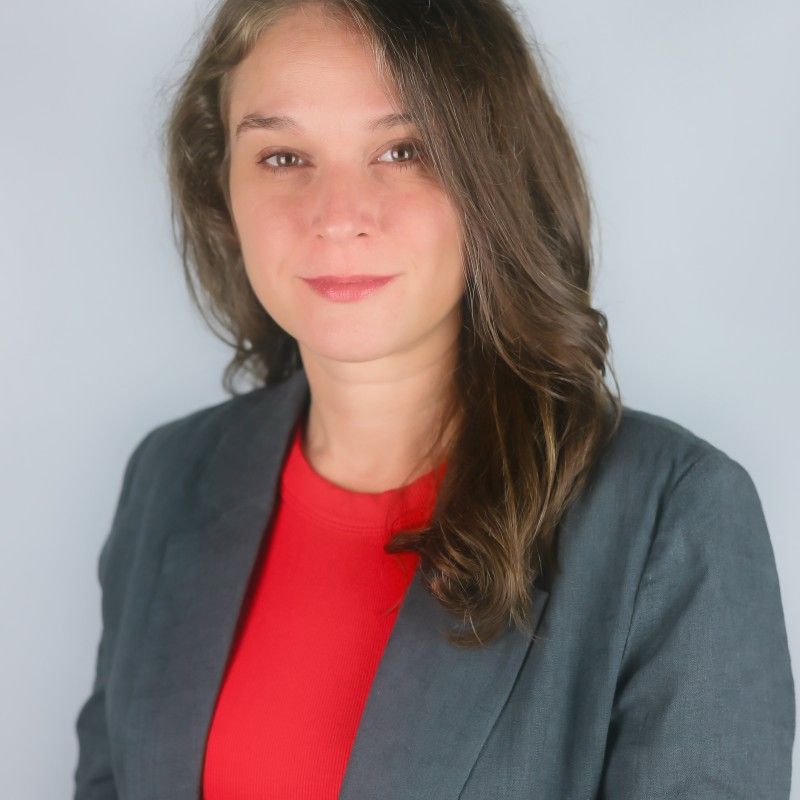

On episode 49 of Generationship, Rachel Chalmers sits down with Denise Koessler Gosnell and Kathryn Erickson to unpack their new book Tech Confidential. Together they explore burnout, leadership, motivation, and the surprising ways our emotional wiring shapes tech culture. It’s a candid, deeply human conversation about transforming toxic systems into something resilient, sustainable, and even joyful.
Denise Koessler Gosnell and Kathryn Erickson are seasoned technology executives whose careers span startups, government agencies, and global-scale tech initiatives. Co-authors of Tech Confidential, they bring strategic precision, human insight, and deeply personal experience to their work on leadership and resilience in the industry. Together, they advocate for a healthier, more sustainable tech culture.
- Tech Confidential (Book by Denise and Kat)
- The Body Keeps the Score (Book by Bessel van der Kolk)
- Social Styles Matrix (Merrill & Reid framework)
- Myers–Briggs Type Indicator (MBTI)
- DiSC assessment
- Gradient Flow (AI and ML insights newsletter)
- Ben’s Bites (AI-focused newsletter)
- ROSS Index (Quarterly open-source metrics)
- Harmonic AI (Startup data aggregation platform)
- Sam Ramji
- Generationship - Ep. #48, Trusting AI with Sarah Novotny
transcript
Rachel Chalmers: Today, I am literally overjoyed to have Denise Gosnell and Kathryn "Kat" Erickson on the podcast. They've just written an incredible book. They are seasoned tech insiders who have navigated the highs and lows of the startup world. Their combined experiences offer a raw, unfiltered perspective, making Tech Confidential an essential read for any entrepreneur ready to face the challenges of the tech industry.
Denise is a master of tech's toughest games. She has a PhD. She's driven NSF funded innovations. She's ridden startup highs and landed Amazon scale launches. Now CEO of her own AI education venture, Denise shares sharp real world strategies for thriving in tech while keeping your humor, sanity and sense of self fully intact.
Kathryn has credentials from successful startups, government agencies, the National Science Foundation itself and Johns Hopkins. She's orchestrated funding deals, acquisitions and hard pivots with the precision of a surgeon and the soul of a creative. She's the executive people call when the stakes are high and the plan needs grit.
Denise and Kathryn, it is so great to have you on the show.
Kathryn "Kat" Erickson: We are so honored.
Rachel: I loved the book so much. I can't wait to talk about it. On sale at your nearest independent bookstore now, Tech Confidential. Folks, no one writes a book unless they're big mad about something. What provoked the two of you into writing this one?
Denise Gosnell: Oh, Rachel, what a great way to dive into that. Look, the way that Kat and I talk about it is we are all in an industry where we talk about and say all the time, "let's move fast and break things."
And we believe in moving fast and breaking things. But There is this FaceTime call from Kat, last March of 2024. She was having one of the best weeks of her life, and I was literally struggling to get up from and off of the floor to answer that call.
Rachel: Oh yeah, a floor day. We've all been there.
Denise: Yeah. I was there for six months.
Rachel: Yeah.
Denise: But look, it hit us in that call that sometimes the thing that breaks is you. And I was literally in that moment, being broken, unable to walk for three months, it was. And then, Kat said something to me on the phone about, "look, it doesn't have to be this hard to make it in the tech industry."
And being me, I was like, well, let's write a book about it. So when we started going, after writing this book and getting the stories out, we were really hesitant to scorch the earth on the tech industry because we love it.
And we found our way into joking about making a really good dumpster fire, which led us to wanting to maybe make a Dumpster Phoenix, where you take the ugly, messy, painful parts of tech culture, and we transform them into something that's useful and beautiful, and it can help others and help others soar above the flames that literally nearly consumed us.
So that is how we came together and decided to go off on this venture to write Tech Confidential.
Rachel: Okay. The Dumpster Phoenix is going to live rent free in my head for the next year.
Denise: It is the laptop sticker that everyone wants.
Rachel: I got to tell you, when I got into tech journalism back in the day, I was drawn to writing about business because the stakes were so low. I had friends in journalism who were on the legal beat or ambulance chasing, and I was like, "no body count in tech. Right?"
And then over the course of my career, I made friends with Aaron Swartz and Nóirín Plunkett. So, boy, is my face red. And, boy, do I miss my friends.
Denise: Yeah.
Rachel: It's an industry that, particularly for Gen X, drew us in with this promise of gainful employment and maybe making the world a better place. And, boy, is our face red.
Kat: Yes.
Denise: And how did we get so lost on that way? I mean, we'll be able to talk about it a lot during this podcast, but being yet another body count in that world was honestly the rage that I wrote from for a lot of it, until an editor helped us not write from that rage.
Rachel: But spite is always a great motivator.
Kat: Yeah, it truly is.
Rachel: So let's start with ourselves. What are some of the unconscious ways in which we ourselves can turn our bosses into assholes? What are some of the anti-patterns?
Kat: Yeah, I love how you pose that question. It's also okay to be honest. Sometimes bosses are assholes. And as much as we wanted to shine a light on the dark side of tech, a year of writing and reflecting really forced us to sometimes examine our own actions and the stories we'd been telling ourselves for so long. There's a quote in the book by astronaut Chris Hadfield.
Rachel: Whoa!
Kat: Yes, he says, and this is the one that lives rent free in my head, "there is no problem so bad you can't make it worse."
Rachel: Yep, yep. And when you're on a space station. Again, there are stakes.
Kat: Yes. It was this realization of how often we project our own insecurity onto our bosses or coworkers actions. And what that does, sometimes it creates the very dynamic we feared happening.
There was a story in the book about a guy I worked with, we call him Ben. And he was to me living proof that the no assholes rule was a myth. I imagine that in high school he was probably voted least likely to be thrown a life saving device while drowning. And to me, working with him really felt like high school. It was constant personal attacks.
And in the book we talk about all the wrong steps I took to improve the situation. But Ben was an asshole. And the thing was though, we were given these very directly conflicting priorities from a senior executive and we were both doing everything that we could to succeed while we were both playing the game as if it was winner take all.
And as a result, we both lost our roles at the same time. And we talked one time after that, and I don't remember which one of us said it, but one of us said, "did we do this to each other?"
And that was it. And it was still, what was it? Another year when we were writing this, Denise, that I finally began to think to myself like I carried my insecurities from high school, from not being part of the tribe, into this relationship. What was going on wasn't about me. The fact that Ben was an asshole had nothing to do with me. But it did create blinders where I could not see a way to solve the problems that were in front of me.
And so it's lessons like this where we want to paint somebody as the villain that when you step back and reflect, when you learn these lessons over and over, you can start to see the role that you played in some of these outcomes.
Rachel: Yeah, that was a really meaningful question for me because that chapter really made me reflect on a job where the person I was working with and I just had really disparate visions for where the project should go and we couldn't reconcile them.
And I did a lot of blaming and getting angry with him, but honestly, I needed to leave and I left and everything got better and we're friends again.
Kat: But the self-reflection doesn't mean you have to let that person off the hook either.
Rachel: He could have handled it a little better in a couple of situations and we'll get back to that.
Denise: Yes.
Rachel: All credit to Sheryl Sandberg. She encouraged a lot of us to step up, but I am not for women taking the whole burden of making everything in the workplace work well on ourselves. There are other factors at play, to say the least.
Denise: Thank you for saying that.
Kat: Yes.
Rachel: Here in the tech industry, though, intense passion is always a super good and healthy and positive thing. Right? Right?
Kat: You need to be passionate. Yes. You have to be passionate to succeed in tech, especially in the startup space. Passion is that thing that drives us, but it can also drive you straight off a cliff. There's research into what's called obsessive passion. And that's when you start to equate success or failure with your own self worth.
In elementary school, we learn about the scientific method. You learn that you make a hypothesis, you do some tests, and the test may succeed or fail, but either way, the experiment is successful. It was a successful experiment. We tested that hypothesis.
But then we got into our careers and we started equating every failure as a personal failure instead of the result of an experiment. There's a chapter in the book where we talk about how nothing's really about you. The bad data, bad products, product fiction, the metrics, whatever's going on, it's not actually about you.
But this obsessive passion can make you lose that objectivity. And when you lose that objectivity, you lose the ability to see these situations clearly. We dig in when we need to pivot, we try harder and harder when we should be throwing challenge flags. And it's through the opportunity to learn these lessons the hard way that you do start to be able to see things a little bit more objectively.
So there's maybe some comfort in the reasons that we have to learn these lessons.
Rachel: There was a line in that section that really slew me. It was something along the lines of, anyone who's in the tech industry and has a full life outside of it is already winning. And I think it's absolutely true. I've talked a lot about my horses on this podcast, but just going into an environment where I forget that I work in the tech industry for two hours and coming back gives me so much of that necessary detachment.
Denise: Absolutely.
Kat: Yes.
Rachel: I think one of the things I really bring to the table as an investor as well is saying, raising venture capital is not a measure of your worth as a human being. And being able to say that to founders in a way that sometimes they can hear me a little bit.
Denise: I can imagine that founders need to really embody that, because I think it's really understated, Kat mentioned it, but we really came out of this with the lesson of, it isn't about us, it's not about you. And I'm really glad to hear that that's one of the ways that you are helping fund the next generation, because they need to have that as part of their armor to get into this arena.
Rachel: Yeah. I mean, to a first approximation, literally everyone I meet is awesome and amazing and incredibly capable. The circumstances of this crazy industry are not their fault.
Denise: Yeah.
Rachel: Denise, how can curiosity help you find your feet in a new role?
Denise: Oh, yes. This one hits home for me. And I just want to give a shout out to Abby Kearns.
Rachel: Abby!
Denise: Yes. We love Abby. Look, she provided us a masterclass with figuring out how to use curiosity to rock your new role. And the TLDR here is that her advice is to always remember the question, "well, what are your best practices for this?"
And that question is just gonna stick in my brain for a long time because I was confused, and I confused confidence with competence. And I made that confusion because I used to think that admitting what I didn't know would tank me. I think that's kind of the veil of imposter syndrome that many of us talk about and we live behind.
But on the other hand, Abby really helped me see that when you admit what you don't know and you frame it to your team as, "well, what are the best practices for this?" that invites other people to be seen and heard at the table.
It's how you build trust, because when you are able to get into that space, admitting what you don't know doesn't take away your authority, it creates it. So leaning into curiosity, it invites other people to join your team. It invites them to join you in your initiative, and it's one way that you will find your feet and find the threads that are gonna lead you and your team to success in your new role.
So I try and lean into that as much as I can. Especially in the world of tech, when you have to wear many hats, and the next hat you pick up, you might not exactly know how to do it, and that's okay. That's just how we roll.
Rachel: I love that question, "what are your best practices today?" One of my favorite engineers, his disarming question is, "what problem are you really trying to solve here?"
Denise: Oh.
Rachel: What are some of your other naive questions that get people to drop their defenses?
Kat: I like to ask, "how did you land on that?" Sometimes I hear something, and my gut reaction is, "really?"
And so this person is competent. We're in the same room. We both deserve to be there. And so just saying, "help me understand how you got there."
Once you hear the thought process they took, I'm often thinking, "all right, that just saved me a lot of time," because I would, you know, surely I would have ended up there as well. Or it helps me see maybe the error in the logic, the stuff that didn't go correctly that we could then talk openly about.
Rachel: Yeah, that's a great one. Because one of the hardest soft skills is modeling someone else's internal state accurately.
Kat: Yes. Very well said.
Denise: Oh, well done. And, I mean, I'm a bit nerdy, so I like to come to the table and ask the question of, " well, what data? What data do you have that got you there?" Very similar to how Kat looks at it. But then I'm like, well, tell me the data. So, I mean, that's how I get to it as well.
Rachel: Those are both great. I'm stealing those. Kat, in what context should you bring your boss a shiny rock?
Kat: You know, my current project is building a rock garden. The person that gave me this advice knows how much I like collecting, finding, digging rocks. Everybody has their thing.
Denise: And if anyone listening wants to get in Kat's good graces, literally bring her a rock.
Kat: That's it. That's it. Let's talk. So in the book, we talk about the social styles matrix. It's this great way of figuring out the best way to work with different types of executives. And many CEOs are what we call drivers. And I was in a situation where it was impossible to work harder.
But the CEO, he wasn't seeing it. He'd constantly ask for updates, constantly ask why I did this instead of that. When Is this going to be done? Constantly wanting to know not just the next step, but the exact step that I'm focused on in that very moment.
And another executive, he sat me down and he said, "Kat, you got to bring him a rock. He needs to see the progress. Every day or two, you need to bring him a shiny new rock."
And the context is that drivers are action oriented and they want outcome. They need constant, tangible evidence of progress. The shiny rock was my proof of progress, something concrete that shows him that I'm moving forward on the outcome that he cares about. And those little shiny rocks arriving on a solid cadence kept him from the barrage of, "where is my rock?"
So it worked exceptionally well until we had the next challenge du jour.
Rachel: It's a great insight into somebody else's internal state, and I love it because the really great managers are shit umbrellas. They're managing up in order to free you up to get into a flow state. And so the shiny rocks are what they use to distract the bean counters above them.
Kat: Exactly, Exactly.
Rachel: Wow. I mixed those metaphors really well.
Denise: That was well done.
Rachel: A metaphor soup.
Kat: Yes.
Denise: I also just want to, I want to plug here, though, that when it comes to the bean counters or the drivers, that there's many different ways that we can talk about the best way to serve others or the best type of rock to give to your executive. But that's why Kat and I really dove into the social styles matrix. I mean, Rachel, do you know your Myers Briggs four letters?
Rachel: It's I-N-T-question-mark. And I was really interested to find myself on your matrix because I immediately gravitate towards analysts because I spent 13 years as an industry analyst. But in fact, I was kind of more in the related quadrant, which, you know, we've talked in the past about what an introvert I am.
I do spend the majority of my time talking one on one to people now and trying to extract their vision or inspire them with mine. It was not how I'd thought of myself, so it was a really interesting exercise to place myself on that quadrant.
Denise: It is. And I love this tool so much, by the way. It's from the 1960s. I'm looking at it right now. It's David Merrill and Roger Reid's work, it underpins the DiSC system today and some other color wheels that you have. But I bring up the Myers Briggs letters or I bring up the color wheels because when you show up and tell me I'm an INTJ green , I don't really know what to do with that in the moment.
But when you go back to the original work on how they developed these tools, you can ask just two questions about a person in the moment and get a decent enough idea on how to better work with them and serve them in a way that is going to be meaningful to them.
So you know when you were talking about thinking you would end up analytical, you're asking the two questions of whether or not you hide your emotions on a day to day basis at work or you show them.
Rachel: Clearly not.
Denise: Yep, clearly not. So now you're in the show and then the other question is whether or not you ask first or you tell first. And when you're sitting down brand new with somebody in a meeting, you can mentally run through those two questions and then get at least 50% into the area that is going to give you a tool to serve them.
So that's why Kat and I love diving into the social styles matrix and finding the best types of rocks that we should bring our executives.
Rachel: The tool to serve them is such a powerful insight. I remember up-leveling as an analyst. When you're an analyst you sometimes have these events where your day is divided into 30 minute slots and a client comes and talks to you every 30 minutes. And it's excruciating for an introvert like me.
And I leveled up the day I realized they all came to the table with a bunch of wishes. And if I figured out what those wishes were, there was usually one of them I could grant. It was an insight or an introduction or an upcoming product that we had.
There was usually something that they needed that I could give them and that made those conversations into a puzzle rather than a chore. It comes back to the modeling internal states thing. If you can figure out a win-win outcome, you get way further than if you're just butting heads.
Kat: I think that also goes into the "be curious" bucket, right? To be curious and to look for how to work with them and where their core needs are that you can focus on.
Rachel: We had the great Sarah Novotny on the podcast, which was a huge honor. And she talked about the way she built the Kubernetes community with game theory. She posited that people are rewarded by four things and I'm going to forget one.
Status, power, access and stuff. So stuff can be money, but if it's an open source community, it can also be merch, stickers, T-shirts. Status is a title. Power is the authority to make decisions. Access is insight into the information flow. And so I've been turning that around in my head and thinking about how to apply that to different situations in negotiation as well.
Denise: Mm. That's a really powerful model as well. I love that.
Rachel: I was like, can we do this for nation states? That would be excellent.
Denise, how does the body keep the score, and can it be stopped?
Denise: Well, I would like to first say that to ask if your body can be stopped from keeping the score is the same thing as asking if you can not be human. So that is not going to be possible to stop your body from keeping the score. And that's also synonymous to asking an SRE or anyone in ops, if they want to permanently stop the flow of system logs and then still have to troubleshoot something, they would freak out. Right?
Rachel: Oh, man. Trauma as a system log. That's a deep, painful insight.
Denise: It honestly is. And the logs that you are getting on a daily basis about headaches or not being able to sleep, panic attacks. Panic attacks that evolve into things like heart explosions or having food allergies, losing your ability to use the restroom, and then maybe even ultimately herniating two discs and not being able to walk for six months, for example. Just an example. A short list of my past 18 months.
Rachel: Oh, God.
Denise: That is what happens.
And at the very beginning, if you are not sleeping or you have headaches and you're just going to choose to push through, that is how your body has been trying to tell you that you're on a path that is not going to work.
And if you want to dive deep into the research, here, because I read his book while lying on my back, because, actually, I didn't read it because I kept dropping it on my face, so I eventually had to listen to it. And Dr. Bessel van der Kolk has a book called The Body Keeps The Score and he goes into how your body literally keeps receipts on every trauma, every experience.
You can't stop it. It's just the function of being human. And you can get into the science of it. You also can just step into the solution. And the solution is to honor your limitations, to listen to your body and to be honest about what it's telling you. And sometimes being honest about what it's telling you is the scariest part.
But I guarantee you, everyone who listens and follows the direction of what your body is telling you is going to end up happier towards the end of it, because that's gonna give you the ability to focus on what truly matters, the second thing that you need to do, in a solution for moving forward.
And if all of this is tied to work, you need to remember it's just a job. So if there's any one person who's listening to this, who realizes they have headaches and they can't sleep and maybe they need to listen to themselves and they make a change because of this, that's the one thing I could wish for. Because I'd never want to hear about more body counts in tech from people getting flattened by the pressure of the system that we live in, because they're trying to live in it in a way that's not authentic to them.
Rachel: Yeah. I definitely hit a point in my career where burnout remediation was job number one.
Denise: Exactly.
Rachel: And not just for me, for other people.
Denise: Yes. And, Rachel, are you happier being on the other side of your burnout recovery?
Rachel: Yes, so much happier. And that's the thing is, the system logs are a gift. T hey're a treasure trove of data. And if you look into them, you can learn about how your system is behaving. You can start to set up error budgets and say, "okay, I've hit my max for today. I'm going to go and sit in the garden and identify five birds."
There's a huge richness to treating our bodies as the complex systems that they are and not trying to force them to be interchangeable widgets in a giant machine.
Denise: Exactly. I don't think there's a more important or pressing message to be talking about today than that because of the, one, the industry we work in, and two, the influence that it has on blurring the line between reality and artificial reality.
So that's only gonna be more prominent as the years and decades go by to remember that we first are human and that there's real limitations that you have to abide by. And honestly, you're gonna enjoy your life more when you listen and abide by them.
Kat: We always called the book Let Go, and a lot of it was about letting go of ego. But we also did a lot of interviews for the book, and in every situation where someone lost a job or lost a role or was forced to really focus on recovering from burnout, in all of those situations, we ask the person, did your life get better?
And I was like, you know, the first day might have been tough, but for others, the first moment was amazing. It was freeing. But in every single conversation, life was better on the other side. You know, we just cling to these things that we thought we wanted so much, you know, thinking we can turn our around these situations or think a white knight is gonna ride in and save us, forgetting that it's our job to save us. But in every one of these situations, the post traumatic growth, the escape, the other side is so much better than the moment that they're in.
Denise: That's the Dumpster Phoenix right there, Kat.
Rachel: Dumpster Phoenix lives. Yeah. Sometimes we cling to things we think we're supposed to want, and then when it all falls down, it's a huge relief.
Kat: Yes, it is, it is.
Rachel: This all makes me want to modify my next question, which was, "what is a flywheel and why does it matter?" I want to add some nuance there and say, how do we prevent our flywheels from turning into grindstones?
Kat: I love that. We can still start by establishing what flywheels are and we can dig in. I learned about flywheels from Sam Ramji, who is a brilliant strategist.
Rachel: Who introduced all of us, by the way.
Kat: Yes, yes.
Rachel: Including me and my partner Michelle.
Kat: The connective tissue between so many great people in tech.
Rachel: Yes.
Kat: That is his superpower. In the book, we use a merry-go-round as an analogy for flywheels because otherwise flywheels are kind of hard and confusing. But the idea with a merry-go-round, like a flywheel, is that it stores energy from every push, making subsequent pushes easier and creating momentum that continues even when you stop pushing.
So in business terms, it's this self reinforcing growth strategy where each element or feature feeds the next. So Costco's flywheel is one many of us are familiar with. Lower prices result in more customers, result in more sales volume, which for Costco results in better negotiating power with vendors, which starts our flywheel back over at even lower prices that get even more customers.
Rachel: Yeah, it's a virtuous cycle.
Kat: Exactly. And so the faster you can make your strategy flywheel spin, the easier it is to make it go even faster. So eventually it becomes self reinforcing. Like when a kid hops off the merry-go-round to give it a push and hop back on.
So it's not about maintaining speed, it's about accelerating it when growth can become its own engine. So that's the flywheel.
But we also talk in the book, like you said, about the grindstone. That's the friction in the flywheel. Right? Yeah, we talked earlier. Sometimes you think the friction is you, not the customer experience. Not the data. In our life and in products, the thing you do first to make a flywheel go faster isn't add 10 more features. It's remove whatever friction is keeping it from spinning. Yeah, I think that's the analogy for life as well.
Rachel: Yeah, yeah.
Denise: And I think, to add there, if you want to make sure you don't create a grindstone, it's to make sure that your team is even acknowledging where the friction is. I love the phrase, "name it, tame it." So that's going to be one of the best ways to prevent your flywheel from grinding itself into the ground.
And know that in that moment, just like within burnout, when you are pushing against the grain or you are trying to do things that are unnatural and just very forceful, go ahead and stop. And that's usually when in your brain you're saying, "just push through, just push through. Just keep going." In those moments, make any other choice.
Rachel: Right.
Denise: Like go on a walk. And when it comes to flywheels and architecting your company, realize that like you're trying to push a massive stone up a hill and it's just gonna keep coming back on you and making it difficult.
So think about how to look at the strategy of what you're doing with your pricing or with the features you're building or the types of customers you believe you're attracting. If it's really hard to get started, you're only going to make it a lot worse if you keep pushing through.
Rachel: Because when the flywheel really starts moving, it's still very hard, but it's a different kind of hard. It's the hard of the rock rolling down the hill and you're all running to catch up. People think that they can will that into existence, that they can get over the peak, but the truth is water runs downhill. It doesn't fall as rain and then try and climb the mountain. It falls as rain and then flows down into the valley. The flow is a clue. It's a signal.
Denise: It is. And we aren't here to reroute rivers.
Rachel: Yeah, Denise, you touched on our new artificial world. Everything is AI. AI is eating the software that's eating the world. For each of you, what are some of your favorite sources for learning about this new blessing and curse upon our industry?
Denise: My favorite source is people.
In this world where we're looking at a blurred line between reality and artificial reality, that is making trusted relationships with other people even more valuable and just something to hold dear and hold very true.
So honestly, when I am looking for new sources, I'm first off probably texting Kat because she knows everything. This is like the world, she studies this more than other people study the Kardashians, as we joke about. So I'm probably going to talk to Kat. We've got some fun group texts and I don't know, I like to go to the people who are in the space and talk with them.
And one of the places that I love to follow, you know, beyond your work, Rachel, I like to read Gradient Flow a lot. I like to read that because I know it's not a monetized newsletter and they go into the mathematics of it. And at my heart I'm a mathematician who loves to study the convergence of functions and things like that. So I do like to read Gradient Flow, to give a specific shout out to Ben's newsletter.
Rachel: Yeah, it's awesome. Kat?
Kat: I mean, I start with group text, you know, what are people talking about? Who asked me about what startup? Group texts are a great source. Ben's Bites newsletter. It's always timely. I like the opinions that they provide.
The quarterly ROSS index for top open source projects is a favorite source of data, although I don't have a license for it right now. My very favorite source of startup data is Harmonic AI. I don't think that was the original use of the platform, but the data is well aggregated and presented in an easy to use way. I just love that tool.
Rachel: Very cool. All right, you sold me on your platform. I'm making you co-presidents of the galaxy. Everything for the next five years is going to go exactly the way that you hope it will. What's the world going to look like?
Denise: For me, I would be living outside mainly. In the next five years, I would love to be able to just live outside and hang out with the people that I find near and dear to my heart. But Kat would most likely be one of them because the change she wants to see in the world, I'm here to make it happen. So Kat, how about you paint us the picture of what you want the next five years to be.
Kat: Yeah, I love this question.
I have some big goals for the next five years. I hope we tax the rich. I hope the importance of diversity is universally accepted. I want all bathrooms to be gender-neutral with doors that go from the ceiling to the floor. I hope the tech is less like a terrible game of Monopoly. I don't want hedge funds to be able to buy houses. College graduates should have to decide between competing offers again. And obviously that we're able to bring the woolly mammoth back from extinction.
Denise: 100%.
Rachel: And the Tasmanian tiger.
Kat: Exactly.
Denise: We can do that.
Rachel: This is one of the most compelling pitches anyone has presented, Kat. I think you're winning this debate.
Last question, favorite question. With your position as co-presidents of the galaxy comes a generation ship, a starship that takes more than 100 years to get to its destination. What will each of you name her?
Kat: I'm naming my starship Trump is a Fascist. I just really think it's a solid way to make sure that phrase makes it into the history books.
Rachel: Just lay our cards out on the table. Yep, yep. No, that's a great name.
Kat: Yeah.
Denise: Now our sister starships, we've got one. And then the Woo Woo starship that I'm leading with my outdoorsy crew over here, it's gonna be called the Cambium. The Cambium, that's the thin layer between a tree's heartwood and then the new growth.
And so I was trying to think about a name that would be about future expansion, but that also represents the expansion or the intersection of old growth and heritage with innovation. So the Cambium is going to be the sister ship driving along, next to Trump is a Fascist. And on Tuesdays at 9:30, whenever that is, I'll be texting you, Kat, to tell you when that is, we'll open up our windows in the middle of the solar system and we'll wave at each other.
Kat: The joke there is we met every Tuesday and Thursday at 9:30 to work on the book. And of course calendars aren't my thing, so Denise would remind me every Tuesday and Thursday at like 9:35, open the window of the starship, it's time.
Rachel: These are both great names, but I think you both missed a trick. I think there's a third ship in your fleet, the Dumpster Phoenix. And she's absolutely beautiful.
Kat: Yeah.
Rachel: Denise and Kat, what a joy to have you on the show. I hope you'll come back. Thank you so much for your time, Rachel.
Denise: Thank you.
Kat: Thank you so much.
Content from the Library
Data Renegades Ep. #14, Databases for Humans and Agents with Hannes Mühleisen
On episode 14 of Data Renegades, CL Kao speaks with Hannes Mühleisen, co-creator of DuckDB, about building databases that people actually want to use. Hannes explains how conversations with frustrated statisticians shaped DuckDB’s architecture and why useful software sometimes requires abandoning your own assumptions. They explore DuckLake, the Quack client-server protocol, and how a focus on human usability is paying off as AI agents begin choosing their own tools.
The Mythical Agent-Month
Wes McKinney, cofounder of Kenn Software, creator of pandas, and co-creator of Apache Arrow, revisits The Mythical Man-Month for the age of agent factories: why coordination is part of the work, and why judgment and taste matter more as agents take on more of the building.
Performance Engineering for Agents: Lessons from Glean
Tony Gentilcore, cofounder of Glean and a veteran of Chrome's Speed Team, brings a performance-first lens to long-horizon agents in a fireside with Chad Metcalf: reading traces, token budgets that change agent behavior, what work belongs in the background, and measuring spend per unit of throughput.